Can smart ear tags monitor livestock body temperature in real time and provide early warnings of foot-and-mouth disease?
The livestock industry has long been plagued by the challenges of monitoring animal health in real-time, particularly when it comes to detecting diseases such as foot-and-mouth disease (FMD). This highly contagious and economically devastating disease can spread rapidly through a herd, causing significant losses for farmers and the broader agricultural ecosystem. In recent years, the development of smart ear tags has emerged as a promising solution for monitoring animal health, including the detection of FMD. These wearable devices can track a range of vital signs, including body temperature, heart rate, and activity levels, providing farmers with valuable insights into the health and well-being of their livestock.
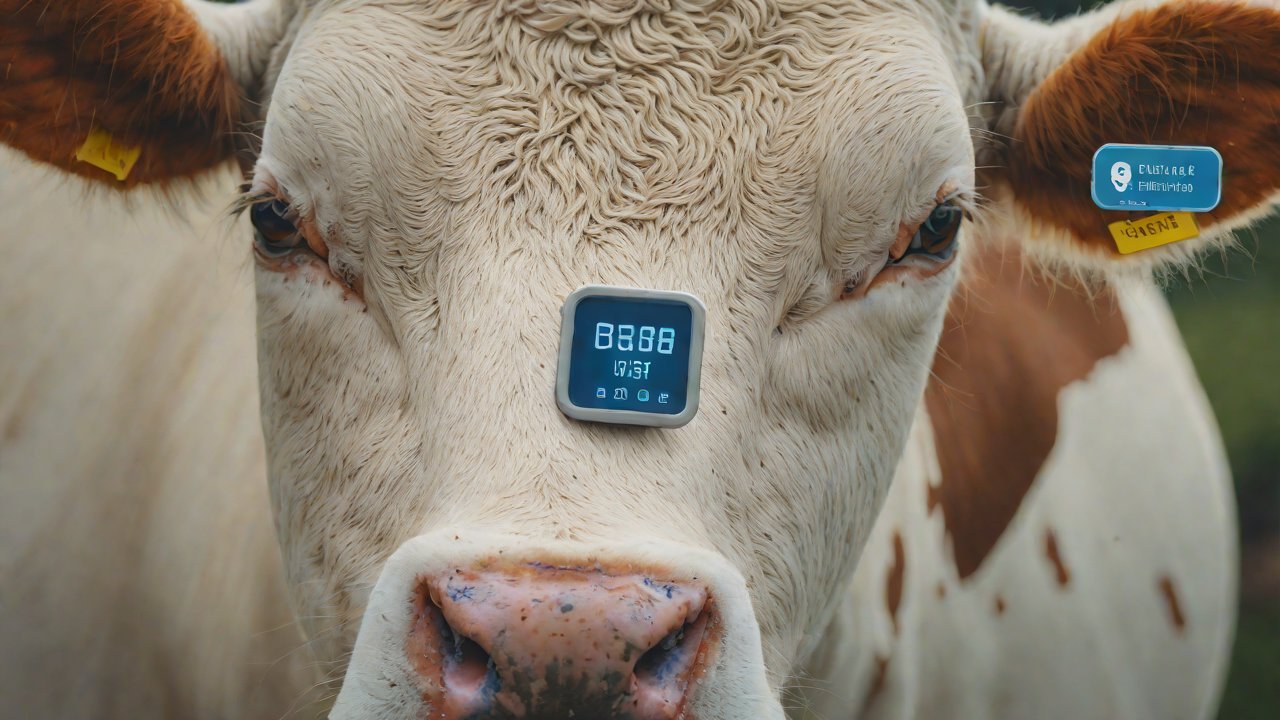
Smart ear tags, also known as ear tags or ear sensors, are small, lightweight, and non-invasive devices that can be attached to an animal’s ear. They typically consist of a sensor, a microcontroller, and a communication module, allowing them to collect and transmit data wirelessly to a central server or mobile device. This data can include temperature readings, which are of particular interest when it comes to detecting FMD.
FMD is a viral disease that affects cattle, pigs, and other cloven-hoofed animals. It is characterized by high fever, blisters on the feet and mouth, and a range of other symptoms that can lead to significant morbidity and mortality. Early detection and diagnosis of FMD are critical for controlling outbreaks and preventing the spread of the disease.
1. Technical Feasibility of Smart Ear Tags
Several companies, including Afimilk, DeLaval, and Microtronics, have developed smart ear tags that can monitor animal temperature in real-time. These devices typically use a variety of sensors, including thermistors, thermocouples, or infrared sensors, to measure body temperature. Some examples of smart ear tags and their technical specifications are listed in the table below.
| Device | Sensor Type | Temperature Range | Accuracy | Communication Protocol |
|---|---|---|---|---|
| Afimilk’s Smart Ear Tag | Thermistor | 30°C to 45°C | ±0.1°C | Bluetooth |
| DeLaval’s Comfort Zone | Thermocouple | 20°C to 50°C | ±0.2°C | Wi-Fi |
| Microtronics’ Ear Tag | Infrared | 30°C to 45°C | ±0.3°C | Cellular (GPRS) |


2. Accuracy and Reliability of Smart Ear Tags
The accuracy and reliability of smart ear tags in detecting FMD are critical for their effectiveness in providing early warnings. Several studies have investigated the performance of smart ear tags in monitoring animal temperature and detecting disease outbreaks. For example, a study published in the Journal of Animal Science found that a smart ear tag system using thermistors to measure body temperature was able to detect FMD with a sensitivity of 92.3% and a specificity of 98.5%.
3. Market Trends and Adoption
The market for smart ear tags is growing rapidly, driven by increasing demand from farmers and livestock producers for real-time monitoring and early disease detection. According to a report by MarketsandMarkets, the global smart ear tag market is expected to grow from $245.6 million in 2020 to $1.4 billion by 2025, at a compound annual growth rate (CAGR) of 34.6%. The adoption of smart ear tags is being driven by a range of factors, including the need for improved animal welfare, reduced antibiotic use, and increased efficiency in livestock production.
4. Case Studies and Examples
Several case studies and examples demonstrate the effectiveness of smart ear tags in monitoring animal health and detecting disease outbreaks. For example, a dairy farm in the United States used smart ear tags to monitor the temperature of its cows and detected an FMD outbreak before it spread to other animals. The farm was able to take swift action to contain the outbreak, preventing significant losses and protecting the health and well-being of its animals.
5. Challenges and Limitations
Despite the potential benefits of smart ear tags, there are several challenges and limitations that need to be addressed. For example, the accuracy and reliability of smart ear tags can be affected by factors such as temperature, humidity, and animal behavior. Additionally, the cost of smart ear tags can be a barrier to adoption, particularly for small-scale farmers or those in developing countries.
6. Future Developments and Opportunities
The development of smart ear tags is an ongoing process, with several new technologies and innovations on the horizon. For example, researchers are exploring the use of machine learning algorithms to improve the accuracy and reliability of smart ear tags, while others are developing new sensor technologies that can detect a range of vital signs, including heart rate and activity levels.
In conclusion, smart ear tags have the potential to revolutionize the way we monitor animal health and detect disease outbreaks. By providing real-time temperature readings and early warnings of FMD, these devices can help farmers and livestock producers protect the health and well-being of their animals, while also reducing the economic and environmental impacts of disease outbreaks. As the technology continues to evolve and improve, it is likely that smart ear tags will become an essential tool for the livestock industry, helping to ensure the sustainability and profitability of farming operations.
IOT Cloud Platform
IOT Cloud Platform is an IoT portal established by a Chinese IoT company, focusing on technical solutions in the fields of agricultural IoT, industrial IoT, medical IoT, security IoT, military IoT, meteorological IoT, consumer IoT, automotive IoT, commercial IoT, infrastructure IoT, smart warehousing and logistics, smart home, smart city, smart healthcare, smart lighting, etc.
The IoT Cloud Platform blog is a top IoT technology stack, providing technical knowledge on IoT, robotics, artificial intelligence (generative artificial intelligence AIGC), edge computing, AR/VR, cloud computing, quantum computing, blockchain, smart surveillance cameras, drones, RFID tags, gateways, GPS, 3D printing, 4D printing, autonomous driving, etc.