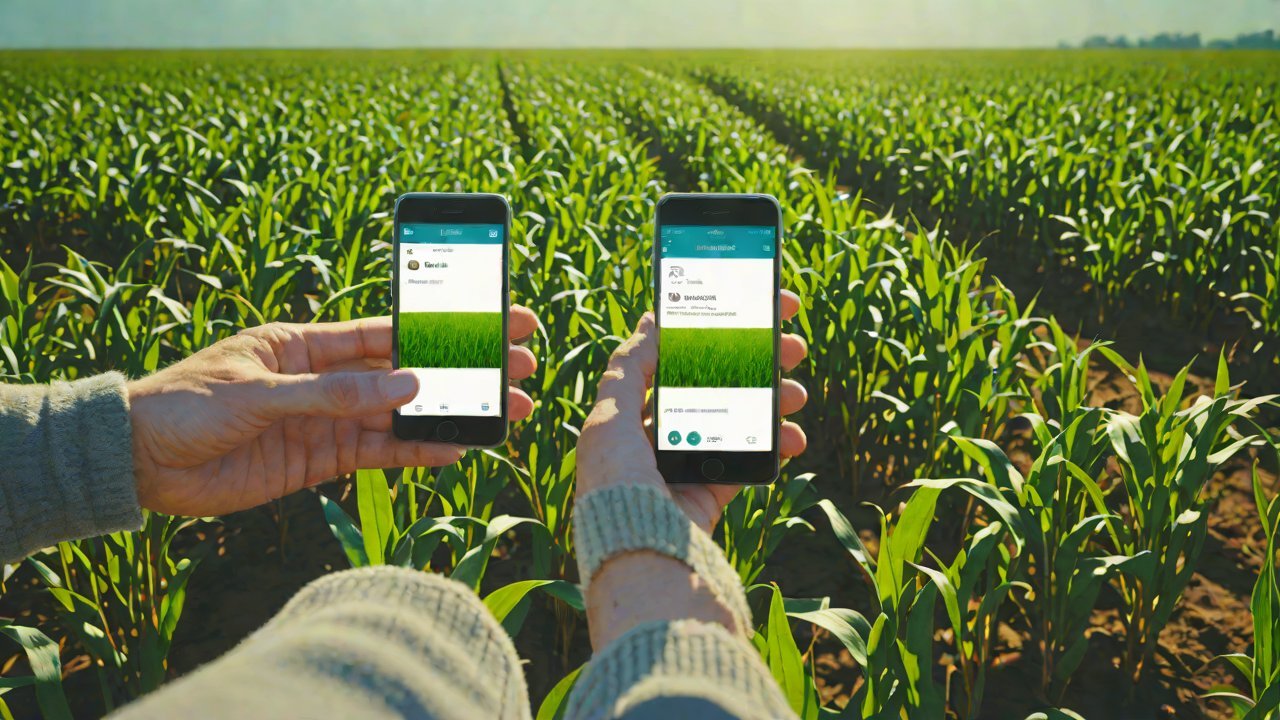
Can semantic analysis technology allow farmers to query real-time soil moisture conditions via voice?
Semantic analysis technology has revolutionized various industries by enabling advanced natural language processing capabilities, allowing humans to interact with machines using everyday language. The agricultural sector is one such industry that can greatly benefit from this technology. One of the most critical factors in farming is soil moisture conditions, which significantly impact crop health and yield. Traditional methods of monitoring soil moisture involve manual checks or deploying expensive sensors, both of which have limitations.
Agricultural producers are increasingly looking for ways to optimize their operations using cutting-edge technologies like semantic analysis. This report explores the possibility of using semantic analysis technology to enable farmers to query real-time soil moisture conditions via voice, providing an in-depth examination of its feasibility and potential benefits.
1. Overview of Semantic Analysis Technology
Semantic analysis involves analyzing the meaning and context of text or speech inputs to provide relevant information or responses. This technology is based on natural language processing (NLP) and machine learning algorithms that can understand human language patterns, intent, and emotions. In recent years, semantic analysis has been applied in various domains, including customer service chatbots, voice assistants, and smart home automation.
The core components of semantic analysis technology include:
- Named Entity Recognition (NER): Identifying specific entities like names, locations, and organizations within text or speech.
- Part-of-Speech (POS) Tagging: Determining the grammatical category of each word in a sentence.
- Dependency Parsing: Analyzing sentence structure to understand relationships between words.
These components enable machines to comprehend human language nuances, making it possible for humans to interact with technology using natural language.
2. Current State of Soil Moisture Monitoring
Soil moisture conditions are crucial for optimal crop growth and yield. Traditional methods of monitoring soil moisture include:
- Manual Checks: Regularly checking the soil’s water content by digging or using a probe, which can be time-consuming and labor-intensive.
- Sensor-Based Systems: Deploying sensors that measure soil moisture levels and transmit data to a central hub for analysis. These systems are often expensive and require significant infrastructure setup.

Despite these methods, many farmers still struggle with accurately monitoring and managing soil moisture conditions, leading to reduced crop yields and increased resource usage.
3. Potential Benefits of Voice-Based Soil Moisture Querying
Implementing semantic analysis technology to enable voice-based querying of real-time soil moisture conditions could bring numerous benefits to farmers:
- Increased Efficiency: Allowing farmers to monitor soil moisture levels remotely using their voice, reducing the need for manual checks and minimizing time spent on monitoring.
- Improved Accuracy: Providing real-time data, eliminating the need for sensor calibration and ensuring accurate soil moisture readings.
- Enhanced Decision-Making: Enabling farmers to make informed decisions about irrigation schedules, fertilization, and pest management based on up-to-date soil moisture information.
4. Technical Feasibility of Voice-Based Soil Moisture Querying
To implement voice-based querying of real-time soil moisture conditions using semantic analysis technology, several technical components must be integrated:
- Speech Recognition: Utilizing speech recognition algorithms to accurately identify spoken commands and convert them into text inputs.
- Natural Language Processing (NLP): Applying NLP techniques to understand the context and intent behind the voice queries.
- Semantic Analysis Engine: Integrating a semantic analysis engine that can process the NLP output, retrieve relevant information from soil moisture sensors or databases, and generate an accurate response.

5. Market Potential and Competition
The agricultural technology market is rapidly growing, with an estimated global value of over $13 billion by 2025. Several companies are already working on developing voice-based interfaces for farmers, including:
| Company | Product/Service |
|---|---|
| John Deere | Precision Planting |
| FarmWise | Autonomous Farming System |
| Granular | Agronomic Decision Support |

However, none of these solutions incorporate semantic analysis technology for real-time soil moisture querying via voice. This presents a significant opportunity for companies to develop innovative products and services that cater to the specific needs of farmers.
6. Challenges and Limitations
While implementing voice-based querying of real-time soil moisture conditions using semantic analysis technology holds tremendous potential, several challenges and limitations must be addressed:
- Accuracy and Reliability: Ensuring accurate speech recognition, NLP processing, and semantic analysis to provide reliable information.
- Scalability and Cost-Effectiveness: Developing cost-effective solutions that can scale with the needs of farmers, while minimizing infrastructure requirements.
- User Adoption and Training: Educating farmers on how to effectively use voice-based interfaces and semantic analysis technology.
7. Conclusion
Semantic analysis technology has the potential to revolutionize soil moisture monitoring in agriculture by enabling voice-based querying of real-time conditions. By integrating speech recognition, NLP, and a semantic analysis engine, companies can develop innovative products and services that cater to the specific needs of farmers. However, several technical, market, and user-related challenges must be addressed to ensure successful adoption.
The agricultural sector is ripe for disruption, and companies that successfully implement voice-based soil moisture querying using semantic analysis technology will be well-positioned to capture a significant share of the growing agricultural technology market.
IOT Cloud Platform
IOT Cloud Platform is an IoT portal established by a Chinese IoT company, focusing on technical solutions in the fields of agricultural IoT, industrial IoT, medical IoT, security IoT, military IoT, meteorological IoT, consumer IoT, automotive IoT, commercial IoT, infrastructure IoT, smart warehousing and logistics, smart home, smart city, smart healthcare, smart lighting, etc.
The IoT Cloud Platform blog is a top IoT technology stack, providing technical knowledge on IoT, robotics, artificial intelligence (generative artificial intelligence AIGC), edge computing, AR/VR, cloud computing, quantum computing, blockchain, smart surveillance cameras, drones, RFID tags, gateways, GPS, 3D printing, 4D printing, autonomous driving, etc.
Note: This article was professionally generated with the assistance of AIGC and has been fact-checked and manually corrected by IoT expert editor IoTCloudPlatForm.