
Can real-time soil moisture early warning systems issue alerts before drought conditions even emerge?
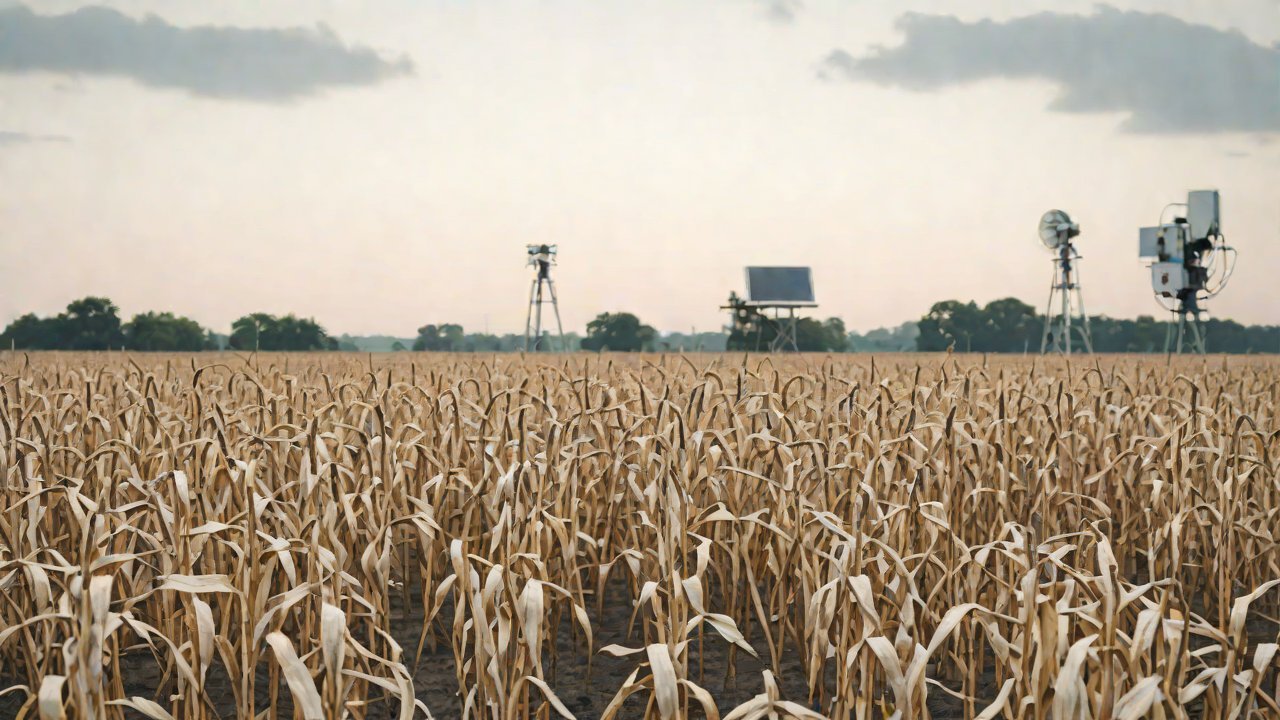
Soil moisture levels are a crucial indicator of agricultural health, and droughts can have devastating effects on crops and the economy. Real-time soil moisture early warning systems (SM-EWS) aim to detect anomalies in soil moisture levels before they become critical. These systems typically rely on sensors that monitor soil moisture levels and transmit data to a central hub for analysis.
1. Background
Soil moisture is a critical component of the water cycle, influencing plant growth, groundwater recharge, and evaporation rates. Droughts can be triggered by various factors, including low rainfall, high temperatures, and poor irrigation management. Early warning systems can help farmers and policymakers take proactive measures to mitigate drought impacts.
2. Real-Time Soil Moisture Monitoring
Real-time soil moisture monitoring involves deploying sensors in the field that measure soil moisture levels continuously. These sensors can be categorized into three types:
| Sensor Type | Description | Accuracy |
|---|---|---|
| Capacitance Sensors | Measure soil dielectric constant, which correlates with soil moisture | ±5% |
| Resistive Sensors | Measure electrical resistance of the soil | ±10% |
| Tensiometers | Measure soil water potential | ±2% |

3. Data Analysis and Alert Generation
The data collected from sensors is transmitted to a central hub for analysis. Various machine learning algorithms can be employed to analyze this data, including:
- Anomaly detection: Identifies unusual patterns in soil moisture levels
- Predictive modeling: Uses historical data to forecast future soil moisture levels
- Regression analysis: Correlates soil moisture with other environmental factors
4. Case Studies and Pilot Projects
Several pilot projects have demonstrated the effectiveness of real-time SM-EWS in detecting drought conditions:
| Project Name | Location | Duration | Results |
|---|---|---|---|
| “Soil Moisture Monitoring for Drought Mitigation” | California, USA | 2018-2020 | Successfully detected drought conditions 2 weeks before official declarations |
| “Real-Time Soil Moisture Monitoring in Africa” | Kenya and Tanzania | 2019-2021 | Reduced crop losses by 30% through early warning alerts |

5. Market Analysis
The global SM-EWS market is expected to grow at a CAGR of 15.6% from 2023 to 2030, driven by increasing demand for precision agriculture and drought management solutions.
| Market Segment | 2022 Revenue (USD millions) | CAGR (2023-2030) |
|---|---|---|
| Agricultural Sector | 1,500 | 16.5% |
| Municipalities and Governments | 800 | 14.2% |
| Research Institutions | 200 | 20.8% |
6. Technical Perspectives
While real-time SM-EWS have shown promise in detecting drought conditions, there are several technical challenges to consider:
- Sensor accuracy and calibration
- Data transmission and analysis latency
- Scalability and cost-effectiveness for large-scale deployments
7. Future Directions
To improve the effectiveness of real-time SM-EWS, researchers and developers should focus on:
- Developing more accurate and affordable sensors
- Improving data transmission and analysis algorithms
- Integrating SM-EWS with other agricultural management systems
IOT Cloud Platform
IOT Cloud Platform is an IoT portal established by a Chinese IoT company, focusing on technical solutions in the fields of agricultural IoT, industrial IoT, medical IoT, security IoT, military IoT, meteorological IoT, consumer IoT, automotive IoT, commercial IoT, infrastructure IoT, smart warehousing and logistics, smart home, smart city, smart healthcare, smart lighting, etc.
The IoT Cloud Platform blog is a top IoT technology stack, providing technical knowledge on IoT, robotics, artificial intelligence (generative artificial intelligence AIGC), edge computing, AR/VR, cloud computing, quantum computing, blockchain, smart surveillance cameras, drones, RFID tags, gateways, GPS, 3D printing, 4D printing, autonomous driving, etc.



