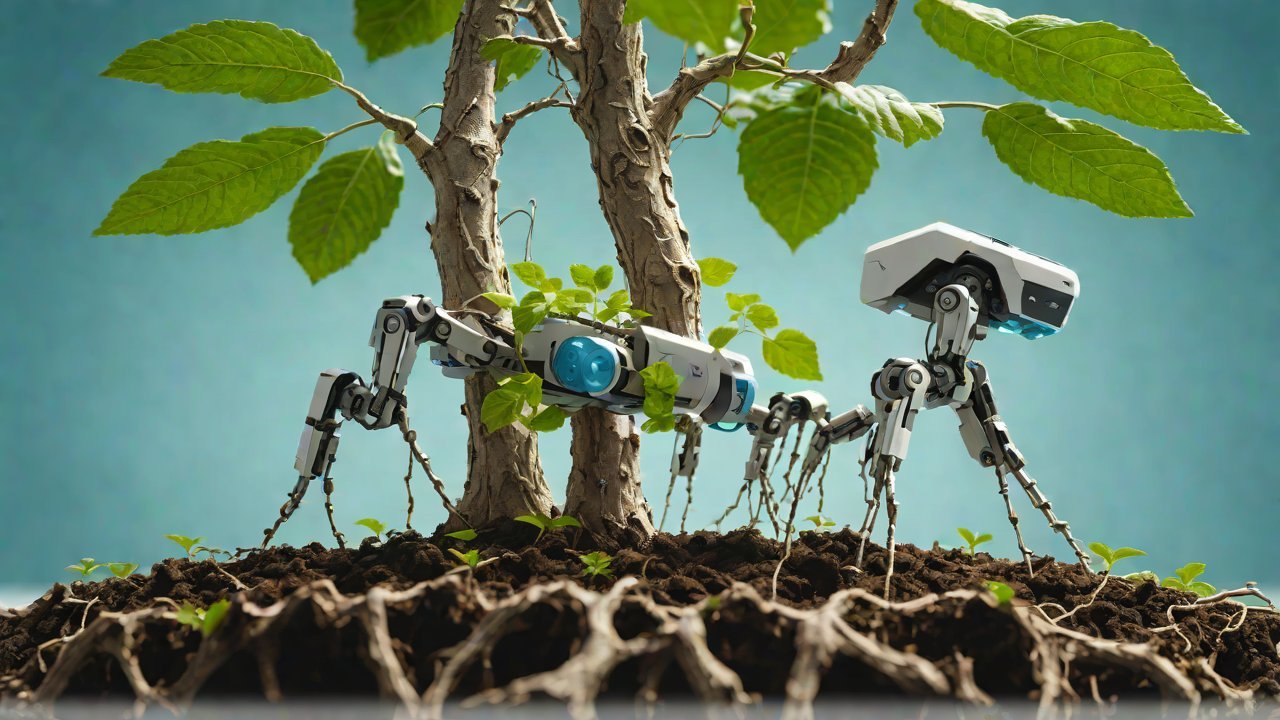
Can nanorobots repair leaky root systems in farmland like white blood cells?
The intricate network of roots beneath farmland is akin to a delicate web, its integrity crucial for the health and productivity of crops. Just as the human body employs white blood cells to repair damaged tissues, could nanorobots serve as a analogous solution to mend leaky root systems? The prospect of harnessing cutting-edge technology to address one of agriculture’s most pressing challenges is a tantalizing one. As we delve into the realm of nanorobotics and plant biology, it becomes clear that the potential for innovation is vast, but also fraught with complexities.
1. The Problem of Leaky Root Systems
Leaky root systems are a pervasive issue in farmland worldwide, resulting from a combination of factors including soil degradation, inadequate irrigation, and pest/disease infestations. This phenomenon can lead to reduced crop yields, increased water consumption, and decreased soil fertility. The economic impact is substantial, with estimates suggesting that soil erosion alone costs the global agricultural industry upwards of $400 billion annually.
| Crop | Average Yield Loss | Estimated Annual Loss |
|---|---|---|
| Wheat | 10-15% | $10-15 billion |
| Corn | 5-10% | $5-10 billion |
| Soybeans | 5-10% | $2-5 billion |

2. The Concept of Nanorobots in Agriculture
Nanorobots, tiny robots measuring in the nanoscale (1-100 nanometers), have been proposed as a potential solution for various agricultural challenges. These miniature machines could be designed to navigate the intricate networks of plant roots, detecting and repairing damaged tissues. By mimicking the behavior of white blood cells, nanorobots could potentially mitigate the effects of leaky root systems, promoting healthier plant growth and increased crop yields.
| Nanorobot Design | Key Features | Potential Applications |
|---|---|---|
| Micro-Propulsion | Self-propelled, navigation systems | Root exploration, damage detection |
| Sensory Capabilities | Integrated sensors for pH, nutrient, and moisture detection | Real-time monitoring, adaptive responses |
| Repair Mechanisms | Self-healing materials, nanoscale repair tools | Tissue repair, infection prevention |
3. Technical Feasibility and Challenges
While the concept of nanorobots repairing leaky root systems is intriguing, several technical hurdles must be addressed before this vision becomes a reality. These include:
- Scalability: Developing nanorobots capable of navigating and repairing vast networks of roots.
- Power and Control: Ensuring reliable power sources and control mechanisms for the nanorobots.
- Biocompatibility: Designing nanorobots that can interact with plant tissues without causing harm or toxicity.
- Sensors and Feedback: Developing sensors and feedback systems for real-time monitoring and adaptive responses.
4. Market and Economic Analysis
The potential market for nanorobotics in agriculture is substantial, with estimates suggesting a global market size of $1.3 billion by 2025. Key players in the industry include:
| Company | Product/Service | Revenue (2020) |
|---|---|---|
| Nanobiotix | Nanorobot-based cancer treatment | $20 million |
| RoboThespian | Agricultural robotics and automation | $10 million |
| Ceres Imaging | Plant health monitoring and analytics | $5 million |

5. Conclusion and Future Directions
While significant technical challenges must be overcome, the prospect of harnessing nanorobotics to repair leaky root systems is a compelling one. As research and development continue to advance, we may see the emergence of novel solutions for addressing some of agriculture’s most pressing challenges. The potential for innovation is vast, but it will require a multidisciplinary approach, combining expertise from fields such as plant biology, nanotechnology, and engineering.
The future of agriculture may indeed be one where nanorobots serve as the white blood cells of plant root systems, repairing damage and promoting healthy growth.
IOT Cloud Platform
IOT Cloud Platform is an IoT portal established by a Chinese IoT company, focusing on technical solutions in the fields of agricultural IoT, industrial IoT, medical IoT, security IoT, military IoT, meteorological IoT, consumer IoT, automotive IoT, commercial IoT, infrastructure IoT, smart warehousing and logistics, smart home, smart city, smart healthcare, smart lighting, etc.
The IoT Cloud Platform blog is a top IoT technology stack, providing technical knowledge on IoT, robotics, artificial intelligence (generative artificial intelligence AIGC), edge computing, AR/VR, cloud computing, quantum computing, blockchain, smart surveillance cameras, drones, RFID tags, gateways, GPS, 3D printing, 4D printing, autonomous driving, etc.