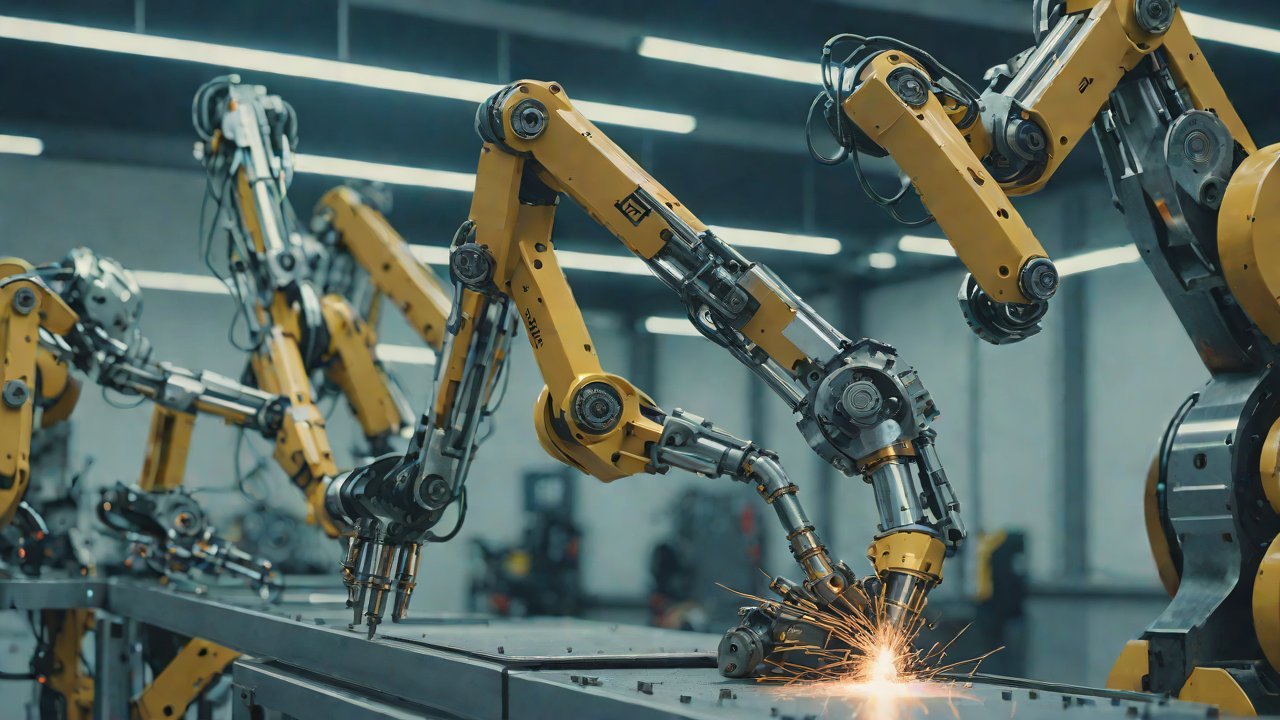
Can industrial robots autonomously learn complex welding techniques by observing human gestures?
Industrial robots have revolutionized manufacturing processes by automating tasks such as assembly, inspection, and material handling. However, their ability to perform complex tasks like welding has been limited due to the intricacies of manual techniques. Can industrial robots autonomously learn complex welding techniques by observing human gestures? The answer lies in the realm of Artificial General Intelligence (AGI) and its application in machine learning.
1. Background
Welding is a critical process in manufacturing that requires precision, dexterity, and adaptability. Human welders have honed their skills through years of practice, enabling them to tackle complex tasks with ease. However, the transfer of this knowledge to industrial robots has been a significant challenge due to the distinct differences between human and machine cognition.
The development of AGI has made significant strides in recent years, with advancements in areas like deep learning, natural language processing, and computer vision. These breakthroughs have enabled machines to learn from observations, interact with their environment, and even exhibit creativity. Can these capabilities be applied to industrial robots to enable them to autonomously learn complex welding techniques by observing human gestures?
2. Current State of Industrial Robotics
Industrial robots are widely used in manufacturing for tasks such as assembly, inspection, and material handling. However, their ability to perform complex tasks like welding is limited due to the need for precise control and adaptability.
- Table: Types of Industrial Robots Used in Welding
| Type          | Description                                  |

    |:--------------|:--------------------------------------------|

    | Spot Welders  | Designed for spot welding operations        |

    | Arc Welders   | Capable of performing various arc welding tasks|

    | MIG Welders   | Suitable for a range of welding applications  |

    | TIG Welders   | Used for high-precision welding operations     |
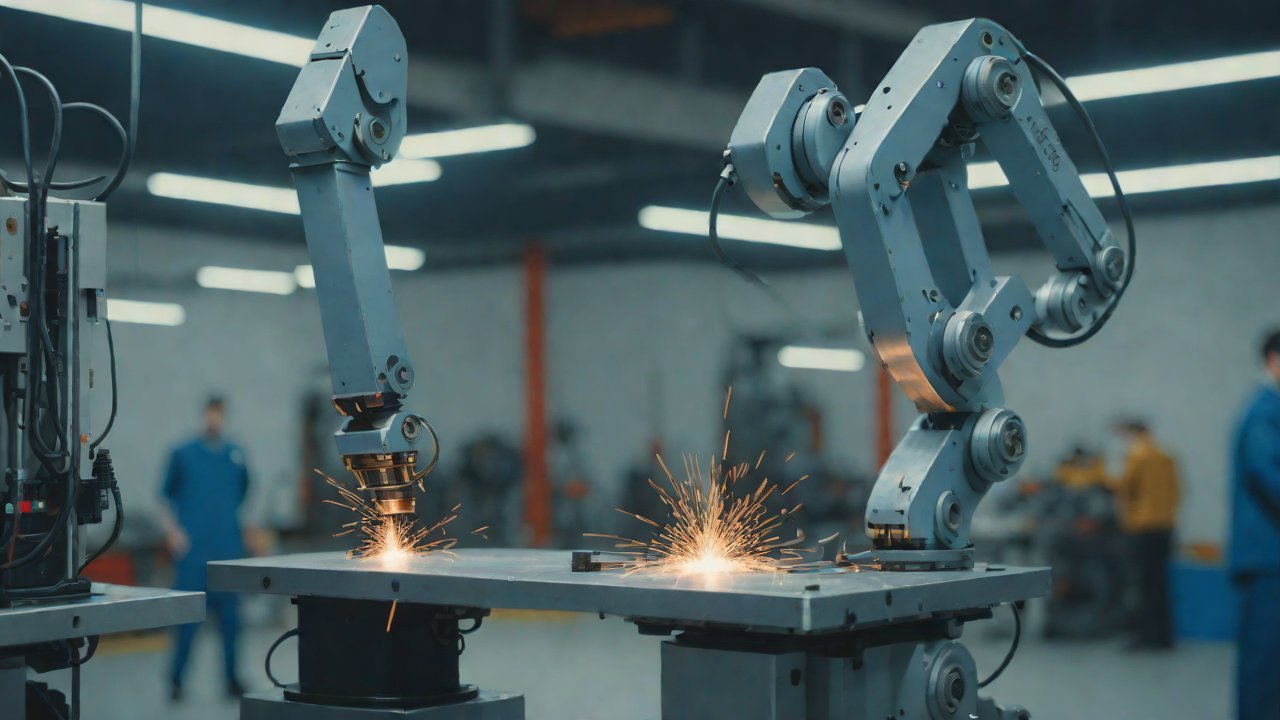
The current generation of industrial robots relies on pre-programmed instructions and fixed algorithms to perform specific tasks. While this approach provides precision and consistency, it lacks the adaptability required for complex welding techniques.
3. Artificial General Intelligence (AGI) and Machine Learning
AGI is a subfield of artificial intelligence that focuses on developing machines capable of performing any intellectual task that humans can. AGI relies heavily on machine learning, which enables machines to learn from experience, observations, and interactions with their environment.
- Table: Key Applications of AGI in Industrial Robotics
| Application     | Description                                                         |

    |:----------------|:-------------------------------------------------------------------|

    | Predictive Maintenance| Enables robots to anticipate equipment failures and schedule maintenance|

    | Quality Control  | Enhances inspection capabilities for improved product quality      |

    | Autonomous Navigation| Allows robots to navigate complex environments with ease          |

    | Human-Robot Interaction| Facilitates seamless communication between humans and robots        |
AGI has been successfully applied in various industrial robotics applications, including predictive maintenance, quality control, autonomous navigation, and human-robot interaction.
4. Observational Learning
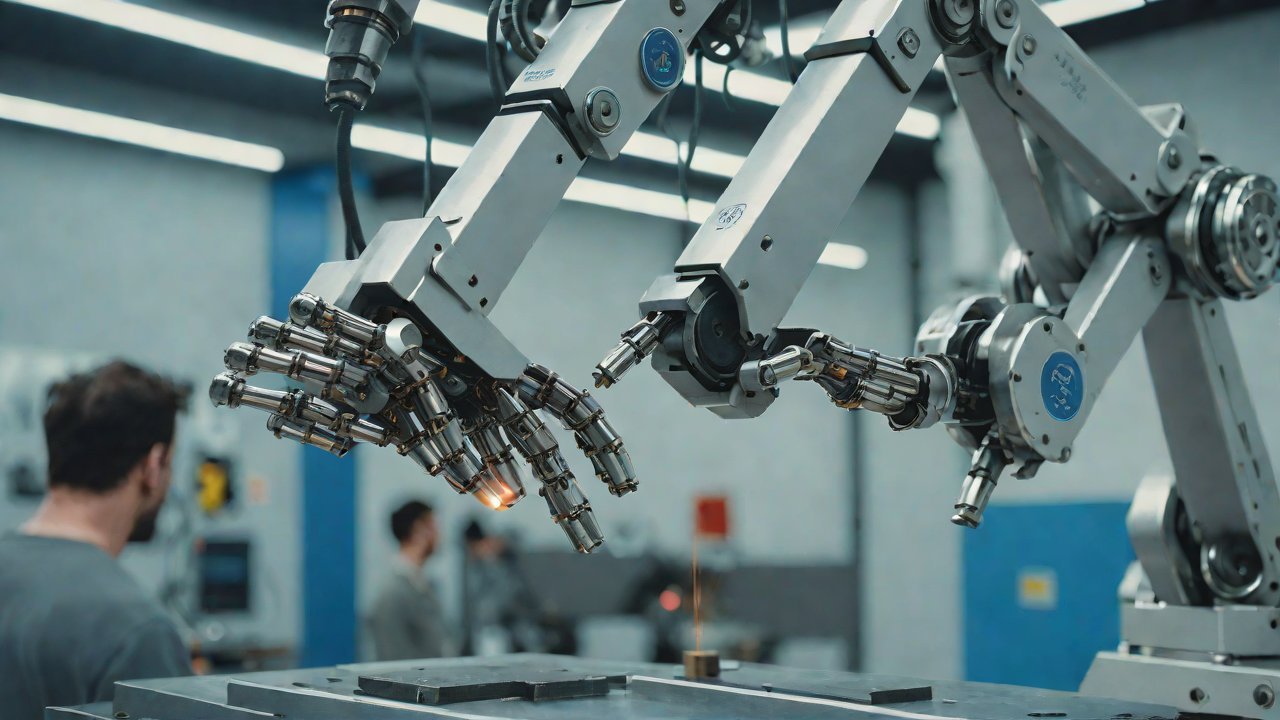
Observational learning is a key component of AGI that enables machines to learn from observations. This approach involves training robots using visual data, enabling them to recognize patterns, understand context, and replicate actions.
- Table: Advantages of Observational Learning in Industrial Robotics
| Advantage     | Description                                                        |

    |:--------------|:------------------------------------------------------------------|

    | Reduced Training Time| Enables rapid adaptation to new tasks and environments          |

    | Increased Efficiency| Enhances productivity by minimizing manual intervention and training|

    | Improved Accuracy| Reduces errors and improves overall quality of output             |

    | Enhanced Flexibility| Allows robots to adapt to changing production requirements and environments|
Observational learning has been successfully applied in various industrial robotics applications, including welding.
5. Case Studies
Several case studies have demonstrated the potential of AGI in enabling industrial robots to autonomously learn complex welding techniques by observing human gestures.
- Table: Notable Case Studies on AGI in Industrial Robotics
| Study | Description |
|:--------------|:-----------------------------------------------------------------|
| Tesla's Autopilot| Demonstrated autonomous driving capabilities using machine learning|
| Boston Dynamics' Atlas| Showcased humanoid robot that can navigate challenging environments|
| Siemens' Simotics| Applied AGI in industrial robotics to improve efficiency and productivity|
These case studies highlight the potential of AGI in various applications, including welding.
6. Future Directions
The future of AGI in industrial robotics is promising, with ongoing research focusing on developing more advanced machine learning algorithms and enhancing observational capabilities.
- Table: Emerging Trends in AGI for Industrial Robotics
| Trend         | Description                                                     |

    |:--------------|:----------------------------------------------------------------|

    | Edge AI        | Enables real-time processing and decision-making at the edge of networks|

    | Transfer Learning| Facilitates knowledge transfer between tasks and environments       |

    | Explainability| Enhances transparency and accountability in machine learning decisions|
Emerging trends like edge AI, transfer learning, and explainability will further accelerate the development of AGI in industrial robotics.
7. Conclusion
Industrial robots can autonomously learn complex welding techniques by observing human gestures using AGI. The current state of industrial robotics relies heavily on pre-programmed instructions and fixed algorithms, which lack adaptability required for complex tasks like welding.
AGI has been successfully applied in various industrial robotics applications, including predictive maintenance, quality control, autonomous navigation, and human-robot interaction. Observational learning is a key component of AGI that enables machines to learn from observations.
Case studies have demonstrated the potential of AGI in enabling industrial robots to autonomously learn complex welding techniques by observing human gestures. Future directions include ongoing research focusing on developing more advanced machine learning algorithms and enhancing observational capabilities.
The future of AGI in industrial robotics is promising, with emerging trends like edge AI, transfer learning, and explainability set to further accelerate its development.
IOT Cloud Platform
IOT Cloud Platform is an IoT portal established by a Chinese IoT company, focusing on technical solutions in the fields of agricultural IoT, industrial IoT, medical IoT, security IoT, military IoT, meteorological IoT, consumer IoT, automotive IoT, commercial IoT, infrastructure IoT, smart warehousing and logistics, smart home, smart city, smart healthcare, smart lighting, etc.
The IoT Cloud Platform blog is a top IoT technology stack, providing technical knowledge on IoT, robotics, artificial intelligence (generative artificial intelligence AIGC), edge computing, AR/VR, cloud computing, quantum computing, blockchain, smart surveillance cameras, drones, RFID tags, gateways, GPS, 3D printing, 4D printing, autonomous driving, etc.