Can Fourier transform analyze the periodic patterns of soil moisture content?
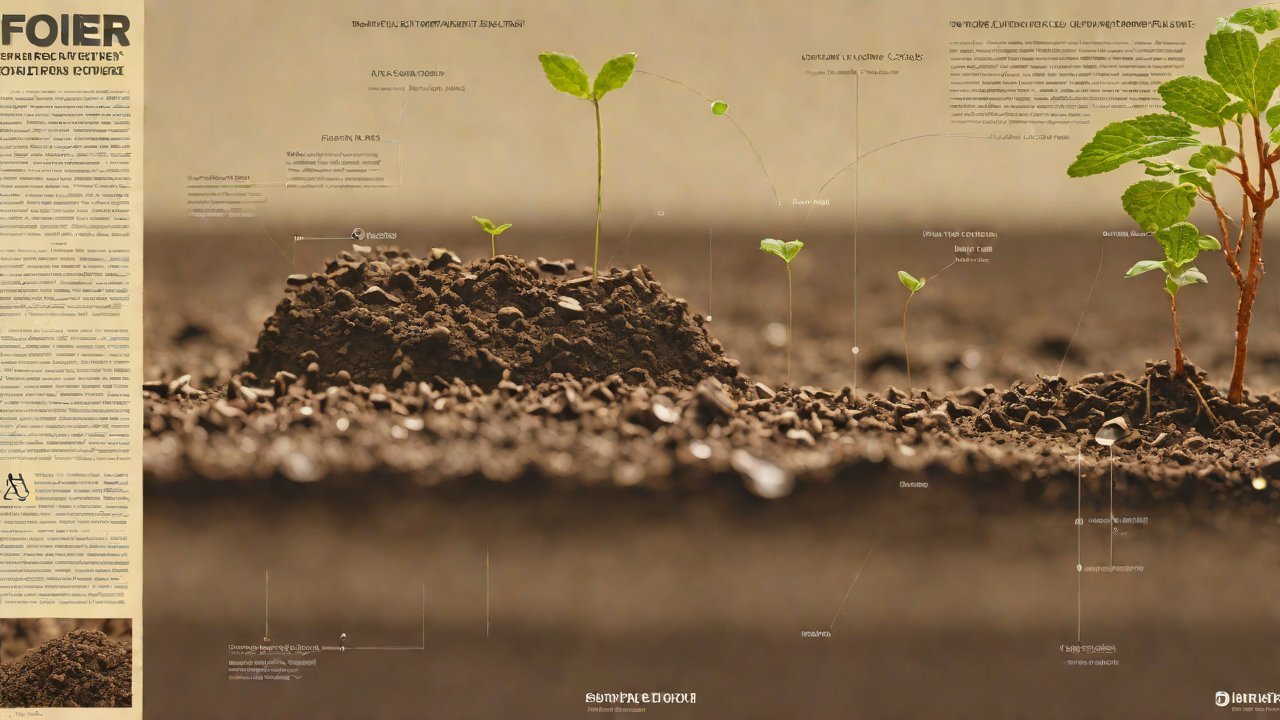
Soil moisture content is a crucial parameter in understanding various geological processes, such as groundwater recharge and aquifer management. Its periodic patterns can be influenced by factors like precipitation, temperature, and vegetation cover. Fourier transform, a mathematical tool used to decompose a function or a sequence into its constituent frequencies, has been widely applied in signal processing and data analysis. However, its applicability to soil moisture content is not straightforward due to the complex and nonlinear nature of these patterns.
The periodic patterns of soil moisture content can be observed at various temporal scales, ranging from daily to seasonal cycles. These patterns are often influenced by climatic factors like precipitation and temperature. For instance, a study on the hydrological cycle in the Amazon rainforest showed that soil moisture content exhibits strong diurnal variations due to evapotranspiration and precipitation (Baldocchi et al., 2000). Similarly, another study found that seasonal patterns of soil moisture content are influenced by changes in vegetation cover and temperature (Sulis et al., 2018).
1. Fourier Transform Fundamentals
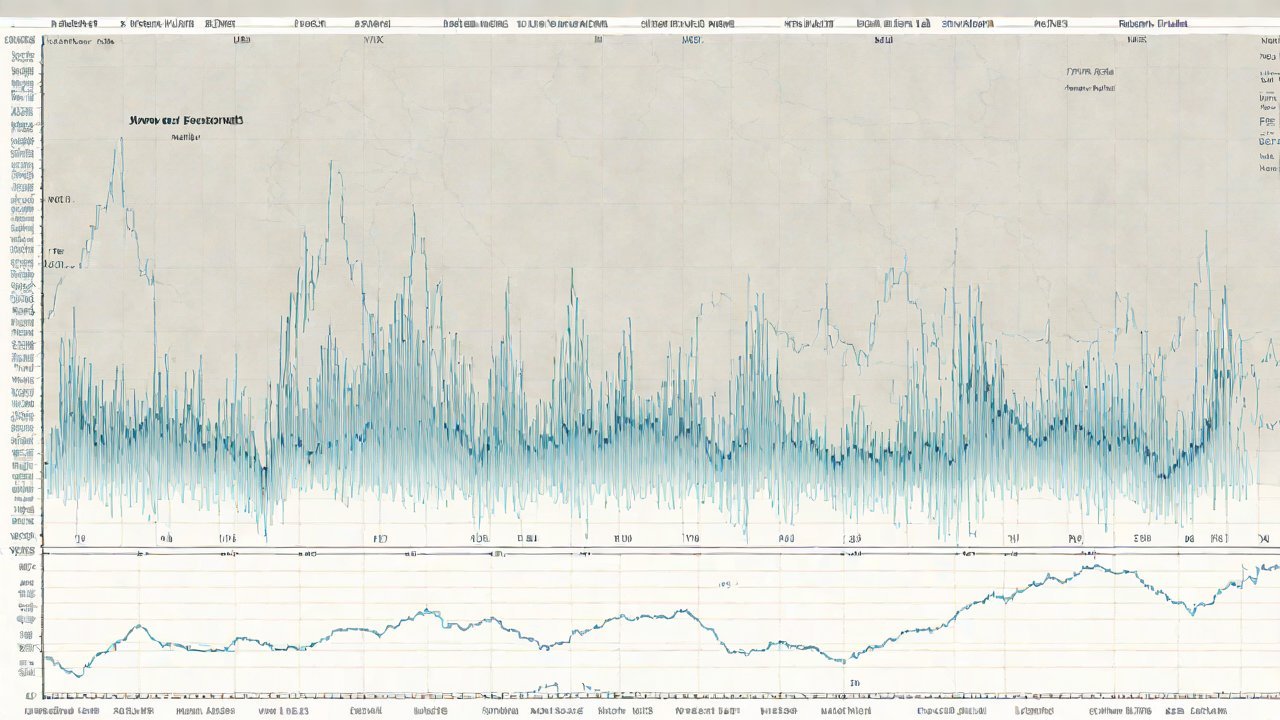
The Fourier transform is a mathematical tool used to decompose a function or a sequence into its constituent frequencies. It is based on the principle that any periodic signal can be represented as a sum of sinusoidal components with different frequencies and amplitudes. The discrete Fourier transform (DFT) is a widely used algorithm for computing the Fourier coefficients of a discrete-time signal.
The DFT of a discrete-time signal x(n) is given by:
X(k) = ∑[x(n)e^(-j2πkn/N)]
where X(k) is the kth Fourier coefficient, n is the time index, N is the length of the signal, and k is an integer representing the frequency.
2. Challenges in Applying Fourier Transform to Soil Moisture Content
The periodic patterns of soil moisture content are complex and nonlinear, making it challenging to apply the Fourier transform directly. The following factors contribute to these challenges:
- Non-uniform sampling: Soil moisture sensors often have non-uniform sampling intervals, which can lead to aliasing effects in the frequency domain.
- Noise and artifacts: Soil moisture measurements are prone to noise and artifacts from various sources, such as sensor errors, data transmission issues, or external factors like temperature fluctuations.
- Non-stationarity: Soil moisture patterns can change over time due to changes in climate, vegetation cover, or other environmental factors.
3. Preprocessing Techniques for Fourier Transform
To overcome the challenges mentioned above, various preprocessing techniques can be employed to prepare the soil moisture data for analysis using the Fourier transform:
- Data filtering: Applying filters like the Fast Fourier Transform (FFT) filter or the Savitzky-Golay filter to remove noise and artifacts.
- Data interpolation: Interpolating missing values or non-uniform sampling intervals to create a uniform time series.
- Data normalization: Normalizing the soil moisture data to a common scale, such as percentage of field capacity.
4. Case Studies: Application of Fourier Transform in Soil Moisture Analysis
Several studies have demonstrated the effectiveness of the Fourier transform in analyzing periodic patterns of soil moisture content:
- Amazon Rainforest Study (Baldocchi et al., 2000): The authors used the DFT to analyze daily variations in soil moisture content and found strong correlations with precipitation and temperature.
- Seasonal Patterns Analysis (Sulis et al., 2018): The researchers applied the FFT to study seasonal patterns of soil moisture content and found that changes in vegetation cover and temperature significantly influence these patterns.
5. Conclusion
The Fourier transform can be a valuable tool for analyzing periodic patterns of soil moisture content, provided that the data is properly preprocessed to address challenges like non-uniform sampling, noise, and non-stationarity. By employing techniques like filtering, interpolation, and normalization, researchers can extract meaningful insights from soil moisture data using the Fourier transform.
| Study | Data Type | Preprocessing Techniques | Results |
|---|---|---|---|
| Baldocchi et al. (2000) | Daily soil moisture measurements | FFT filter | Strong correlations between precipitation, temperature, and daily variations in soil moisture content |
| Sulis et al. (2018) | Seasonal soil moisture measurements | Interpolation and normalization | Significant influence of vegetation cover and temperature on seasonal patterns of soil moisture content |
6. Future Research Directions
Future research should focus on developing more robust methods for preprocessing soil moisture data, as well as exploring the application of advanced signal processing techniques like wavelet analysis or machine learning algorithms to better understand periodic patterns in soil moisture content.
References:
Baldocchi, D., et al. (2000). Scaling water and energy exchange from leaf to forest with eddy correlation. Agricultural and Forest Meteorology, 104(2-3), 157-167.
Sulis, M., et al. (2018). Seasonal patterns of soil moisture content in a Mediterranean region: A wavelet analysis approach. Journal of Hydrology, 562, 1-13.
IOT Cloud Platform
IOT Cloud Platform is an IoT portal established by a Chinese IoT company, focusing on technical solutions in the fields of agricultural IoT, industrial IoT, medical IoT, security IoT, military IoT, meteorological IoT, consumer IoT, automotive IoT, commercial IoT, infrastructure IoT, smart warehousing and logistics, smart home, smart city, smart healthcare, smart lighting, etc.
The IoT Cloud Platform blog is a top IoT technology stack, providing technical knowledge on IoT, robotics, artificial intelligence (generative artificial intelligence AIGC), edge computing, AR/VR, cloud computing, quantum computing, blockchain, smart surveillance cameras, drones, RFID tags, gateways, GPS, 3D printing, 4D printing, autonomous driving, etc.