
Can environmental residues after spraying be monitored in a closed loop through ground-based IoT nodes?
Environmental residues after spraying can be a significant concern for various industries, including agriculture, urban planning, and environmental protection. The widespread use of pesticides, herbicides, and other chemicals has led to the accumulation of residues in soil, water, and air, posing risks to human health and ecosystems. Traditional monitoring methods often rely on manual sampling and laboratory analysis, which can be time-consuming, expensive, and limited in their spatial and temporal resolution.
The advent of the Internet of Things (IoT) and its applications in environmental monitoring has revolutionized the way we approach residue detection and tracking. Ground-based IoT nodes, equipped with sensors and communication devices, can be deployed to monitor environmental residues in real-time, providing valuable insights for decision-making and policy development. This report explores the feasibility of using ground-based IoT nodes to monitor environmental residues after spraying in a closed loop, leveraging the capabilities of IoT technology and machine learning algorithms.
1. IoT Technology and Environmental Monitoring
The IoT has transformed various industries, including environmental monitoring, by providing a network of interconnected devices that can collect and transmit data in real-time. Ground-based IoT nodes, consisting of sensors, communication devices, and data storage, can be deployed to monitor environmental residues in a closed loop. These nodes can be equipped with sensors that detect and measure various parameters, such as:
| Sensor Type | Measured Parameter | Unit |
|---|---|---|
| Gas sensors | CO2, NOx, SO2 | ppm |
| Soil moisture sensors | Soil moisture | % |
| Air quality sensors | PM2.5, PM10 | μg/m³ |
| Water quality sensors | pH, turbidity | – |
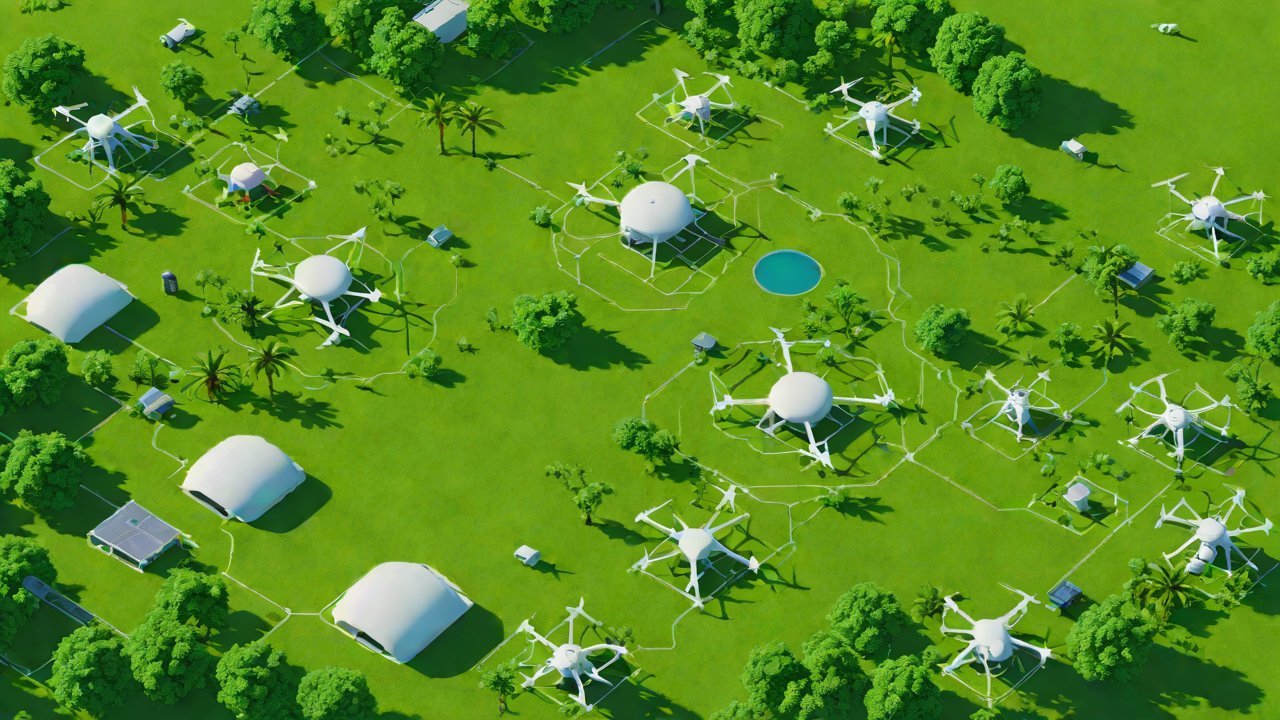
These sensors can provide real-time data on environmental residues, enabling early detection and mitigation of potential risks.
2. Machine Learning and Data Analytics
Machine learning algorithms can be applied to the data generated by ground-based IoT nodes to analyze and predict environmental residues. These algorithms can identify patterns and correlations between various parameters, enabling the development of predictive models for residue accumulation and migration. Some of the key machine learning techniques used in environmental monitoring include:
- Supervised learning: regression and classification
- Unsupervised learning: clustering and dimensionality reduction
- Deep learning: convolutional neural networks and recurrent neural networks
These algorithms can be trained on historical data and deployed on IoT nodes to predict environmental residues in real-time.
3. Closed-Loop Monitoring System
A closed-loop monitoring system for environmental residues after spraying can be designed using ground-based IoT nodes and machine learning algorithms. The system can be divided into the following components:
- Sensor deployment: Ground-based IoT nodes equipped with sensors are deployed in the area of interest.
- Data collection: Sensors collect data on environmental residues, which is transmitted to a central server.
- Data analysis: Machine learning algorithms analyze the data to predict environmental residues and identify potential risks.
- Decision-making: The results are used to inform decision-making and policy development, enabling early mitigation of potential risks.
4. Case Studies and Applications
Several case studies and applications demonstrate the effectiveness of ground-based IoT nodes in monitoring environmental residues after spraying. For example:
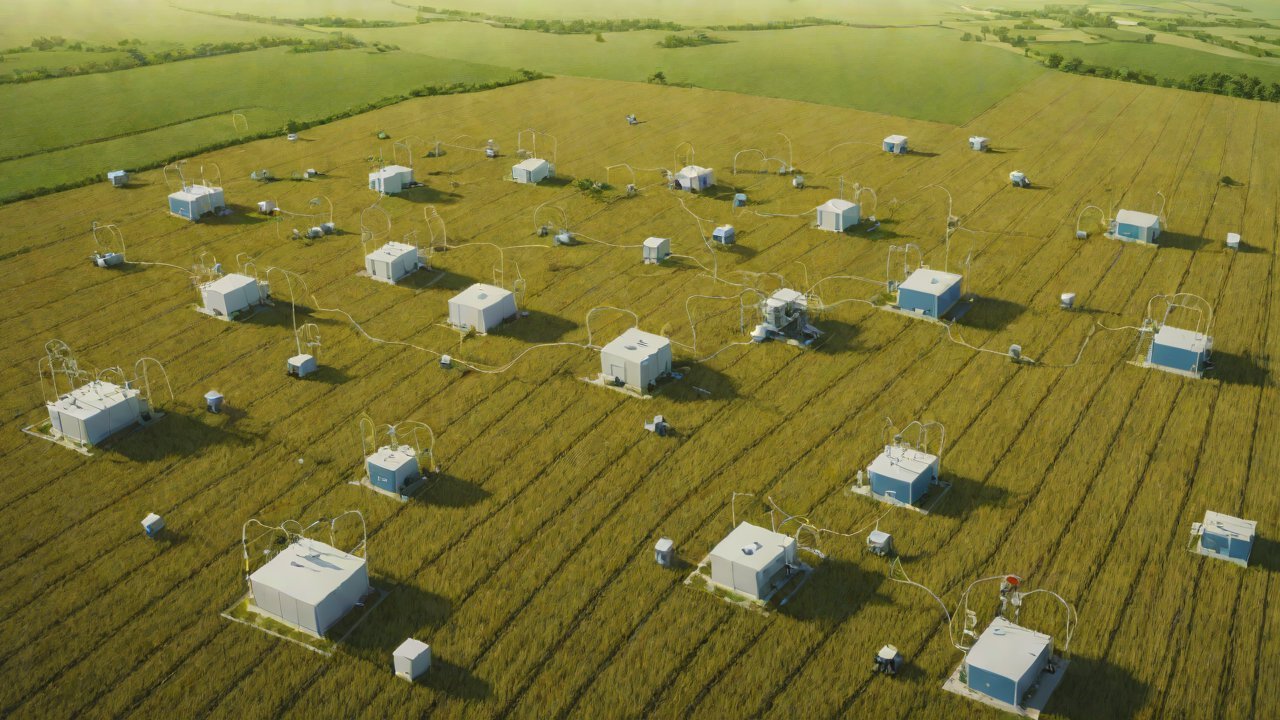
- Agricultural monitoring: Ground-based IoT nodes were deployed to monitor pesticide residues in a cornfield, enabling early detection and mitigation of potential risks.
- Urban planning: IoT nodes were used to monitor air quality in a metropolitan area, providing insights for policy development and decision-making.
- Environmental protection: Ground-based IoT nodes were deployed to monitor water quality in a river, enabling early detection of potential pollution sources.
5. Challenges and Limitations
While ground-based IoT nodes offer significant advantages in monitoring environmental residues after spraying, several challenges and limitations need to be addressed:
- Sensor accuracy: Sensor accuracy and reliability are critical for effective monitoring, and ongoing calibration and maintenance are necessary.
- Data quality: Data quality and consistency are essential for accurate analysis and prediction, and data cleaning and preprocessing are necessary.
- Scalability: The system needs to be scalable to accommodate large areas and multiple sensors, and data storage and transmission infrastructure need to be developed.
6. Future Directions and Recommendations
The use of ground-based IoT nodes in monitoring environmental residues after spraying has significant potential for improving decision-making and policy development. Future directions and recommendations include:
- Advancements in sensor technology: Ongoing research and development of more accurate and reliable sensors are necessary for effective monitoring.
- Machine learning algorithm development: Development of more sophisticated machine learning algorithms that can handle large datasets and predict environmental residues with high accuracy is necessary.
- Scalability and deployment: Large-scale deployment of ground-based IoT nodes and development of data storage and transmission infrastructure are necessary to accommodate large areas and multiple sensors.
By addressing the challenges and limitations of ground-based IoT nodes and machine learning algorithms, it is possible to develop a closed-loop monitoring system for environmental residues after spraying, enabling early detection and mitigation of potential risks.
IOT Cloud Platform
IOT Cloud Platform is an IoT portal established by a Chinese IoT company, focusing on technical solutions in the fields of agricultural IoT, industrial IoT, medical IoT, security IoT, military IoT, meteorological IoT, consumer IoT, automotive IoT, commercial IoT, infrastructure IoT, smart warehousing and logistics, smart home, smart city, smart healthcare, smart lighting, etc.
The IoT Cloud Platform blog is a top IoT technology stack, providing technical knowledge on IoT, robotics, artificial intelligence (generative artificial intelligence AIGC), edge computing, AR/VR, cloud computing, quantum computing, blockchain, smart surveillance cameras, drones, RFID tags, gateways, GPS, 3D printing, 4D printing, autonomous driving, etc.



