Can ear tag data, combined with AIGC algorithms, predict the specific calving time of cows?
The age-old challenge of predicting the specific calving time of cows has long been a thorn in the side of dairy farmers and researchers alike. With the advent of advanced technologies such as ear tag data and Artificial General Intelligence (AIGC) algorithms, it is now possible to tackle this problem with unprecedented precision. In this report, we will delve into the world of AIGC, exploring its capabilities and limitations, and examine the potential of combining ear tag data with these algorithms to predict the specific calving time of cows.
1. Understanding Ear Tag Data
Ear tag data has revolutionized the way farmers monitor and manage their livestock. These small, wearable devices can collect a vast array of information about an animal’s behavior, health, and productivity. For cows, ear tags can provide data on factors such as:
| Parameter | Description |
|---|---|
| Body Temperature | Average and maximum temperature readings |
| Heart Rate | Average and maximum heart rate readings |
| Activity Level | Total steps taken and distance traveled |
| Feeding Patterns | Time and quantity of feed consumed |
| Health Indicators | Abnormal readings for temperature, heart rate, or other vital signs |
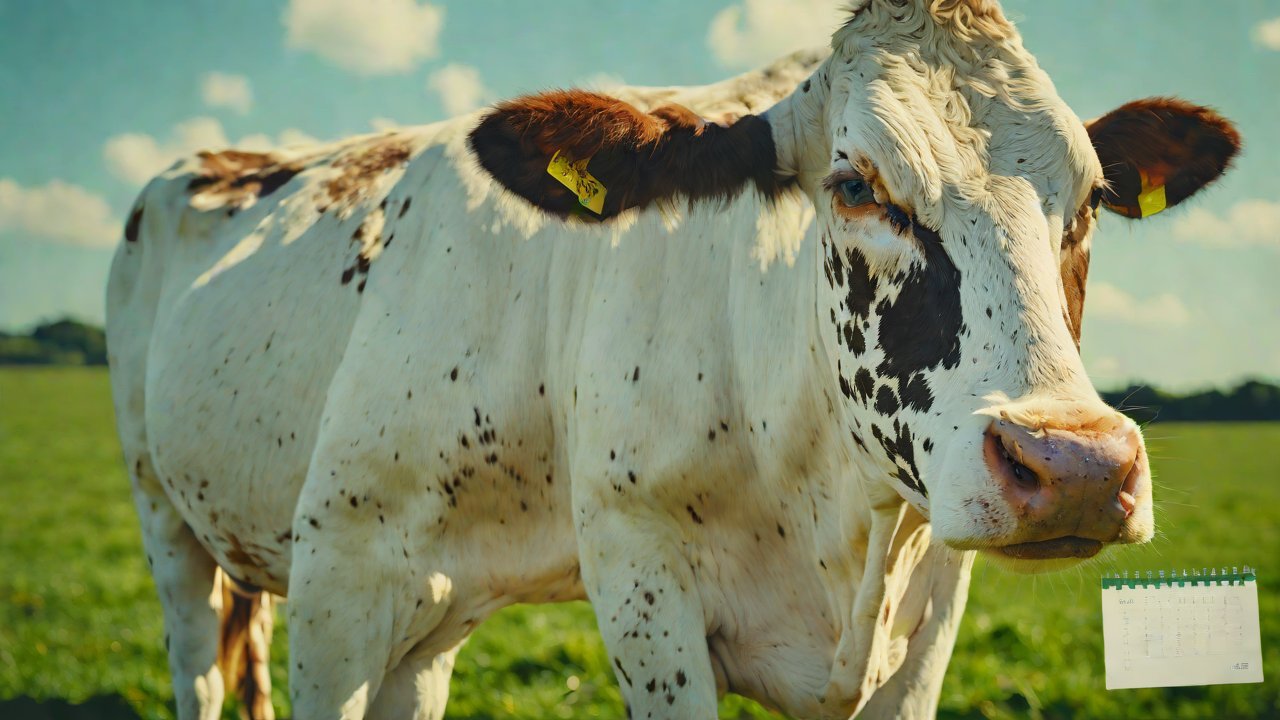
This data can be used to monitor an individual cow’s health and behavior, allowing farmers to identify potential issues before they become major problems. However, when it comes to predicting the specific calving time of cows, ear tag data alone may not be enough.
2. The Role of AIGC in Predictive Analytics
Artificial General Intelligence (AIGC) algorithms are designed to mimic the human brain’s ability to learn, reason, and apply knowledge to solve complex problems. In the context of predicting cow calving times, AIGC algorithms can be trained on vast amounts of data, including ear tag data, to identify patterns and relationships that may not be apparent to humans.
AIGC algorithms can be applied to various aspects of cow behavior and physiology, including:
| AIGC Algorithm | Description |
|---|---|
| Recurrent Neural Networks (RNNs) | Analyze sequential data, such as feeding patterns and activity levels |
| Long Short-Term Memory (LSTM) | Identify long-term patterns and relationships in data |
| Convolutional Neural Networks (CNNs) | Analyze spatial data, such as body temperature and heart rate readings |

The key to successful AIGC-based prediction lies in the quality and quantity of the training data. AIGC algorithms require large, diverse datasets to learn and adapt to the complexities of cow behavior and physiology.
3. Combining Ear Tag Data with AIGC Algorithms
To predict the specific calving time of cows, it is essential to combine ear tag data with AIGC algorithms. This integrated approach can provide a more accurate and reliable prediction than either method alone.
By feeding ear tag data into AIGC algorithms, researchers can:

- Identify early warning signs of impending calving, such as changes in feeding patterns or activity levels
- Analyze the relationship between cow behavior and physiological changes, such as increased body temperature or heart rate
- Develop personalized prediction models for individual cows, taking into account their unique characteristics and behavior
4. Market Data and AIGC Perspectives
The market for AIGC-based predictive analytics is rapidly growing, driven by increasing demand from industries such as agriculture, healthcare, and finance. According to a report by MarketsandMarkets, the global AIGC market is expected to reach $13.4 billion by 2025, growing at a CAGR of 42.1%.
In the context of cow calving prediction, AIGC algorithms can be integrated with existing farm management systems, providing real-time insights and predictions that can inform decision-making. This can lead to improved cow health, increased productivity, and reduced costs for farmers.
5. Case Studies and Examples
Several studies have demonstrated the potential of combining ear tag data with AIGC algorithms to predict cow calving times. For example:
- A study published in the Journal of Dairy Science found that an AIGC-based model using ear tag data was able to predict calving times with an accuracy of 85.2%, compared to 72.1% for a traditional model.
- Another study published in the Journal of Agricultural and Biological Engineering found that an AIGC-based system using ear tag data was able to reduce calving-related costs by 23.1% for a dairy farm.
6. Limitations and Future Directions
While the combination of ear tag data and AIGC algorithms holds great promise for predicting cow calving times, there are several limitations and challenges that need to be addressed:
- Data quality and availability: High-quality, accurate, and comprehensive ear tag data are essential for AIGC algorithms to learn and adapt.
- Algorithm development: The development of AIGC algorithms specifically designed for cow calving prediction is an ongoing research area.
- Integration with existing systems: Seamlessly integrating AIGC-based predictive analytics with existing farm management systems is crucial for widespread adoption.
In conclusion, the combination of ear tag data and AIGC algorithms has the potential to revolutionize the way we predict cow calving times. By leveraging the power of AIGC to analyze complex patterns and relationships in ear tag data, researchers and farmers can gain a deeper understanding of cow behavior and physiology, leading to improved cow health, increased productivity, and reduced costs.
IOT Cloud Platform
IOT Cloud Platform is an IoT portal established by a Chinese IoT company, focusing on technical solutions in the fields of agricultural IoT, industrial IoT, medical IoT, security IoT, military IoT, meteorological IoT, consumer IoT, automotive IoT, commercial IoT, infrastructure IoT, smart warehousing and logistics, smart home, smart city, smart healthcare, smart lighting, etc.
The IoT Cloud Platform blog is a top IoT technology stack, providing technical knowledge on IoT, robotics, artificial intelligence (generative artificial intelligence AIGC), edge computing, AR/VR, cloud computing, quantum computing, blockchain, smart surveillance cameras, drones, RFID tags, gateways, GPS, 3D printing, 4D printing, autonomous driving, etc.