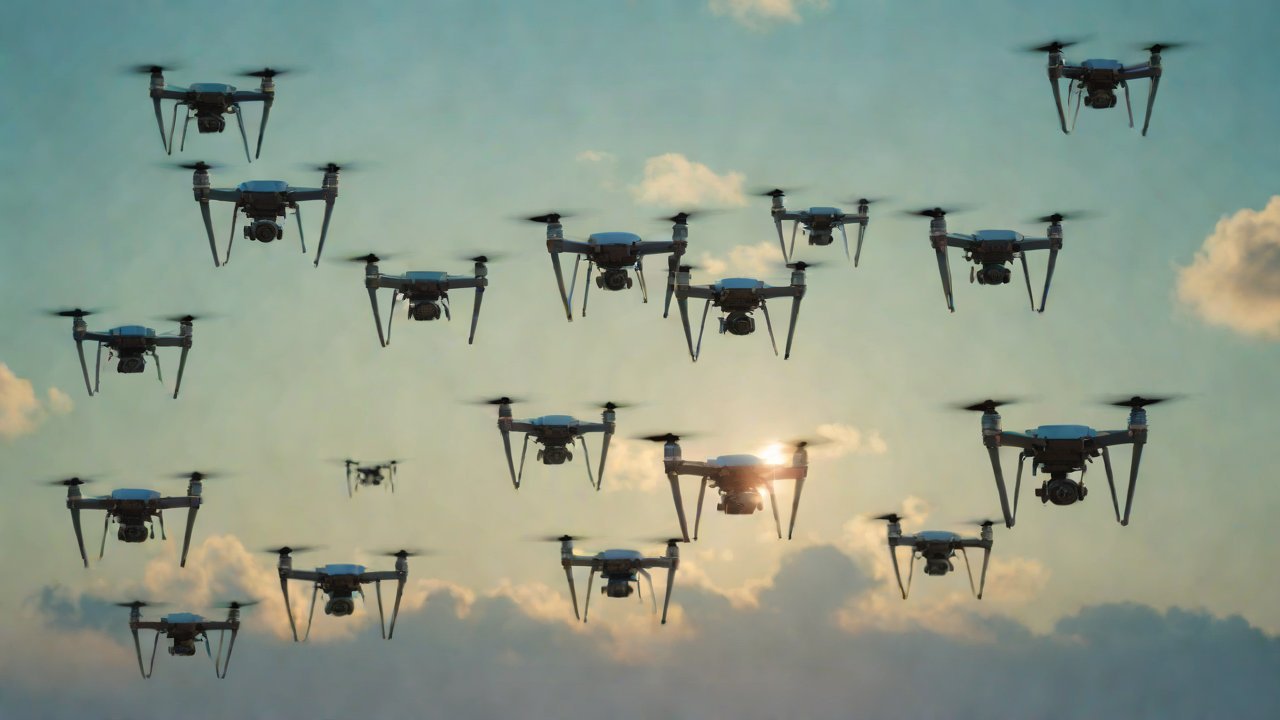
Can distributed swarm control algorithms enable hundreds of drones to operate in an orderly manner, like migratory birds?
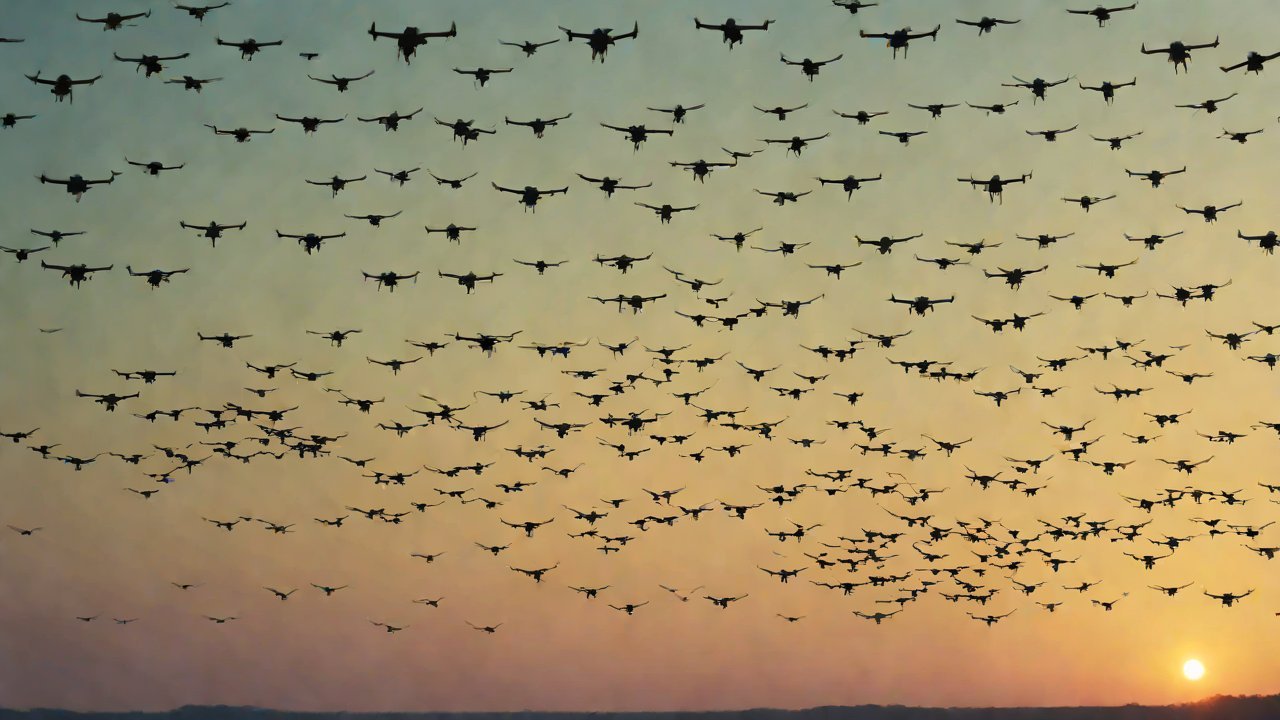
Distributed swarm control algorithms have long fascinated researchers and industry professionals alike, as they hold the promise of enabling hundreds of drones to operate in an orderly manner, much like the intricate patterns displayed by migratory birds. This phenomenon is not only a testament to the wonders of nature but also a challenge to be replicated through technological advancements. By studying the flocking behavior of birds, scientists have been able to develop algorithms that mimic their collective decision-making process, allowing drones to move in unison and adapt to changing environments.
1. Background and Motivation
The concept of distributed swarm control algorithms is rooted in the field of swarm intelligence, which explores the collective behavior of decentralized, self-organized systems. In the context of drone swarms, the primary goal is to create a system that can operate autonomously, with each drone making decisions based on its local environment and the behavior of its neighbors. This approach has numerous applications, including search and rescue operations, environmental monitoring, and surveillance.
One of the key drivers behind the development of distributed swarm control algorithms is the increasing demand for autonomous systems that can operate in complex, dynamic environments. Traditional control methods rely on a centralized authority, which can be vulnerable to single-point failures and limited by the speed of communication. In contrast, distributed swarm control algorithms enable drones to operate independently, while still maintaining a cohesive and coordinated behavior.
2. State of the Art
Current research in distributed swarm control algorithms has made significant progress in recent years, with various approaches being explored. Some of the key techniques include:
- Boid algorithms: Developed by Reynolds in the 1980s, boid algorithms are a simple yet effective method for simulating flocking behavior. Each drone follows three basic rules: separation, alignment, and cohesion.
- Flocking algorithms: Building on boid algorithms, flocking algorithms incorporate additional rules to improve the realism of the simulation. These include rules for collision avoidance and obstacle avoidance.
- Swarm optimization algorithms: Inspired by the behavior of bird flocks, swarm optimization algorithms use a collective decision-making process to optimize complex functions.
3. Challenges and Limitations
While significant progress has been made in developing distributed swarm control algorithms, several challenges and limitations remain. Some of the key issues include:
- Scalability: As the number of drones increases, the complexity of the system grows exponentially. Developing algorithms that can scale to large numbers of drones remains an open challenge.
- Robustness: Distributed swarm control algorithms are often vulnerable to faults and failures, which can have a ripple effect throughout the system.
- Communication overhead: As the number of drones increases, the communication overhead can become significant, leading to delays and decreased performance.
4. Market and Industry Trends
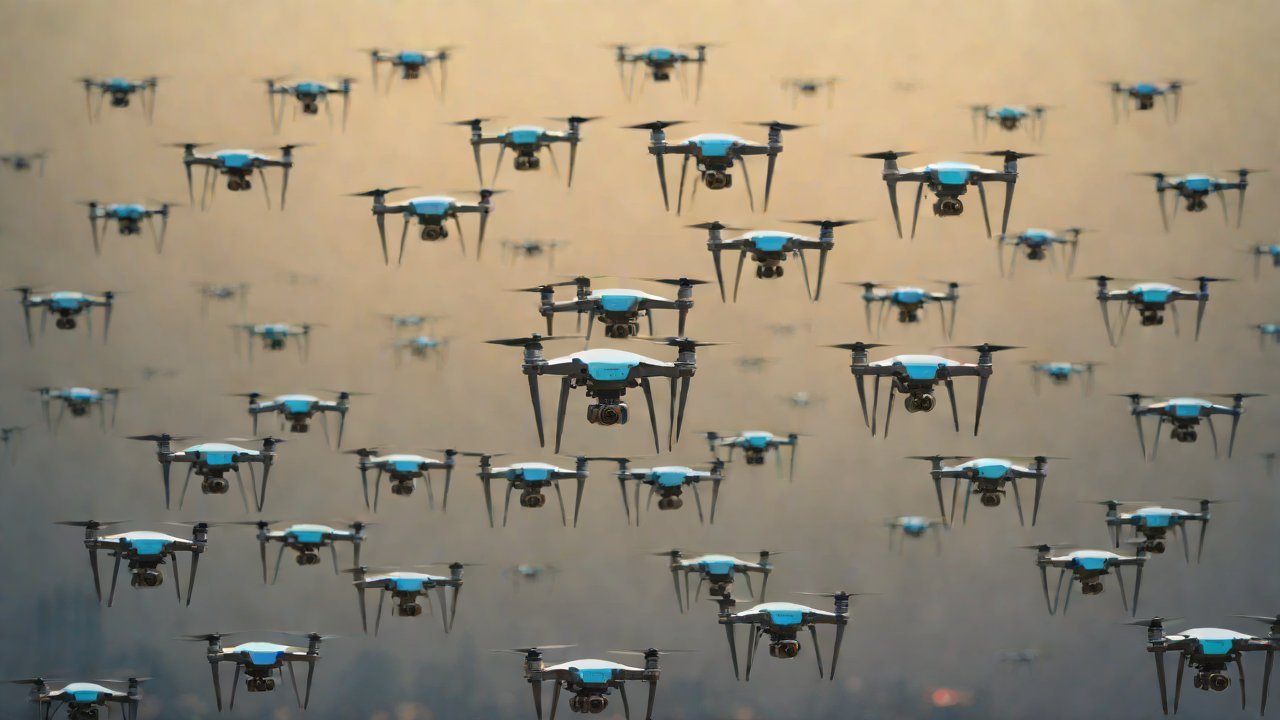
The demand for autonomous systems is on the rise, driven by various industry trends and market demands. Some of the key drivers include:
| Industry | Application | Market Size (2020) | Growth Rate (2020-2025) |
|---|---|---|---|
| Agriculture | Crop monitoring | $1.3B | 12.1% |
| Construction | Site monitoring | $1.5B | 10.5% |
| Energy | Inspection and maintenance | $2.5B | 15.6% |
5. Technical Perspectives
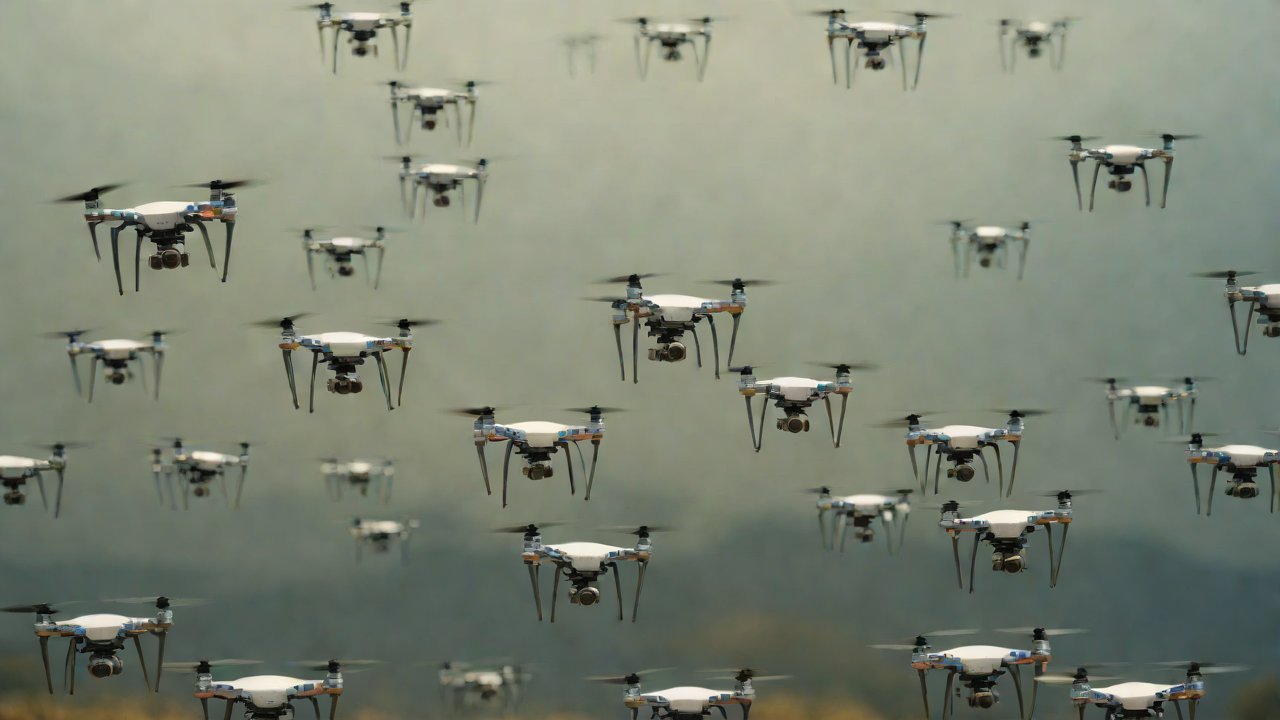
Distributed swarm control algorithms rely on various technical components, including:
- Sensor and actuator systems: Drones require sophisticated sensor and actuator systems to perceive and interact with their environment.
- Communication protocols: Effective communication protocols are essential for enabling coordination and cooperation among drones.
- Algorithmic frameworks: Distributed swarm control algorithms require robust and scalable algorithmic frameworks to manage complex behavior.
6. Future Research Directions
Several research directions offer promising avenues for advancing distributed swarm control algorithms. Some of the key areas include:
- Hybrid approaches: Combining distributed swarm control algorithms with other control methods, such as model predictive control.
- Swarm cognition: Developing algorithms that enable drones to learn and adapt to changing environments.
- Scalability and robustness: Addressing the challenges of scalability and robustness through novel algorithmic and architectural approaches.
In conclusion, distributed swarm control algorithms hold significant promise for enabling hundreds of drones to operate in an orderly manner, like migratory birds. While significant progress has been made, several challenges and limitations remain, including scalability, robustness, and communication overhead. As the demand for autonomous systems continues to grow, researchers and industry professionals must work together to advance the state of the art in distributed swarm control algorithms.
IOT Cloud Platform
IOT Cloud Platform is an IoT portal established by a Chinese IoT company, focusing on technical solutions in the fields of agricultural IoT, industrial IoT, medical IoT, security IoT, military IoT, meteorological IoT, consumer IoT, automotive IoT, commercial IoT, infrastructure IoT, smart warehousing and logistics, smart home, smart city, smart healthcare, smart lighting, etc.
The IoT Cloud Platform blog is a top IoT technology stack, providing technical knowledge on IoT, robotics, artificial intelligence (generative artificial intelligence AIGC), edge computing, AR/VR, cloud computing, quantum computing, blockchain, smart surveillance cameras, drones, RFID tags, gateways, GPS, 3D printing, 4D printing, autonomous driving, etc.