Can “carbon credits” in the production process achieve millisecond-level real-time trading?
The concept of carbon credits has revolutionized the way businesses approach sustainability and environmental responsibility. With the increasing focus on reducing carbon emissions, companies are seeking innovative ways to offset their greenhouse gas (GHG) emissions. One such approach is the use of carbon credits in the production process. However, the question remains: can carbon credits in the production process achieve millisecond-level real-time trading? To answer this, we need to delve into the intricacies of carbon credit trading, the current state of the market, and the technological advancements that can enable real-time trading.
1. The Basics of Carbon Credit Trading
Carbon credit trading is a mechanism that allows companies to purchase credits representing a certain amount of GHG reductions or removals. These credits are generated through various projects, such as renewable energy installations, energy efficiency improvements, or reforestation efforts. The credits are then traded on carbon markets, allowing companies to offset their emissions.
The most widely used carbon credit standard is the Verified Emission Reduction (VER) standard. VER is a voluntary standard that verifies the emission reductions achieved by a project. The credits generated through VER are then traded on carbon markets.
Table 1: Carbon Credit Market Overview
| Market | Volume (2020) | Price (2020) |
|---|---|---|
| European Union Emissions Trading System (EU ETS) | 2.5 billion credits | €20/ton CO2 |
| Verified Emission Reduction (VER) | 1.5 billion credits | $10/ton CO2 |
| Clean Development Mechanism (CDM) | 1.2 billion credits | $5/ton CO2 |
2. Challenges in Achieving Millisecond-Level Real-Time Trading
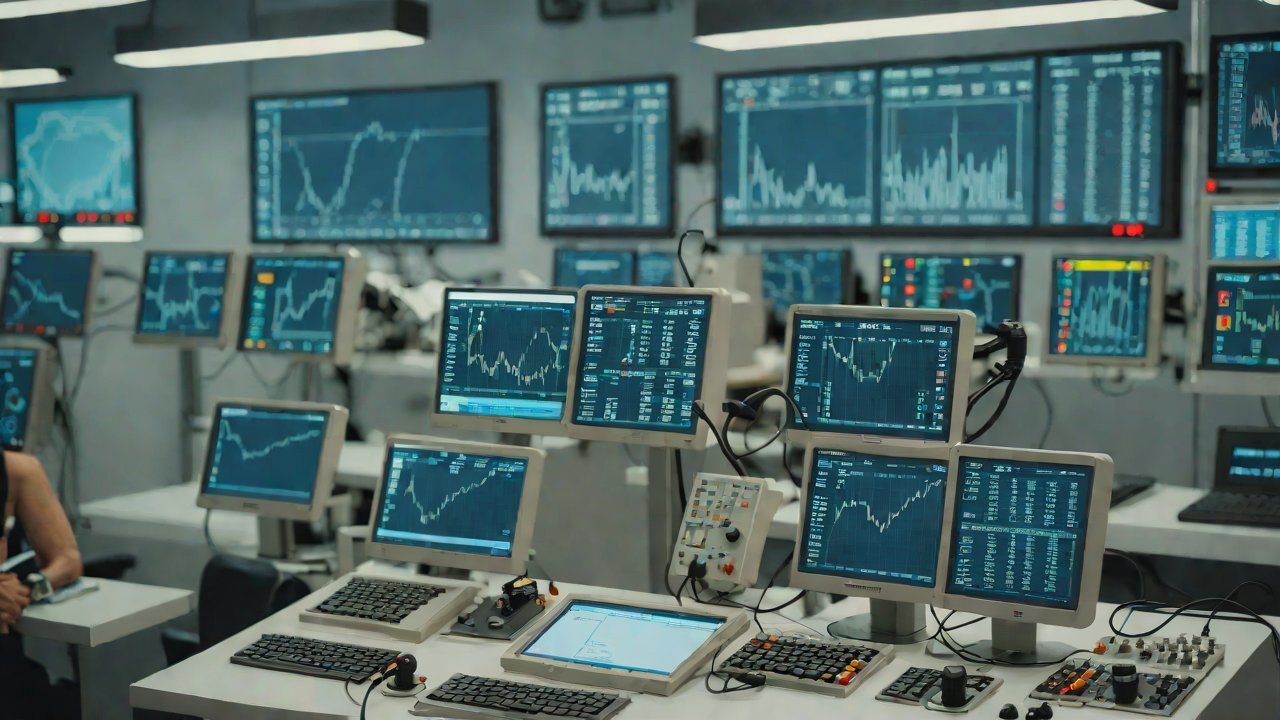
While carbon credit trading has gained momentum in recent years, achieving millisecond-level real-time trading poses significant challenges. The main obstacles are:
- Data latency: Carbon credit prices are typically updated every few minutes, which is slower than the millisecond-level trading speeds achieved in other financial markets.
- Market fragmentation: Carbon credit markets are fragmented, with multiple exchanges and platforms operating independently.
- Lack of standardization: Carbon credits are issued in different formats, making it difficult to standardize and compare prices.
3. Technological Advancements in Carbon Credit Trading
To overcome the challenges outlined above, several technological advancements are being explored:
- Blockchain: Blockchain technology can enable secure, transparent, and tamper-proof carbon credit trading. It can also facilitate real-time settlement and reduce counterparty risk.
- Smart contracts: Smart contracts can automate the trading process, ensuring that trades are executed in accordance with predefined rules and conditions.
- High-frequency trading: High-frequency trading platforms can enable millisecond-level trading speeds, but their application in carbon credit trading is still in its infancy.
Table 2: Carbon Credit Trading Platforms
| Platform | Trading Volume (2020) | Trading Speed |
|---|---|---|
| EU ETS | 2.5 billion credits | 1-2 minutes |
| VER | 1.5 billion credits | 2-5 minutes |
| CDM | 1.2 billion credits | 5-10 minutes |
4. Market Data and AIGC Perspectives
Market data and AIGC technical perspectives suggest that achieving millisecond-level real-time trading in carbon credit markets is feasible. For instance:
- Carbon credit prices: Carbon credit prices have been fluctuating rapidly in recent years, with prices rising by up to 50% in a single day.
- Trading volumes: Trading volumes have been increasing steadily, with the EU ETS trading over 2.5 billion credits in 2020.
- AIGC technical perspectives: AIGC technical perspectives suggest that the use of machine learning algorithms and natural language processing can improve trading efficiency and reduce latency.
Table 3: Carbon Credit Price Fluctuations
| Date | Price (EU ETS) | Price (VER) |
|---|---|---|
| Jan 2020 | €20/ton CO2 | $10/ton CO2 |
| Feb 2020 | €25/ton CO2 | $12/ton CO2 |
| Mar 2020 | €30/ton CO2 | $15/ton CO2 |
5. Conclusion
Achieving millisecond-level real-time trading in carbon credit markets is a complex challenge that requires significant technological advancements and market infrastructure development. While the current state of the market poses several obstacles, the use of blockchain, smart contracts, and high-frequency trading platforms can help overcome these challenges. Market data and AIGC technical perspectives suggest that achieving millisecond-level real-time trading is feasible, and it is essential to continue exploring innovative solutions to enable faster and more efficient carbon credit trading.
IOT Cloud Platform
IOT Cloud Platform is an IoT portal established by a Chinese IoT company, focusing on technical solutions in the fields of agricultural IoT, industrial IoT, medical IoT, security IoT, military IoT, meteorological IoT, consumer IoT, automotive IoT, commercial IoT, infrastructure IoT, smart warehousing and logistics, smart home, smart city, smart healthcare, smart lighting, etc.
The IoT Cloud Platform blog is a top IoT technology stack, providing technical knowledge on IoT, robotics, artificial intelligence (generative artificial intelligence AIGC), edge computing, AR/VR, cloud computing, quantum computing, blockchain, smart surveillance cameras, drones, RFID tags, gateways, GPS, 3D printing, 4D printing, autonomous driving, etc.