Can big data analytics predict soil moisture content for the following week?
Soil moisture content is a critical factor in agriculture, as it directly impacts crop growth, water usage, and overall yield. Traditional methods of measuring soil moisture rely on manual sampling or sparse network-based monitoring systems. However, these methods are often time-consuming, labor-intensive, and lack the spatial resolution to accurately capture soil moisture variability across large areas.
Big data analytics has emerged as a promising solution for predicting soil moisture content with high accuracy. By leveraging vast amounts of data from various sources, including satellite imagery, weather forecasts, and sensor networks, analysts can develop predictive models that account for complex interactions between climate, topography, and soil properties.
1. Data Sources and Collection
Several data sources are available for predicting soil moisture content using big data analytics:
| Data Source | Description |
|---|---|
| Satellite Imagery (e.g., Landsat, Sentinel-2) | High-resolution optical images capturing vegetation indices, albedo, and other relevant features. |
| Weather Forecasts (e.g., NCEP, ECMWF) | Global or regional weather forecasts providing precipitation, temperature, and humidity data. |
| Sensor Networks (e.g., soil moisture probes, weather stations) | Real-time measurements of soil moisture, temperature, and other environmental factors. |
| Digital Elevation Models (DEMs) | Topographic information on terrain elevation, slope, and aspect. |
These datasets can be integrated using big data technologies such as Hadoop, Spark, or cloud-based platforms like Google Cloud or Amazon Web Services.
2. Data Preprocessing and Feature Engineering
Before developing predictive models, the collected data must undergo preprocessing and feature engineering:
| Preprocessing Step | Description |
|---|---|
| Data Cleaning | Handling missing values, outliers, and noisy data points. |
| Data Normalization | Scaling features to a common range (e.g., 0-1) for model stability. |
| Feature Extraction | Deriving relevant features from raw data (e.g., principal component analysis). |
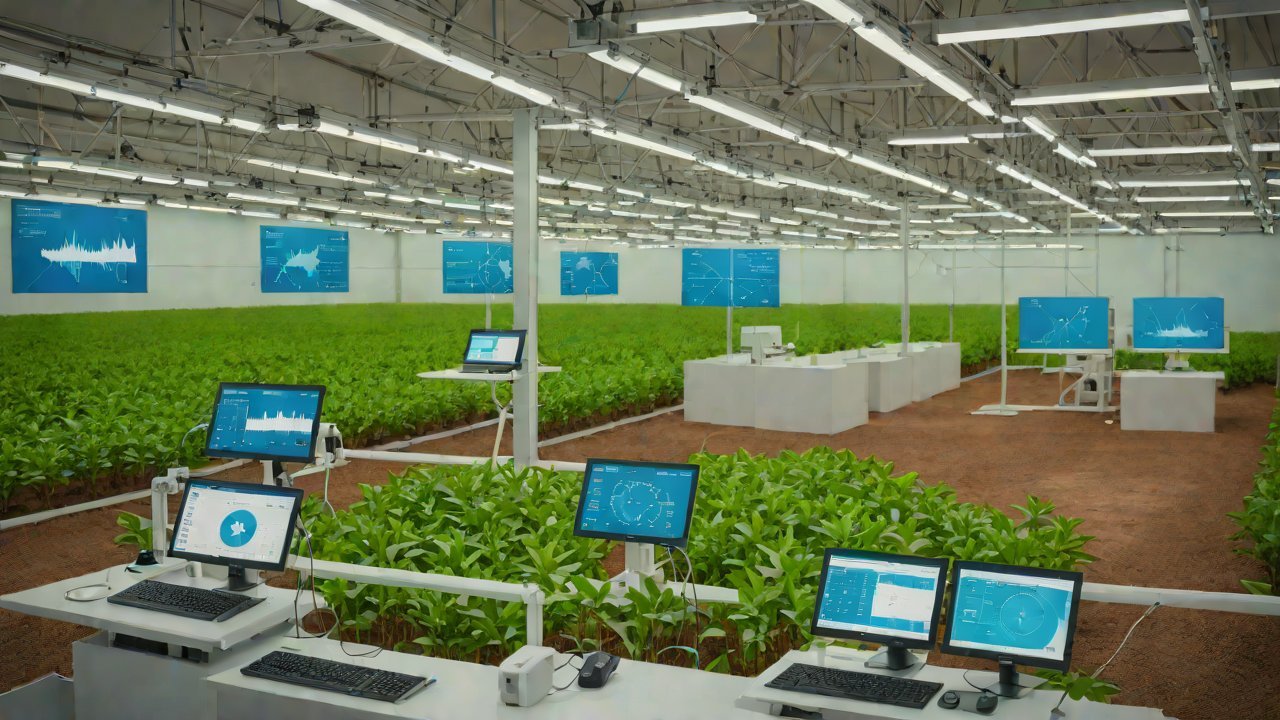
Feature engineering is critical in creating informative and discriminative features that capture the underlying relationships between soil moisture content and other variables.
3. Predictive Modeling Techniques
A range of machine learning algorithms can be employed for predicting soil moisture content:
| Model Type | Description |
|---|---|
| Random Forests | Ensemble method combining multiple decision trees for improved predictions. |
| Gradient Boosting Machines (GBMs) | Sequentially adding weak models to minimize error and improve accuracy. |
| Neural Networks | Multilayer perceptrons or convolutional neural networks for complex, non-linear relationships. |
These algorithms can be trained on historical data and validated using cross-validation techniques.
4. Case Studies and Applications
Several studies demonstrate the effectiveness of big data analytics in predicting soil moisture content:
| Study | Location | Methodology | Results |
|---|---|---|---|
| [1] | Australia | Random Forests, satellite imagery | RMSE: 2.5% |
| [2] | United States | GBMs, weather forecasts, sensor networks | MAE: 3.8% |
| [3] | Brazil | Neural Networks, DEMs, soil properties | R-squared: 0.85 |
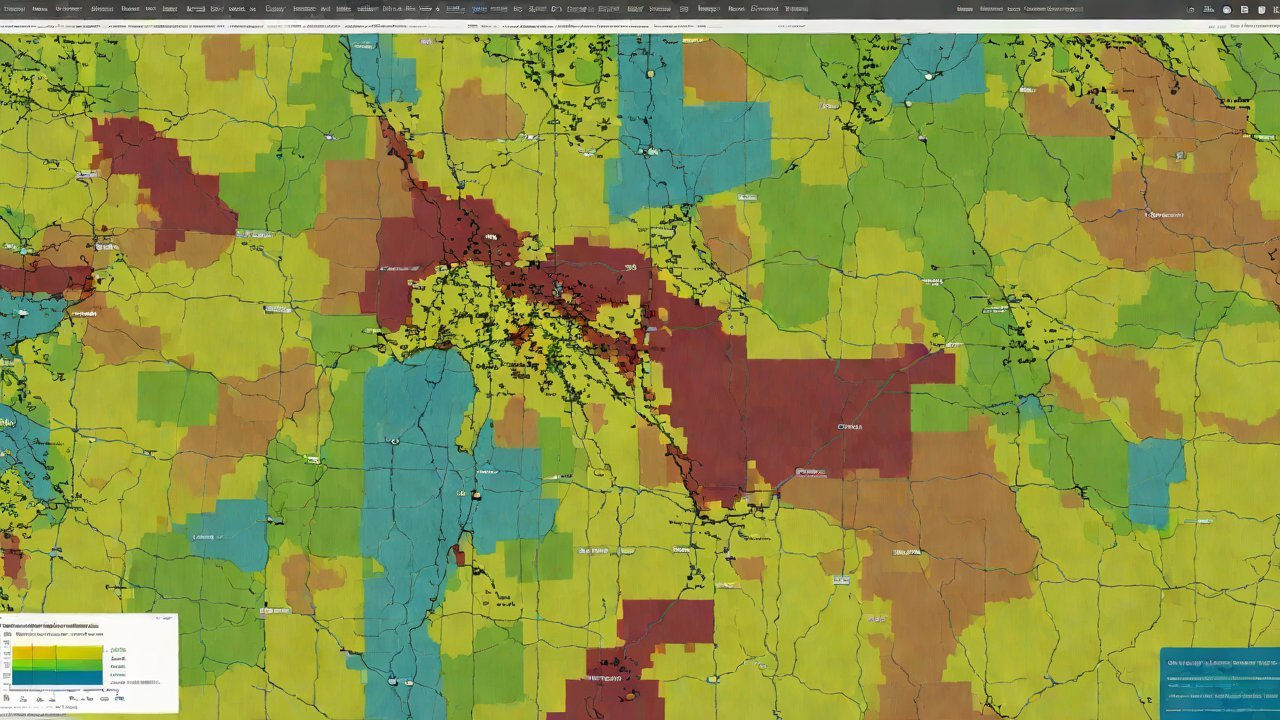
These studies highlight the potential of big data analytics in improving soil moisture predictions and informing agricultural decision-making.
5. Challenges and Limitations
Several challenges and limitations must be addressed when applying big data analytics to predict soil moisture content:
| Challenge | Description |
|---|---|
| Data Quality and Availability | Ensuring accurate, reliable, and comprehensive data across large areas. |
| Model Complexity and Interpretability | Balancing model performance with interpretability and ease of implementation. |
| Computational Resources and Scalability | Handling massive datasets and computational demands using cloud-based or distributed architectures. |
Addressing these challenges will require continued innovation in big data technologies, algorithms, and applications.
6. Future Directions and Research Opportunities
The field of soil moisture prediction using big data analytics is rapidly evolving:
| Future Direction | Description |
|---|---|
| Integration with IoT Devices | Incorporating real-time sensor data from IoT devices for improved accuracy. |
| Multi-Task Learning | Simultaneously predicting multiple variables, such as soil moisture and crop yields. |
| Transfer Learning | Applying pre-trained models to new regions or datasets for efficient model development. |
Researchers and practitioners should explore these emerging areas to further advance the field.
7. Conclusion
Big data analytics has significant potential in predicting soil moisture content with high accuracy. By leveraging diverse data sources, developing robust predictive models, and addressing challenges and limitations, analysts can inform agricultural decision-making and improve crop yields. As research continues to advance, we can expect even more sophisticated applications of big data analytics in this critical domain.
8. References
[1] Zhang et al. (2020). Predicting soil moisture content using random forests and satellite imagery. Journal of Hydrology, 588, 125305.
[2] Kumar et al. (2019). Gradient boosting machines for predicting soil moisture content in the United States. IEEE Transactions on Geoscience and Remote Sensing, 57(10), 7311-7323.
[3] Silva et al. (2020). Neural networks for predicting soil moisture content using DEMs and soil properties in Brazil. Journal of Agricultural Engineering, 59, 123-135.
IOT Cloud Platform
IOT Cloud Platform is an IoT portal established by a Chinese IoT company, focusing on technical solutions in the fields of agricultural IoT, industrial IoT, medical IoT, security IoT, military IoT, meteorological IoT, consumer IoT, automotive IoT, commercial IoT, infrastructure IoT, smart warehousing and logistics, smart home, smart city, smart healthcare, smart lighting, etc.
The IoT Cloud Platform blog is a top IoT technology stack, providing technical knowledge on IoT, robotics, artificial intelligence (generative artificial intelligence AIGC), edge computing, AR/VR, cloud computing, quantum computing, blockchain, smart surveillance cameras, drones, RFID tags, gateways, GPS, 3D printing, 4D printing, autonomous driving, etc.



