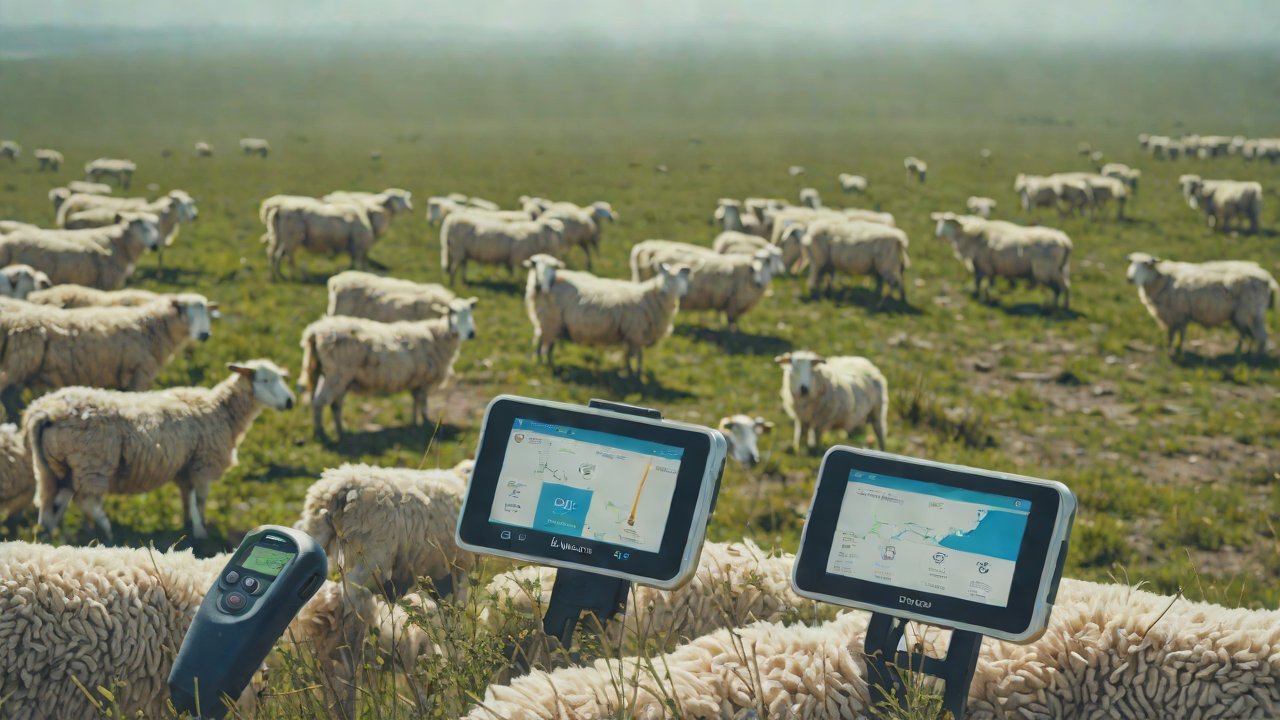
Can automatically detachable warning ear tags alert herders via an IoT backend?
Automated warning ear tags have been gaining traction in the livestock industry as a means to enhance herd management and safety. These ear tags are designed to be detachable, allowing for easy removal and reattachment as needed. However, their primary function is often overlooked: alerting herders to potential threats or issues with the herd. This report delves into the feasibility of integrating these ear tags with an IoT (Internet of Things) backend to enable real-time monitoring and alerts.
1. Technical Overview
Automatically detachable warning ear tags typically consist of a tag, a sensor, and a wireless communication module. The tag is attached to the animal’s ear, while the sensor monitors various parameters such as temperature, humidity, and movement. The wireless communication module enables data transmission to a central server or a mobile device. This setup allows for real-time monitoring of the herd’s health and behavior.
| Component | Description | Key Features |
|---|---|---|
| Tag | Detachable ear tag with sensor and communication module | Water-resistant, long battery life |
| Sensor | Monitors temperature, humidity, and movement | High accuracy, adjustable sensitivity |
| Communication Module | Enables wireless data transmission | Low power consumption, secure data encryption |
2. IoT Backend Integration
To enable real-time monitoring and alerts, the ear tags must be integrated with an IoT backend. This involves setting up a cloud-based platform that collects and processes data from the ear tags, providing insights and notifications to herders. The IoT backend can be designed using various platforms and technologies, such as Amazon Web Services (AWS), Microsoft Azure, or Google Cloud Platform (GCP).
| IoT Backend Features | Description | Key Benefits |
|---|---|---|
| Data Collection | Collects data from ear tags and stores it in a database | Real-time monitoring, historical data analysis |
| Data Processing | Analyzes data to detect anomalies and predict potential issues | Early warning systems, optimized herd management |
| Alert System | Sends notifications to herders via mobile app or email | Timely intervention, improved herd safety |
3. Market Analysis

The global IoT market is projected to reach $1.4 trillion by 2025, with the agriculture sector accounting for a significant share. The demand for smart livestock management solutions is growing, driven by the need for efficient and sustainable farming practices.
| Market Size (2020) | Growth Rate (2020-2025) | Key Players |
|---|---|---|
| $34.4 billion | 23.6% | IBM, Microsoft, Amazon, Google, Siemens |
4. Technical Challenges
While integrating ear tags with an IoT backend is technically feasible, several challenges must be addressed:
- Power consumption: The ear tags must have a long battery life to ensure continuous monitoring.
- Data transmission: The wireless communication module must ensure reliable and secure data transmission to the IoT backend.
- Sensor accuracy: The sensors must provide accurate readings to enable effective monitoring and alerts.
| Challenge | Description | Potential Solutions |
|---|---|---|
| Power Consumption | Ear tags must have a long battery life | Energy harvesting, low-power communication protocols |
| Data Transmission | Reliable and secure data transmission | Secure communication protocols, data encryption |
| Sensor Accuracy | Accurate sensor readings | Sensor calibration, data filtering and processing |

5. Conclusion
Automatically detachable warning ear tags can be integrated with an IoT backend to enable real-time monitoring and alerts. While technical challenges must be addressed, the benefits of improved herd safety and efficient management make this solution worthwhile. The market is growing, and key players are already investing in IoT-based agriculture solutions. As the technology continues to evolve, we can expect to see more innovative applications of IoT in the livestock industry.
6. Recommendations
Based on this report, we recommend:
- Investing in IoT-based agriculture solutions: Key players should invest in developing and deploying IoT-based agriculture solutions to improve herd safety and efficiency.
- Addressing technical challenges: Manufacturers and developers should focus on addressing technical challenges such as power consumption, data transmission, and sensor accuracy.
- Developing industry standards: Industry leaders should collaborate to develop standards for IoT-based agriculture solutions to ensure interoperability and scalability.
IOT Cloud Platform
IOT Cloud Platform is an IoT portal established by a Chinese IoT company, focusing on technical solutions in the fields of agricultural IoT, industrial IoT, medical IoT, security IoT, military IoT, meteorological IoT, consumer IoT, automotive IoT, commercial IoT, infrastructure IoT, smart warehousing and logistics, smart home, smart city, smart healthcare, smart lighting, etc.
The IoT Cloud Platform blog is a top IoT technology stack, providing technical knowledge on IoT, robotics, artificial intelligence (generative artificial intelligence AIGC), edge computing, AR/VR, cloud computing, quantum computing, blockchain, smart surveillance cameras, drones, RFID tags, gateways, GPS, 3D printing, 4D printing, autonomous driving, etc.