Can AR navigation on the production floor allow novices to operate five-axis machining centers directly?
The intersection of Augmented Reality (AR) and manufacturing has been gaining significant attention in recent years, driven by the potential for increased productivity, reduced training times, and improved overall efficiency on the production floor. One area where AR is being explored with great interest is in the operation of complex machinery, such as five-axis machining centers.
These machines are capable of performing multiple tasks simultaneously, including milling, drilling, and turning, but their operation requires a high level of expertise due to the complexity of their programming and setup. Novices often struggle to operate these machines safely and effectively, resulting in reduced productivity and increased costs for manufacturers.
AR navigation on the production floor has the potential to bridge this knowledge gap by providing novices with real-time guidance and feedback as they interact with the machinery. By leveraging AR technology, manufacturers can create immersive, interactive experiences that simulate complex operations and provide hands-on practice without the risk of damaging equipment or compromising safety.
One key aspect of AR navigation in this context is its ability to provide intuitive interfaces for machine operation. Traditional interfaces often rely on cryptic programming languages and complex menu systems, which can be daunting for those new to machining centers. In contrast, AR-powered interfaces can use visual cues, gestures, and voice commands to guide operators through the setup and operation of these machines.
For example, an AR interface might display a 3D model of the machine’s work envelope, highlighting areas where cutting tools are positioned and providing real-time feedback on tool clearance and collision risks. Alternatively, it could superimpose virtual controls onto the physical equipment, allowing operators to interact with the machine as if it were a virtual simulation.
1. Current State of Five-Axis Machining Centers
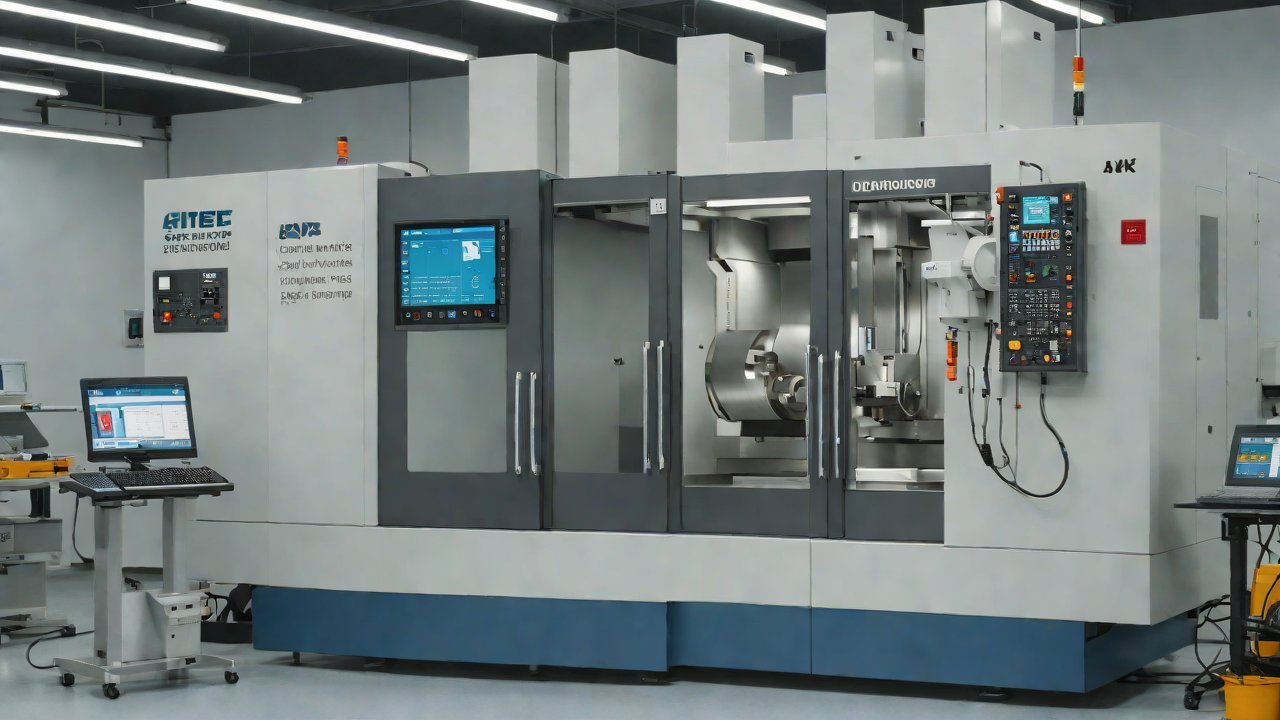
Five-axis machining centers are widely used in industries such as aerospace, automotive, and medical device manufacturing due to their ability to perform complex tasks with high precision and speed. However, these machines also come with significant challenges for operators, including:
- Steep learning curve: Mastering the operation of a five-axis machine requires extensive training and experience.
- Safety risks: Operating these machines can be hazardous if not done correctly, posing risks to both equipment and personnel.
- Productivity limitations: Novices often struggle to optimize machining parameters, leading to reduced productivity and increased costs.
To address these challenges, manufacturers have begun exploring the use of AR navigation on the production floor. By providing novice operators with real-time guidance and feedback, AR technology can help reduce training times, improve safety, and increase overall efficiency.
2. Benefits of AR Navigation
The benefits of using AR navigation on five-axis machining centers are numerous:
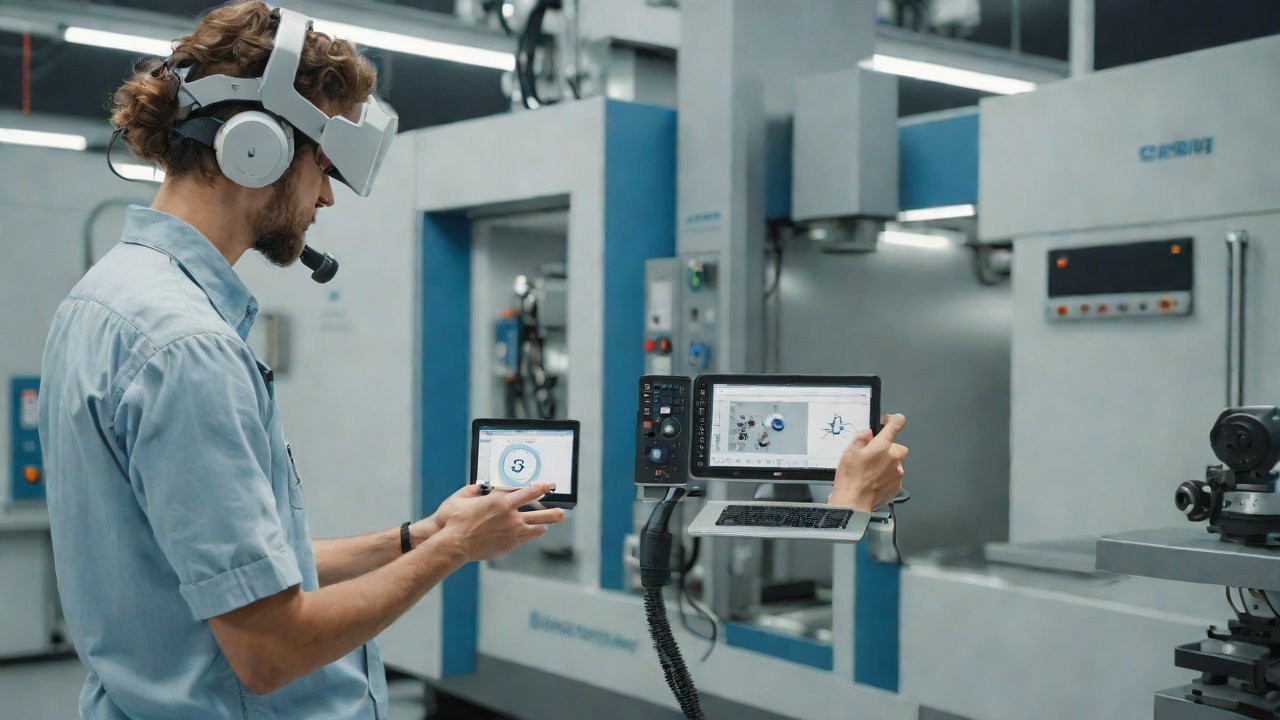
- Improved operator experience: AR interfaces provide intuitive interactions that simplify machine operation, reducing the risk of errors and improving overall satisfaction.
- Enhanced training capabilities: By simulating complex operations in a virtual environment, novice operators can gain hands-on practice without risking equipment damage or safety hazards.
- Increased productivity: With real-time guidance and feedback, operators can optimize machining parameters, leading to improved efficiency and reduced costs.
3. Technical Requirements
Implementing AR navigation on the production floor requires careful consideration of several technical factors:
Hardware Requirements
- Computational power: High-performance computing hardware is necessary for processing complex AR data in real-time.
- Display technology: High-resolution displays with low latency are required to provide smooth, immersive experiences.
- Sensor integration: Integration with machine sensors and control systems allows for seamless interaction between the AR interface and physical equipment.
Software Requirements
- AR development frameworks: Specialized software frameworks are necessary for creating AR applications that interact with machine data and hardware.
- Machine control interfaces: APIs or proprietary interfaces allow AR applications to communicate with machine control systems, enabling real-time feedback and guidance.
- Data analytics tools: Integration with data analytics platforms enables manufacturers to collect insights on operator performance, equipment efficiency, and process optimization.
4. Implementation Strategies
Several strategies can be employed when implementing AR navigation on the production floor:
Pilot Programs
- Small-scale trials: Test AR-powered interfaces in controlled environments before scaling up implementation.
- Operator feedback: Gather input from novice operators to refine AR interface design and improve user experience.
Training and Support
- Comprehensive training programs: Develop structured training sessions for operators, focusing on AR navigation principles and machine operation best practices.
- Ongoing support: Provide maintenance and upgrade services to ensure the continued effectiveness of AR-powered interfaces.
5. Market Trends and Outlook
The market for AR navigation in manufacturing is rapidly expanding:
Key Players
- AR software providers: Companies like PTC, Dassault Systèmes, and Siemens offer specialized AR development frameworks and machine control interfaces.
- Machine manufacturers: Leading machining center suppliers, such as Makino and Mazak, are integrating AR technology into their products.
Market Growth Projections
- Increasing adoption rates: As more manufacturers adopt AR navigation on the production floor, market growth is expected to accelerate.
- Improved efficiency and productivity: The benefits of AR-powered interfaces will drive demand for these solutions across various industries.
6. Conclusion
The integration of AR navigation on the production floor has the potential to revolutionize the operation of five-axis machining centers. By providing novice operators with real-time guidance and feedback, manufacturers can reduce training times, improve safety, and increase overall efficiency. As the market continues to grow, it is essential for manufacturers to stay informed about the latest trends, technologies, and best practices in AR navigation.
IOT Cloud Platform
IOT Cloud Platform is an IoT portal established by a Chinese IoT company, focusing on technical solutions in the fields of agricultural IoT, industrial IoT, medical IoT, security IoT, military IoT, meteorological IoT, consumer IoT, automotive IoT, commercial IoT, infrastructure IoT, smart warehousing and logistics, smart home, smart city, smart healthcare, smart lighting, etc.
The IoT Cloud Platform blog is a top IoT technology stack, providing technical knowledge on IoT, robotics, artificial intelligence (generative artificial intelligence AIGC), edge computing, AR/VR, cloud computing, quantum computing, blockchain, smart surveillance cameras, drones, RFID tags, gateways, GPS, 3D printing, 4D printing, autonomous driving, etc.