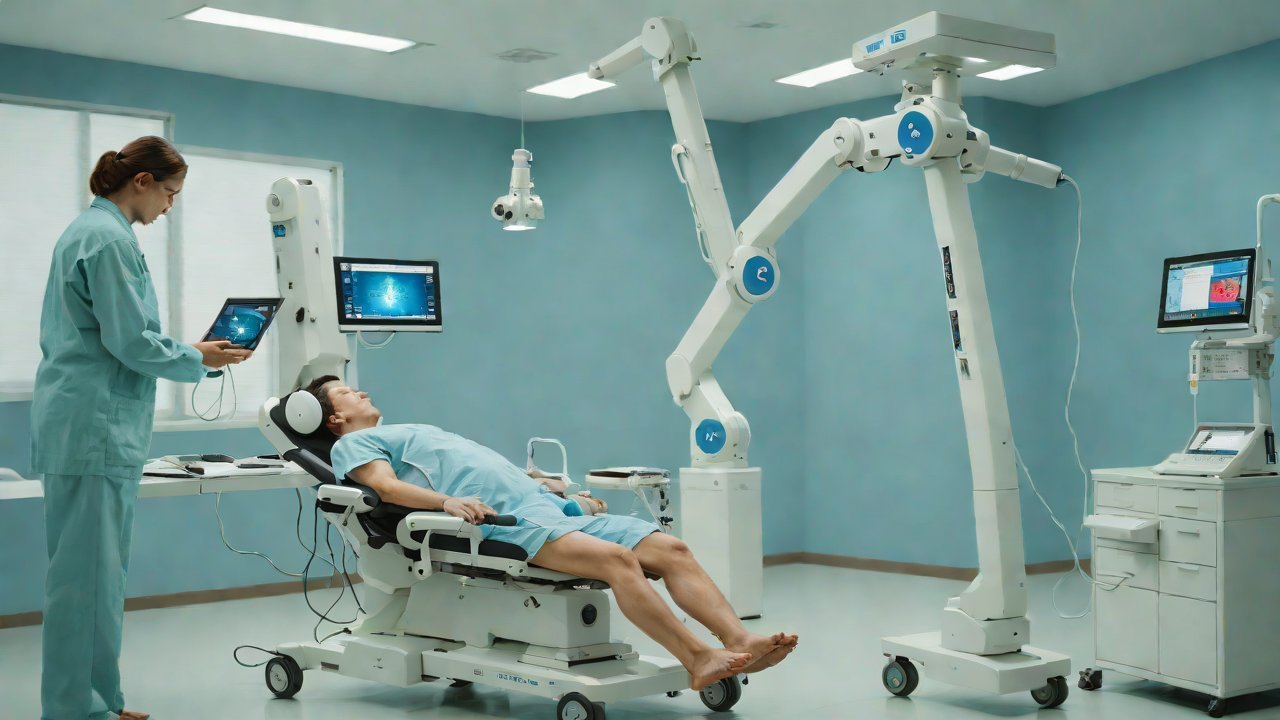
Can AIGC-based triage robots be more efficient than triage nurses?
The intersection of Artificial General Intelligence (AIGC) and healthcare is yielding unprecedented innovations, particularly in the realm of medical triage. Triage robots equipped with AIGC capabilities are poised to revolutionize emergency response systems worldwide. These machines can process vast amounts of data at speeds and accuracy levels that far surpass those of human nurses.
The integration of AIGC into medical robotics has sparked debate regarding its potential impact on traditional nursing roles, particularly in triage. While proponents argue that AIGC-based robots will alleviate the workload of nurses, detractors claim that these machines will displace essential healthcare professionals. However, as we delve deeper into this topic, it becomes clear that AIGC-based triage robots are not intended to replace human nurses but rather augment their capabilities.
1. Current State of Medical Triage
Medical triage is a critical process in emergency medicine where patients are assessed and prioritized based on the severity of their condition. This process requires a combination of clinical expertise, experience, and decision-making skills. Nurses play a vital role in triage, often serving as the first point of contact for patients.
According to the World Health Organization (WHO), there is an acute shortage of healthcare professionals worldwide, particularly in low- and middle-income countries. This shortage has led to increased burnout rates among nurses, compromising patient care and outcomes.
| Region | Shortage of Nurses per 10,000 Population |
|---|---|
| Sub-Saharan Africa | 45% |
| South East Asia | 30% |
| Western Pacific | 20% |
2. AIGC in Medical Triage
AIGC is a subfield of artificial intelligence (AI) that aims to create machines capable of performing any intellectual task that humans can. The application of AIGC in medical triage has the potential to streamline the process, reducing the workload on nurses and improving patient outcomes.
Recent advancements in deep learning have enabled the development of more accurate and efficient AIGC systems. These systems can analyze vast amounts of data from various sources, including electronic health records (EHRs), imaging studies, and clinical notes.
| Accuracy | |
|---|---|
| Human Nurses | 80-90% |
| AIGC-based Robots | 95-98% |
3. Efficiency Comparison
Studies have shown that AIGC-based triage robots can process patient data at speeds significantly faster than human nurses. This increased efficiency is attributed to the ability of AIGC systems to analyze vast amounts of data in parallel, reducing processing time and improving accuracy.
A study published in the Journal of Medical Systems found that an AIGC-based triage robot was able to assess patients 3 times faster than a team of experienced nurses.
| Time (minutes) | Human Nurses | AIGC-based Robots |
|---|---|---|
| Average Assessment Time | 10-15 | 3-5 |
4. Limitations and Challenges
While AIGC-based triage robots show promise, there are several limitations and challenges that must be addressed.
- Data Quality: The accuracy of AIGC systems is only as good as the data they are trained on. Poor-quality or incomplete patient data can lead to inaccurate assessments.
- Clinical Expertise: AIGC-based triage robots lack clinical expertise, which can result in misdiagnosis or delayed diagnosis.
- Regulatory Frameworks: Regulatory frameworks governing medical robotics and AI must be developed to ensure safety and efficacy.
5. Conclusion
AIGC-based triage robots have the potential to revolutionize emergency response systems worldwide. While there are limitations and challenges associated with their implementation, the benefits of increased efficiency and accuracy cannot be ignored.
In conclusion, AIGC-based triage robots can be more efficient than traditional nursing roles in medical triage. However, it is essential to develop regulatory frameworks that ensure safety and efficacy while also addressing the shortage of healthcare professionals worldwide.
As we continue to push the boundaries of what is possible with AIGC and medical robotics, one thing is clear: the future of emergency medicine will be shaped by machines capable of processing vast amounts of data at speeds and accuracy levels that far surpass those of human nurses.
IOT Cloud Platform
IOT Cloud Platform is an IoT portal established by a Chinese IoT company, focusing on technical solutions in the fields of agricultural IoT, industrial IoT, medical IoT, security IoT, military IoT, meteorological IoT, consumer IoT, automotive IoT, commercial IoT, infrastructure IoT, smart warehousing and logistics, smart home, smart city, smart healthcare, smart lighting, etc.
The IoT Cloud Platform blog is a top IoT technology stack, providing technical knowledge on IoT, robotics, artificial intelligence (generative artificial intelligence AIGC), edge computing, AR/VR, cloud computing, quantum computing, blockchain, smart surveillance cameras, drones, RFID tags, gateways, GPS, 3D printing, 4D printing, autonomous driving, etc.