Can a biomimetic fish scale structure allow sensors to move more naturally through the soil?
The intricate patterns on a fish’s scales have long fascinated scientists and engineers, who seek to replicate their unique properties in human-made materials. One such property is the ability of fish scales to reduce drag and enhance movement through water with minimal energy expenditure. Biomimetic researchers have been exploring ways to apply this knowledge to create more efficient sensors that can navigate complex environments like soil.
In traditional sensor design, mechanical components often rely on rigid structures that hinder their ability to move smoothly through dense or irregular terrain. The adoption of biomimetic fish scale-inspired structures could potentially alleviate these limitations by allowing sensors to move more naturally and efficiently through the soil.
1. Biomimicry in Sensor Design
Biomimicry, the practice of emulating nature’s designs and processes to solve human problems, has been instrumental in driving innovation across various fields. In sensor design, biomimicry can help create devices that mimic the adaptability and resilience of natural systems. By studying the structure and properties of fish scales, researchers have identified key features that could be applied to enhance sensor mobility.
Table 1: Key Features of Fish Scales
| Feature | Description |
|---|---|
| Undulation | Wavy pattern on scale surface |
| Micro-roughness | Small-scale irregularities on scale surface |
| Flexibility | Ability of scales to bend and flex |
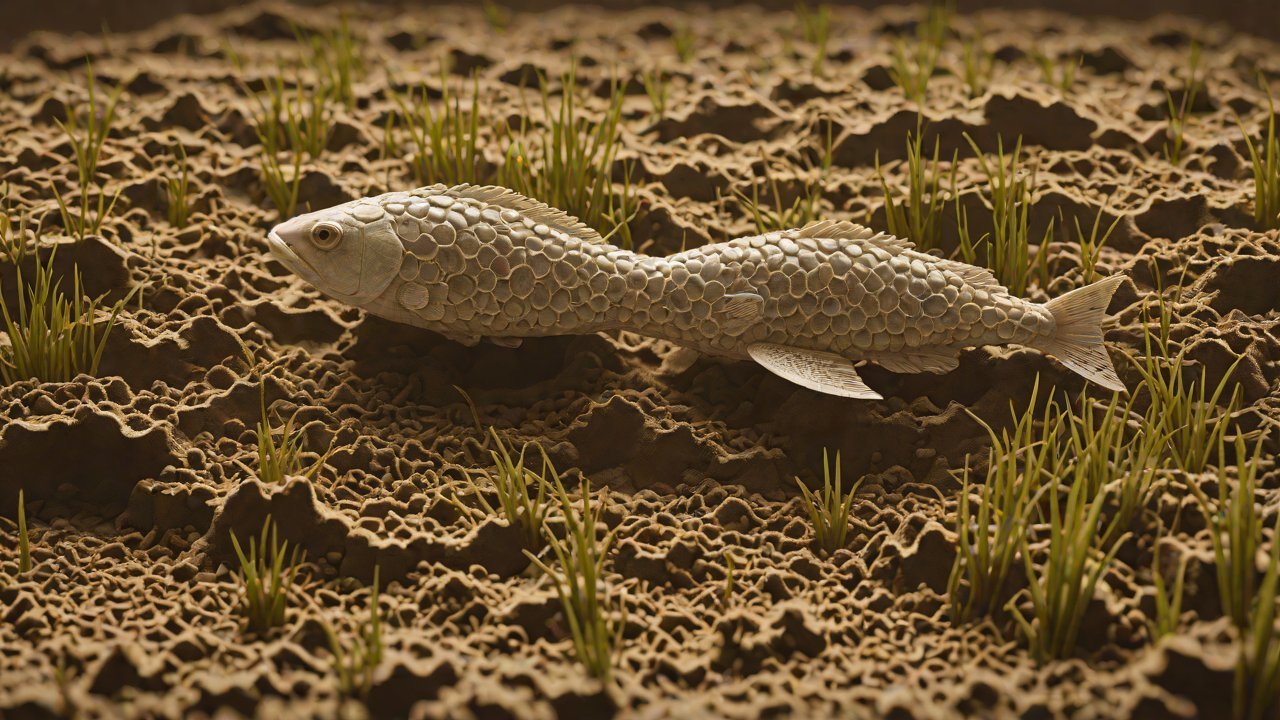
These features contribute to the remarkable mobility of fish in water, allowing them to change direction quickly and maintain speed. Biomimetic researchers aim to replicate these properties in sensor design by developing materials that can mimic the undulation, micro-roughness, and flexibility of fish scales.
2. Challenges in Sensor Mobility
Traditional sensors often rely on rigid structures that hinder their ability to move through dense or irregular terrain. This is particularly true for applications like environmental monitoring, where sensors need to navigate complex soil profiles to collect accurate data.
Table 2: Limitations of Traditional Sensors
| Challenge | Description |
|---|---|
| Clogging | Sensors can become clogged with debris, reducing accuracy |
| Damage | Rigid structures can be damaged by rough terrain or obstacles |
| Energy consumption | Traditional sensors often require significant energy to move through soil |
To overcome these limitations, biomimetic fish scale-inspired structures could provide a more efficient and adaptive solution for sensor mobility.
3. Biomimetic Fish Scale-Inspired Materials
Researchers have developed various materials that mimic the properties of fish scales, including:
- Polymer-based composites: These materials can replicate the undulation and micro-roughness of fish scales, reducing friction and improving sensor movement.
- Nanostructured surfaces: These surfaces can mimic the flexibility and adaptability of fish scales, allowing sensors to change direction quickly and maintain speed.
Table 3: Biomimetic Materials for Sensor Design
| Material | Description |
|---|---|
| Polyurethane-based composite | Replicates undulation and micro-roughness of fish scales |
| Nanocrystalline surface | Mimics flexibility and adaptability of fish scales |
These biomimetic materials have shown promise in improving sensor mobility, but further research is needed to fully understand their potential applications.
4. Market and AIGC Perspectives
The market for sensors and monitoring systems is growing rapidly, driven by increasing demand for environmental monitoring and IoT applications. Biomimetic fish scale-inspired structures could provide a competitive advantage for companies looking to develop more efficient and adaptive sensor solutions.
Table 4: Market Trends and Forecasts
| Category | Forecast |
|---|---|
| Environmental monitoring | $1.5B (2023) – $2.5B (2028) |
| IoT sensors | $10B (2023) – $20B (2028) |
Artificial intelligence and machine learning (AIGC) techniques can also be applied to optimize sensor design and performance, allowing for real-time adaptation to changing environments.
5. Future Research Directions
While biomimetic fish scale-inspired structures show promise in improving sensor mobility, further research is needed to fully understand their potential applications and limitations. Future studies should focus on:
- Material optimization: Developing more efficient and durable materials that can replicate the properties of fish scales.
- Sensor design: Integrating biomimetic fish scale-inspired structures into sensor design to improve mobility and accuracy.
By combining biomimicry, AIGC, and materials science, researchers can create innovative solutions for sensor design that mimic the remarkable adaptability and resilience of natural systems.
IOT Cloud Platform
IOT Cloud Platform is an IoT portal established by a Chinese IoT company, focusing on technical solutions in the fields of agricultural IoT, industrial IoT, medical IoT, security IoT, military IoT, meteorological IoT, consumer IoT, automotive IoT, commercial IoT, infrastructure IoT, smart warehousing and logistics, smart home, smart city, smart healthcare, smart lighting, etc.
The IoT Cloud Platform blog is a top IoT technology stack, providing technical knowledge on IoT, robotics, artificial intelligence (generative artificial intelligence AIGC), edge computing, AR/VR, cloud computing, quantum computing, blockchain, smart surveillance cameras, drones, RFID tags, gateways, GPS, 3D printing, 4D printing, autonomous driving, etc.