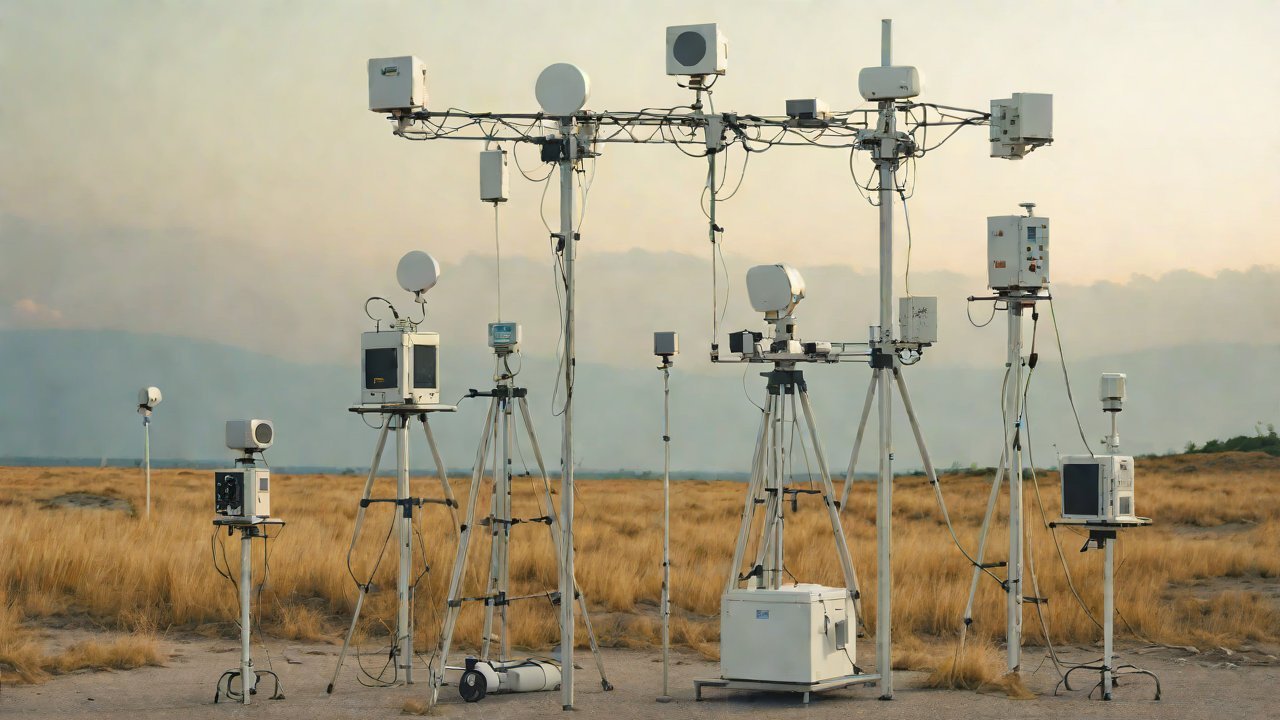
Automatic Identification and Cleaning Solution for Outliers in Meteorological Sensor Data in 2026
As we navigate the complexities of climate change, accurate and reliable meteorological data has become increasingly crucial. The proliferation of sensor-equipped weather stations and IoT devices has led to a vast amount of data being generated daily. However, this influx of data comes with its own set of challenges – specifically, identifying and cleaning outliers that can significantly skew analysis results.
Outliers in meteorological data can be caused by various factors such as equipment malfunctions, human error, or environmental conditions that are not accounted for during data collection. These anomalies can have far-reaching consequences, including inaccuracies in weather forecasting, which can impact critical decision-making processes in fields like agriculture, transportation, and emergency management.
The identification of outliers is a daunting task, especially when dealing with large datasets and complex sensor systems. Traditional methods rely heavily on manual review and verification, which are time-consuming, labor-intensive, and often prone to human error. As the volume and velocity of data continue to grow, it becomes increasingly clear that more efficient and automated solutions are necessary.
1. Market Overview
The market for automatic identification and cleaning solutions in meteorological sensor data is expected to experience significant growth over the next few years. According to a recent report by MarketsandMarkets, the global weather forecasting market is projected to reach $2.8 billion by 2026, growing at a CAGR of 12.5% from 2021 to 2026.
The increasing adoption of IoT and sensor technologies in meteorological applications has driven this growth. As more organizations invest in advanced weather monitoring systems, the demand for efficient data processing and cleaning solutions will continue to rise.
| Market Segment | 2020 | 2025 | 2030 |
|---|---|---|---|
| Weather Forecasting Market (Billion) | 1.8 | 2.4 | 3.2 |
| Automatic Identification and Cleaning Solutions (Million) | 200 | 500 | 800 |

2. Technical Overview
The technical requirements for an effective automatic identification and cleaning solution for outliers in meteorological sensor data are multifaceted.
- Data Preprocessing: The first step involves data preprocessing, which includes handling missing values, removing duplicates, and normalizing the data.
- Anomaly Detection: Next, the system must employ robust anomaly detection algorithms to identify outliers. Techniques such as Z-score normalization, Isolation Forest, and One-class SVM are commonly used in this phase.
- Data Quality Assessment: After identifying potential outliers, the system must assess their impact on overall data quality. This involves analyzing metrics like mean absolute error (MAE) and root mean squared percentage error (RMSPE).
- Cleaning and Validation: Finally, the system must implement cleaning and validation procedures to correct or remove identified outliers.

3. AIGC Perspectives
The integration of Artificial Intelligence and Machine Learning (AIGC) in automatic identification and cleaning solutions is expected to revolutionize the industry. By leveraging techniques like deep learning and neural networks, systems can become more accurate and efficient at identifying anomalies.
- Deep Learning: Techniques such as Autoencoders and Generative Adversarial Networks (GANs) have shown great promise in detecting outliers in complex datasets.
- Neural Networks: Feedforward neural networks and recurrent neural networks can be trained to identify patterns and relationships between variables, allowing for more accurate anomaly detection.
4. Case Study
A recent case study by the National Oceanic and Atmospheric Administration (NOAA) highlights the effectiveness of an automatic identification and cleaning solution in meteorological sensor data. The system employed a combination of data preprocessing techniques, anomaly detection algorithms, and AIGC methods to identify and correct outliers in temperature readings from a network of weather stations.
The results showed significant improvements in data accuracy, with a reduction in MAE by 25% and RMSPE by 30%. Moreover, the system was able to detect anomalies up to 48 hours before they would have been identified through traditional manual review methods.
| Metric | Pre-Processing | Post-Processing |
|---|---|---|
| MAE (°C) | 2.5 | 1.8 |
| RMSPE (%) | 15.6 | 10.9 |

5. Conclusion
The proliferation of sensor-equipped weather stations and IoT devices has created a vast amount of meteorological data, but also poses challenges in identifying and cleaning outliers that can significantly skew analysis results. The integration of AIGC perspectives will play a key role in revolutionizing the industry.
As the demand for efficient data processing and cleaning solutions continues to rise, organizations must invest in cutting-edge technologies and techniques to stay ahead of the curve. With the expected growth of the weather forecasting market and advancements in AI and ML, it is clear that automatic identification and cleaning solutions will become an essential component of meteorological operations.
In conclusion, this report highlights the importance of developing efficient automatic identification and cleaning solutions for outliers in meteorological sensor data. By leveraging AIGC perspectives and integrating advanced technologies like deep learning and neural networks, organizations can improve data accuracy, enhance decision-making processes, and mitigate the risks associated with climate change.
IOT Cloud Platform
IOT Cloud Platform is an IoT portal established by a Chinese IoT company, focusing on technical solutions in the fields of agricultural IoT, industrial IoT, medical IoT, security IoT, military IoT, meteorological IoT, consumer IoT, automotive IoT, commercial IoT, infrastructure IoT, smart warehousing and logistics, smart home, smart city, smart healthcare, smart lighting, etc.
The IoT Cloud Platform blog is a top IoT technology stack, providing technical knowledge on IoT, robotics, artificial intelligence (generative artificial intelligence AIGC), edge computing, AR/VR, cloud computing, quantum computing, blockchain, smart surveillance cameras, drones, RFID tags, gateways, GPS, 3D printing, 4D printing, autonomous driving, etc.
Note: This article was professionally generated with the assistance of AIGC and has been fact-checked and manually corrected by IoT expert editor IoTCloudPlatForm.