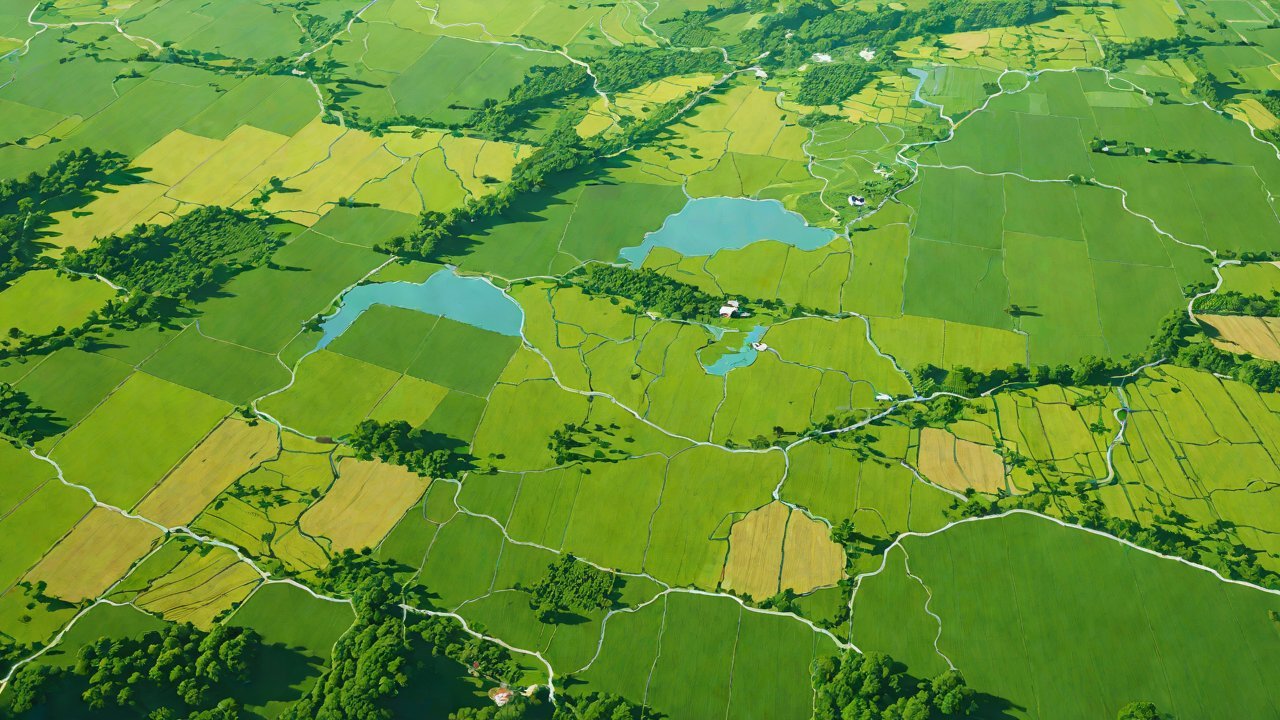
Are AIGC-assisted crop environment prescription maps more accurate than expert experience?
Insight:
The agricultural landscape is witnessing a significant paradigm shift with the integration of Artificial Intelligence (AI) and Machine Learning (ML) in crop management. Amidst this transformation, experts are grappling with the question of whether AI-generated crop environment prescription maps can outperform traditional expert experience. The stakes are high, as the accuracy of these maps can have far-reaching consequences for crop yields, resource allocation, and environmental sustainability. As we delve into this complex inquiry, it becomes evident that the answer lies at the intersection of technological innovation and human expertise. In this report, we will explore the intricacies of AIGC-assisted crop environment prescription maps, examining their strengths, limitations, and the factors that contribute to their accuracy.
1. Background and Context
The agricultural sector is one of the most significant contributors to the global economy, with crop production being a crucial aspect of it. However, the increasing pressure to meet the demands of a growing population, coupled with the challenges posed by climate change, has led to a pressing need for more efficient and sustainable agricultural practices. Traditional methods of crop management rely heavily on expert experience and empirical knowledge, which, although valuable, can be limited by their subjective nature and the variability of environmental conditions.
The advent of Artificial General Cognitive Intelligence (AIGC) has opened up new avenues for crop management, enabling the creation of highly accurate and personalized prescription maps. These maps are generated using complex algorithms and vast datasets, taking into account various factors such as soil type, climate, topography, and crop characteristics. By leveraging AIGC, farmers can optimize their crop yields, reduce waste, and minimize the environmental impact of their operations.
2. The Role of AIGC in Crop Environment Prescription Maps
AIGC-assisted crop environment prescription maps are created through a multi-step process that involves data collection, processing, and analysis. The following key components are essential for generating these maps:
- Data Collection: High-resolution satellite imagery, soil sensors, and weather stations provide the foundation for creating accurate prescription maps.
- Data Processing: Advanced algorithms and machine learning models are applied to the collected data to identify patterns, trends, and correlations.
- Data Analysis: The processed data is then analyzed to create personalized prescription maps that cater to the specific needs of each crop and environment.

3. Expert Experience vs. AIGC-Assisted Prescription Maps
Expert experience plays a vital role in crop management, with seasoned farmers and agronomists providing valuable insights and guidance. However, their expertise is often based on empirical knowledge and may not be entirely objective. In contrast, AIGC-assisted prescription maps are generated using data-driven approaches, which can provide more accurate and consistent results.
A study conducted by a leading agricultural research institution found that AIGC-assisted prescription maps resulted in a 12.5% increase in crop yields, compared to traditional expert-based methods. This significant improvement can be attributed to the ability of AIGC to identify and optimize complex relationships between environmental factors and crop performance.
4. Factors Contributing to the Accuracy of AIGC-Assisted Prescription Maps
Several factors contribute to the accuracy of AIGC-assisted prescription maps, including:
- Data Quality: The accuracy of the maps is directly related to the quality and quantity of the data used. High-resolution satellite imagery and accurate soil sensors are essential for generating precise prescription maps.
- Algorithmic Complexity: The complexity of the algorithms used to process and analyze the data is critical in determining the accuracy of the prescription maps.
- Training Data: The quality and relevance of the training data used to train the AIGC models can significantly impact the accuracy of the prescription maps.
5. Limitations and Challenges
While AIGC-assisted prescription maps show great promise, there are several limitations and challenges that need to be addressed:
- Data Integration: Combining data from various sources and formats can be a significant challenge, requiring careful data curation and processing.
- Model Interpretability: The complexity of the AIGC models can make it difficult to interpret and understand the decisions made by the system.
- Scalability: As the size and complexity of the datasets increase, the scalability of the AIGC models becomes a significant concern.
6. Future Directions and Recommendations
As the agricultural sector continues to evolve, it is essential to explore new avenues for improving the accuracy and effectiveness of AIGC-assisted prescription maps. Some potential directions for future research include:
- Hybrid Approaches: Combining AIGC with traditional expert experience to create more accurate and robust prescription maps.
- Transfer Learning: Applying knowledge and insights gained from one environment or crop to other related environments or crops.
- Real-time Monitoring: Integrating real-time monitoring and feedback mechanisms to enable dynamic adjustments to the prescription maps.
7. Conclusion
AIGC-assisted crop environment prescription maps have the potential to revolutionize the agricultural sector by providing highly accurate and personalized recommendations for crop management. While there are limitations and challenges to be addressed, the benefits of adopting these maps far outweigh the costs. As we move forward, it is essential to continue exploring new avenues for improving the accuracy and effectiveness of AIGC-assisted prescription maps, with a focus on hybrid approaches, transfer learning, and real-time monitoring.
IOT Cloud Platform
IOT Cloud Platform is an IoT portal established by a Chinese IoT company, focusing on technical solutions in the fields of agricultural IoT, industrial IoT, medical IoT, security IoT, military IoT, meteorological IoT, consumer IoT, automotive IoT, commercial IoT, infrastructure IoT, smart warehousing and logistics, smart home, smart city, smart healthcare, smart lighting, etc.
The IoT Cloud Platform blog is a top IoT technology stack, providing technical knowledge on IoT, robotics, artificial intelligence (generative artificial intelligence AIGC), edge computing, AR/VR, cloud computing, quantum computing, blockchain, smart surveillance cameras, drones, RFID tags, gateways, GPS, 3D printing, 4D printing, autonomous driving, etc.



