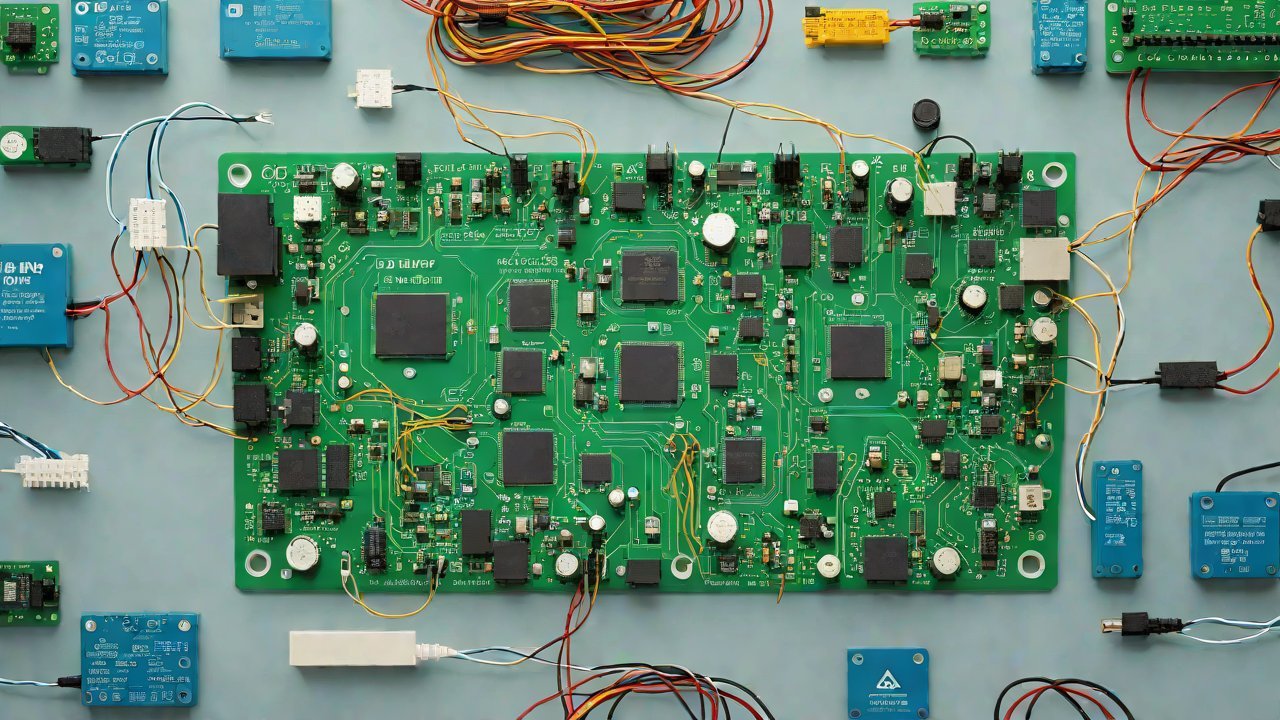
Applications of the SPI Protocol in IoT
The proliferation of Internet of Things (IoT) devices has created a vast array of interconnected systems, generating unprecedented amounts of data. To manage and utilize this data effectively, efficient communication protocols are essential. One such protocol is the Serial Peripheral Interface (SPI) protocol, which has been widely adopted in various applications. SPI’s ability to enable high-speed, low-latency communication has made it an attractive choice for IoT developers. This report delves into the applications of the SPI protocol in IoT, exploring its use cases, advantages, and limitations.
1. Overview of SPI Protocol
The SPI protocol is a synchronous serial communication protocol that enables high-speed data transfer between devices. It operates on a master-slave architecture, where one device acts as the master and controls the data transfer, while the other devices act as slaves and receive the data. SPI’s key features include:
| Feature | Description |
|---|---|
| Synchronous | Data transfer is synchronized with a clock signal |
| Master-slave | One device controls the data transfer, while others receive the data |
| High-speed | Supports data transfer rates up to 100 MHz |

2. Applications of SPI in IoT
SPI’s high-speed data transfer capabilities and low latency make it an ideal choice for various IoT applications. Some of the key use cases include:
2.1. Sensor Data Acquisition
SPI is widely used in sensor data acquisition systems, enabling the transfer of sensor data from various sensors, such as temperature, pressure, and acceleration sensors. This data is then processed and analyzed to gain insights into the system’s performance and behavior.
2.2. Microcontroller Communication
SPI is used to communicate between microcontrollers and peripheral devices, such as memory chips and display drivers. This enables the efficient transfer of data between devices, reducing the overall system latency.
2.3. Wireless Communication
SPI is used in wireless communication protocols, such as Wi-Fi and Bluetooth, to enable high-speed data transfer between devices. This is particularly useful in applications where low latency is critical, such as video streaming and online gaming.
2.4. Industrial Automation
SPI is used in industrial automation systems to enable high-speed data transfer between devices, such as sensors, actuators, and controllers. This enables real-time monitoring and control of industrial processes.
3. Advantages of SPI in IoT

The SPI protocol offers several advantages in IoT applications, including:
3.1. High-Speed Data Transfer
SPI’s high-speed data transfer capabilities enable efficient data transfer between devices, reducing the overall system latency.
3.2. Low Latency
SPI’s low latency enables real-time monitoring and control of IoT systems, making it suitable for applications where timely decision-making is critical.
3.3. Scalability
SPI’s master-slave architecture enables easy scalability, allowing multiple devices to be connected to a single master device.
4. Limitations of SPI in IoT
While SPI offers several advantages in IoT applications, it also has some limitations, including:
4.1. Complexity
SPI’s master-slave architecture can be complex to implement, particularly in systems with multiple devices.
4.2. Limited Distance
SPI’s signal integrity is limited to a certain distance, making it unsuitable for applications where devices are separated by long distances.
4.3. Electromagnetic Interference
SPI’s electromagnetic interference (EMI) can be a concern in applications where devices are exposed to electromagnetic radiation.
5. Market Analysis
The SPI protocol is widely used in various industries, including:
5.1. Industrial Automation

SPI is used in industrial automation systems to enable high-speed data transfer between devices.
5.2. Consumer Electronics
SPI is used in consumer electronics, such as smartphones and tablets, to enable high-speed data transfer between devices.
5.3. Automotive
SPI is used in automotive systems to enable high-speed data transfer between devices, such as sensors and actuators.
6. Conclusion
The SPI protocol is a widely adopted communication protocol in IoT applications, offering high-speed data transfer capabilities and low latency. Its use cases range from sensor data acquisition to wireless communication and industrial automation. While SPI has several advantages, including high-speed data transfer, low latency, and scalability, it also has some limitations, including complexity, limited distance, and EMI. As the IoT landscape continues to evolve, the SPI protocol is likely to remain a key player in efficient communication between devices.
7. Future Outlook
The SPI protocol is expected to continue playing a crucial role in IoT applications, particularly in areas where high-speed data transfer and low latency are critical. As the IoT landscape continues to evolve, new applications and use cases are likely to emerge, further solidifying the SPI protocol’s position as a leading communication protocol.
8. Recommendations
Based on the analysis, the following recommendations are made:
8.1. Adoption of SPI in IoT Applications
IoT developers should consider adopting the SPI protocol in their applications, particularly in areas where high-speed data transfer and low latency are critical.
8.2. Development of SPI-Based Solutions
Companies should invest in developing SPI-based solutions, such as SPI-compatible microcontrollers and peripheral devices, to enable efficient communication between devices.
8.3. Research and Development
Researchers and developers should continue to explore the potential of SPI in IoT applications, identifying new use cases and areas where the protocol can be improved.
By following these recommendations, the SPI protocol is likely to remain a leading communication protocol in IoT applications, enabling efficient and reliable communication between devices.
IOT Cloud Platform
IOT Cloud Platform is an IoT portal established by a Chinese IoT company, focusing on technical solutions in the fields of agricultural IoT, industrial IoT, medical IoT, security IoT, military IoT, meteorological IoT, consumer IoT, automotive IoT, commercial IoT, infrastructure IoT, smart warehousing and logistics, smart home, smart city, smart healthcare, smart lighting, etc.
The IoT Cloud Platform blog is a top IoT technology stack, providing technical knowledge on IoT, robotics, artificial intelligence (generative artificial intelligence AIGC), edge computing, AR/VR, cloud computing, quantum computing, blockchain, smart surveillance cameras, drones, RFID tags, gateways, GPS, 3D printing, 4D printing, autonomous driving, etc.