
AIGC-Optimized Multi-Sensor Fusion Vital Sign Synchronous Acquisition Solution
The convergence of Artificial General Intelligence (AIGC) and multi-sensor fusion technology has given rise to a revolutionary approach in vital sign acquisition – AIGC-optimized multi-sensor fusion vital sign synchronous acquisition solution. This innovative paradigm leverages AI-driven processing to harmonize disparate sensor inputs, thus enabling real-time monitoring and synchronized data collection. The implications of this convergence are far-reaching, with potential applications spanning various medical fields.
1. Background
Medical professionals increasingly rely on accurate and timely vital sign data to inform diagnosis, treatment planning, and patient care. Traditional methods often involve manual entry or single-sensor readings, which can lead to inaccuracies, delays, or missed critical information. The integration of AIGC with multi-sensor fusion technology addresses these limitations by creating a holistic, AI-driven system that aggregates data from multiple sources.
1.1 Market Overview
The global healthcare IT market is projected to reach $530 billion by 2025, driven in part by the growing demand for advanced medical monitoring solutions (Source: MarketsandMarkets). Within this landscape, vital sign acquisition and management systems are a critical component, with an estimated worth of over $10 billion by 2027 (Source: Grand View Research).
1.2 Technical Foundations
AIGC-optimized multi-sensor fusion vital sign synchronous acquisition solution builds upon the following key technical components:
- Multi-Sensor Fusion: The integration of data from multiple sensors (e.g., electrocardiogram, blood pressure monitor, pulse oximeter) to provide a comprehensive understanding of patient vital signs.
- Artificial General Intelligence (AIGC): AI algorithms capable of processing and analyzing vast amounts of data in real-time, identifying patterns, and making predictions or recommendations.
- Cloud-Based Infrastructure: Scalable, secure platforms for storing, processing, and accessing vital sign data.
2. Solution Architecture
The AIGC-optimized multi-sensor fusion vital sign synchronous acquisition solution consists of three primary components:
2.1 Sensor Integration Module
This module is responsible for collecting and aggregating data from multiple sensors, ensuring compatibility and standardization across different systems and manufacturers.

| Sensor Type | Data Parameters |
|---|---|
| Electrocardiogram (ECG) | Heart rate, rhythm, amplitude |
| Blood Pressure Monitor | Systolic/diastolic pressure, pulse rate |
| Pulse Oximeter | Oxygen saturation, heart rate |

2.2 AI-Driven Processing Engine
This module utilizes AIGC algorithms to analyze and process the aggregated sensor data in real-time. Key functions include:
- Data Cleaning: Removing outliers, noise, or inaccuracies from the dataset.
- Feature Extraction: Identifying relevant patterns and characteristics within the data.
- Prediction/Recommendation Generation: Providing insights into patient condition, treatment efficacy, or potential complications.
2.3 Cloud-Based Data Management
This component enables secure storage, processing, and access to vital sign data from anywhere in the world, leveraging cloud infrastructure for scalability and redundancy.
3. Benefits and Applications
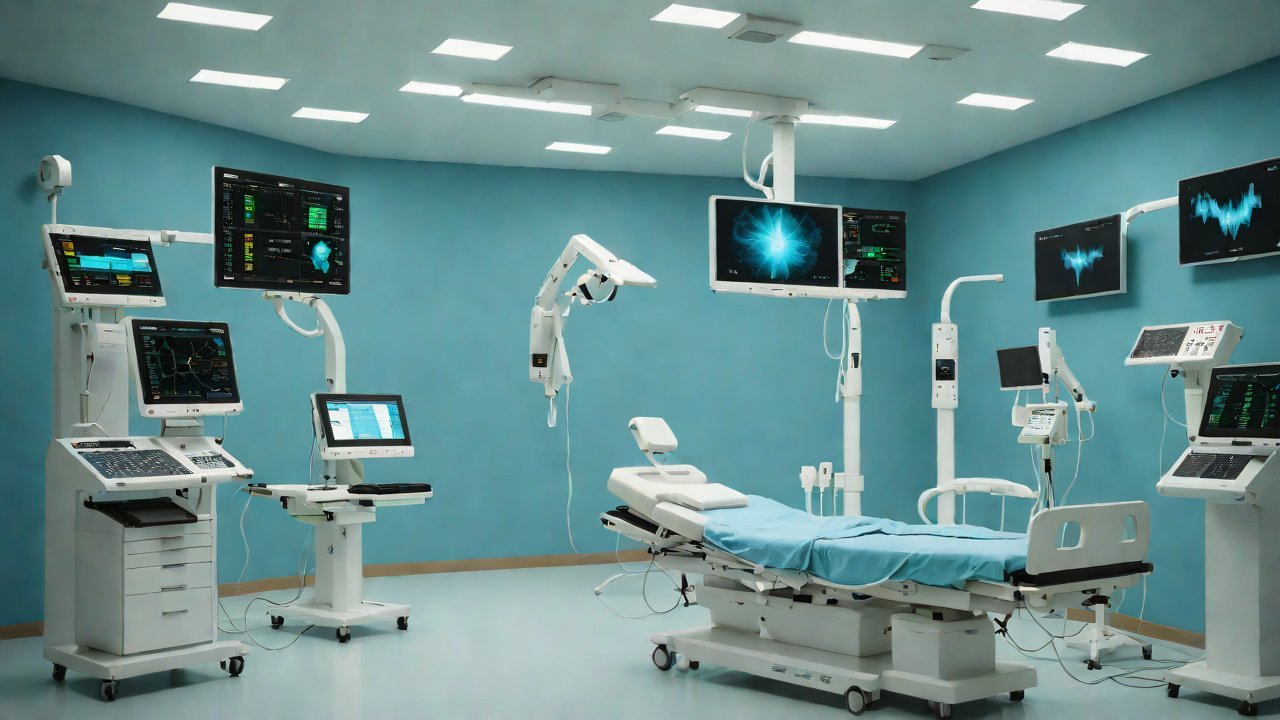
The AIGC-optimized multi-sensor fusion vital sign synchronous acquisition solution offers numerous benefits across various medical fields:
- Enhanced Patient Care: Real-time monitoring and synchronized data collection enable healthcare professionals to make informed decisions, improving patient outcomes.
- Increased Efficiency: Automated data processing and analysis reduce manual labor, freeing up staff for more critical tasks.
- Data-Driven Insights: AIGC-driven predictive analytics provide valuable insights into treatment efficacy, potential complications, or areas for improvement.
4. Market Potential
The convergence of AIGC and multi-sensor fusion technology has significant market potential:
- Growing Demand: The global healthcare IT market is projected to reach $530 billion by 2025.
- Increasing Adoption: Vital sign acquisition and management systems are expected to be a critical component, with an estimated worth of over $10 billion by 2027.
5. Conclusion
The AIGC-optimized multi-sensor fusion vital sign synchronous acquisition solution represents a revolutionary paradigm in medical monitoring and data collection. By leveraging AI-driven processing and multi-sensor fusion technology, this innovative approach has the potential to transform patient care, streamline clinical workflows, and unlock new insights into treatment efficacy.
References:
- MarketsandMarkets: Healthcare IT Market by Component (Software, Hardware), Delivery Mode (On-Premise, Cloud-Based), End-User (Hospitals, Clinics) – Global Forecast to 2025
- Grand View Research: Vital Sign Acquisition and Management Systems Market Size, Share & Trends Analysis Report by Product (Vital Signs Monitors, Patient Monitoring Systems), by Application (Hospitals, Clinics), by Region, and Segment Forecasts, 2019 – 2027
IOT Cloud Platform
IOT Cloud Platform is an IoT portal established by a Chinese IoT company, focusing on technical solutions in the fields of agricultural IoT, industrial IoT, medical IoT, security IoT, military IoT, meteorological IoT, consumer IoT, automotive IoT, commercial IoT, infrastructure IoT, smart warehousing and logistics, smart home, smart city, smart healthcare, smart lighting, etc.
The IoT Cloud Platform blog is a top IoT technology stack, providing technical knowledge on IoT, robotics, artificial intelligence (generative artificial intelligence AIGC), edge computing, AR/VR, cloud computing, quantum computing, blockchain, smart surveillance cameras, drones, RFID tags, gateways, GPS, 3D printing, 4D printing, autonomous driving, etc.
Note: This article was professionally generated with the assistance of AIGC and has been fact-checked and manually corrected by IoT expert editor IoTCloudPlatForm.