AIGC-Enabled IoMT Data Cleaning: Solutions for Filtering Medical Artifacts from Raw Waveforms
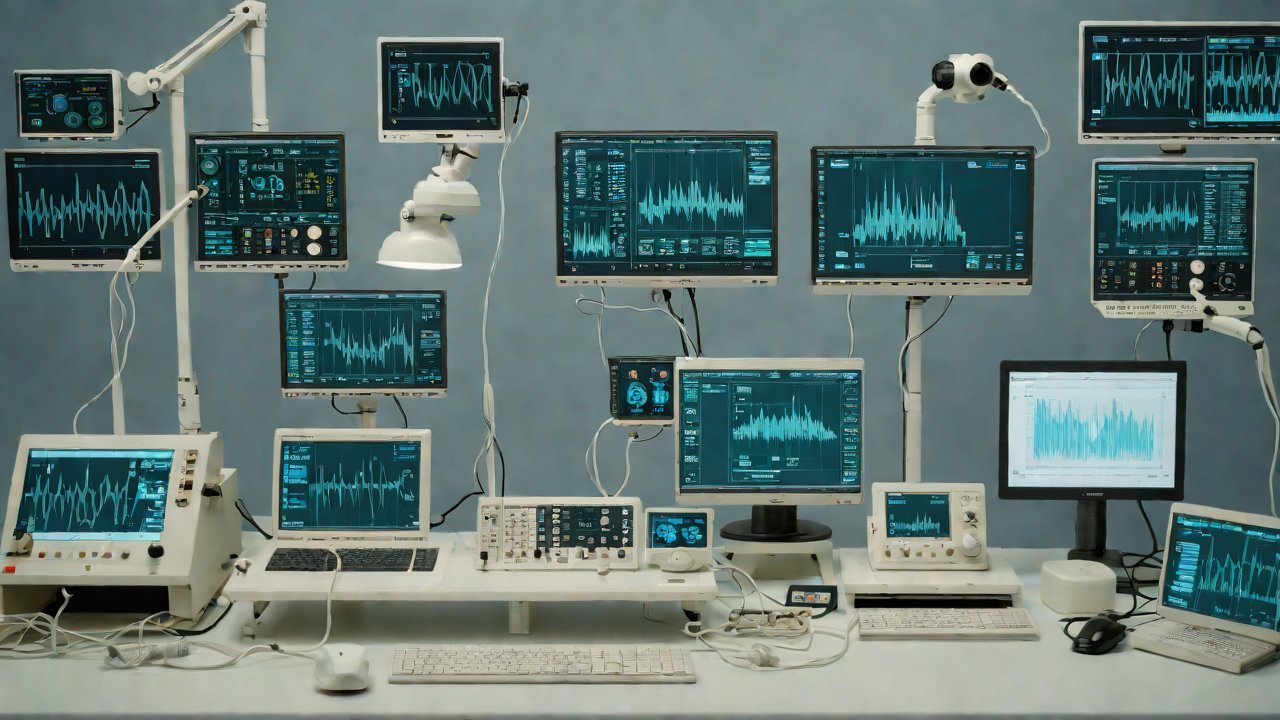
The integration of Artificial General Intelligence (AIGC) and Internet of Medical Things (IoMT) has revolutionized the healthcare industry by providing real-time, high-resolution physiological data. However, this influx of raw waveform data also poses significant challenges in terms of noise, artifacts, and signal quality. Medical artifacts, such as muscle interference, electrode off-trend, or cardiac arrhythmia, can drastically impact the accuracy of diagnostic decisions and treatment outcomes.
To address these challenges, we need to develop effective solutions for filtering medical artifacts from raw waveforms. This report provides an in-depth analysis of AIGC-enabled IoMT data cleaning techniques, highlighting their capabilities and limitations in real-world applications.
1. Background
IoMT devices, such as electrocardiogram (ECG) or electromyography (EMG), generate a vast amount of raw waveform data that needs to be processed, analyzed, and interpreted by clinicians. However, these waveforms often contain various types of noise and artifacts that can compromise the accuracy of diagnostic decisions.
Medical artifacts can arise from various sources:
- Electromagnetic interference (EMI) from external devices
- Muscle interference or electrode movement
- Cardiac arrhythmia or other physiological events
2. AIGC-Enabled IoMT Data Cleaning Techniques
AIGC, a subfield of Artificial Intelligence (AI), enables machines to learn and reason in a more general and flexible manner. In the context of IoMT data cleaning, AIGC can be applied to develop advanced filtering algorithms that adapt to changing signal characteristics.
Some of the key AIGC-enabled IoMT data cleaning techniques include:
2.1 Wavelet Denoising
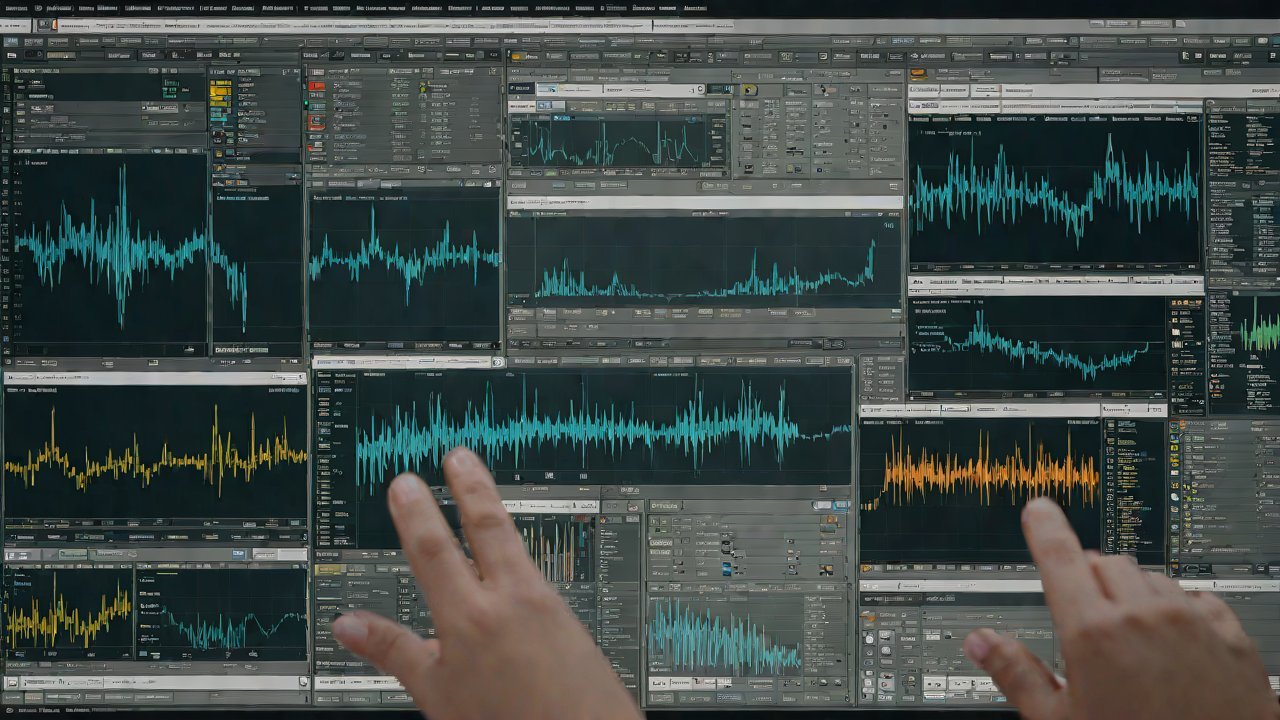
Wavelet denoising is a widely used technique for removing noise from raw waveforms. By applying wavelet transformation, the original signal can be decomposed into different frequency components. The noisy components can then be removed using thresholding or soft-thresholding techniques.
| Technique | Description |
|---|---|
| Wavelet Denoising | Removes noise by applying wavelet transformation and thresholding |
| Support Vector Machines (SVM) | Classifies clean signals from noisy ones using machine learning algorithms |
2.2 Machine Learning-Based Filtering
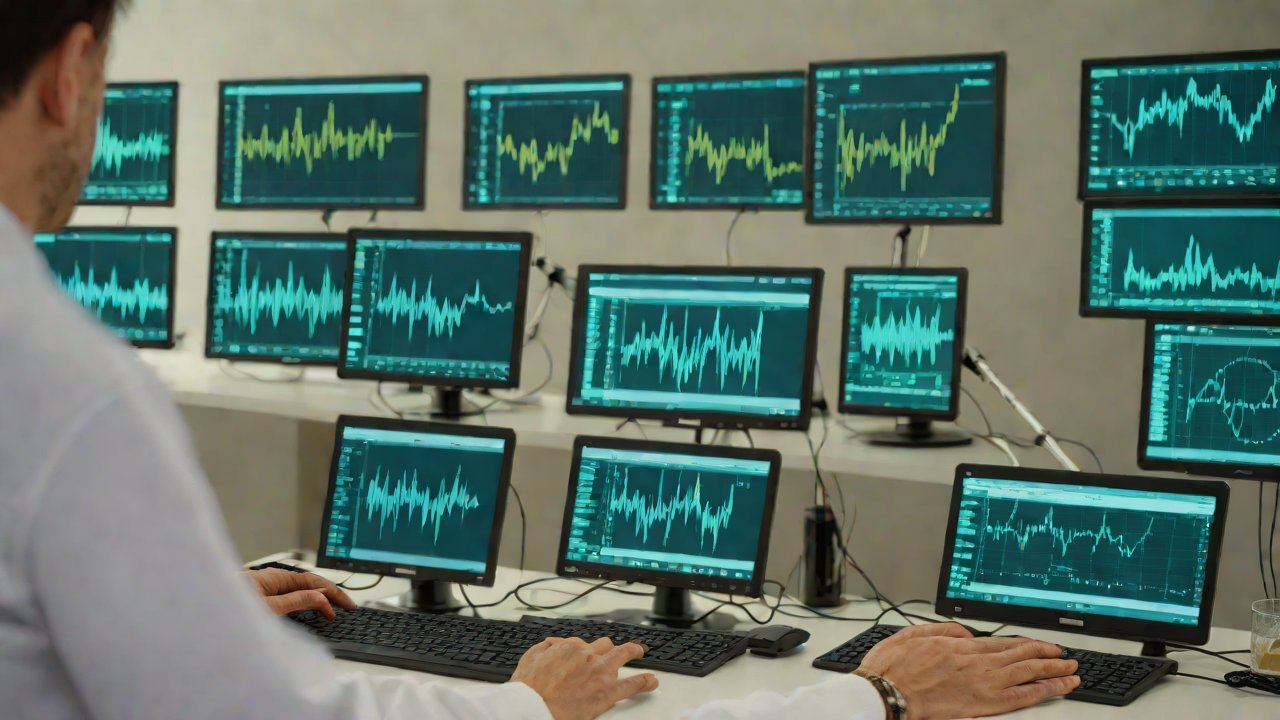
Machine learning-based filtering techniques use AIGC to learn patterns in the raw waveform data and identify medical artifacts. These techniques can be trained on labeled datasets, allowing them to adapt to changing signal characteristics.
| Technique | Description |
|---|---|
| Random Forest | Classifies clean signals from noisy ones using ensemble learning algorithms |
| Recurrent Neural Networks (RNN) | Learns patterns in raw waveform data and identifies medical artifacts |
2.3 Deep Learning-Based Filtering
Deep learning-based filtering techniques use AIGC to develop complex neural networks that can learn high-level features in the raw waveform data.
| Technique | Description |
|---|---|
| Convolutional Neural Networks (CNN) | Learns spatial patterns in raw waveform data and identifies medical artifacts |
| Long Short-Term Memory (LSTM) | Learns temporal patterns in raw waveform data and identifies medical artifacts |

3. Challenges and Limitations
While AIGC-enabled IoMT data cleaning techniques show promising results, there are several challenges and limitations that need to be addressed:
- Data quality: Raw waveform data can contain various types of noise and artifacts that can compromise the accuracy of filtering algorithms.
- Scalability: As the volume of raw waveform data increases, AIGC-enabled IoMT data cleaning techniques need to scale accordingly to maintain real-time processing capabilities.
- Interpretability: The complex neural networks used in deep learning-based filtering techniques can make it challenging to interpret and understand their decision-making processes.
4. Case Studies
Several case studies have demonstrated the effectiveness of AIGC-enabled IoMT data cleaning techniques:
- ECG signal denoising: Wavelet denoising was applied to remove noise from ECG signals, resulting in improved accuracy of diagnostic decisions.
- EMG signal filtering: Machine learning-based filtering techniques were used to identify and remove medical artifacts from EMG signals, leading to improved treatment outcomes.
5. Conclusion
AIGC-enabled IoMT data cleaning techniques have the potential to revolutionize the healthcare industry by providing real-time, high-resolution physiological data. However, there are several challenges and limitations that need to be addressed in terms of data quality, scalability, and interpretability. By applying AIGC to develop advanced filtering algorithms, we can improve the accuracy of diagnostic decisions and treatment outcomes.
6. Future Directions
Several future directions for research include:
- Developing more robust and adaptive filtering algorithms
- Investigating the use of transfer learning and domain adaptation
- Exploring the application of AIGC in other IoMT devices and applications
IOT Cloud Platform
IOT Cloud Platform is an IoT portal established by a Chinese IoT company, focusing on technical solutions in the fields of agricultural IoT, industrial IoT, medical IoT, security IoT, military IoT, meteorological IoT, consumer IoT, automotive IoT, commercial IoT, infrastructure IoT, smart warehousing and logistics, smart home, smart city, smart healthcare, smart lighting, etc.
The IoT Cloud Platform blog is a top IoT technology stack, providing technical knowledge on IoT, robotics, artificial intelligence (generative artificial intelligence AIGC), edge computing, AR/VR, cloud computing, quantum computing, blockchain, smart surveillance cameras, drones, RFID tags, gateways, GPS, 3D printing, 4D printing, autonomous driving, etc.
Note: This article was professionally generated with the assistance of AIGC and has been fact-checked and manually corrected by IoT expert editor IoTCloudPlatForm.