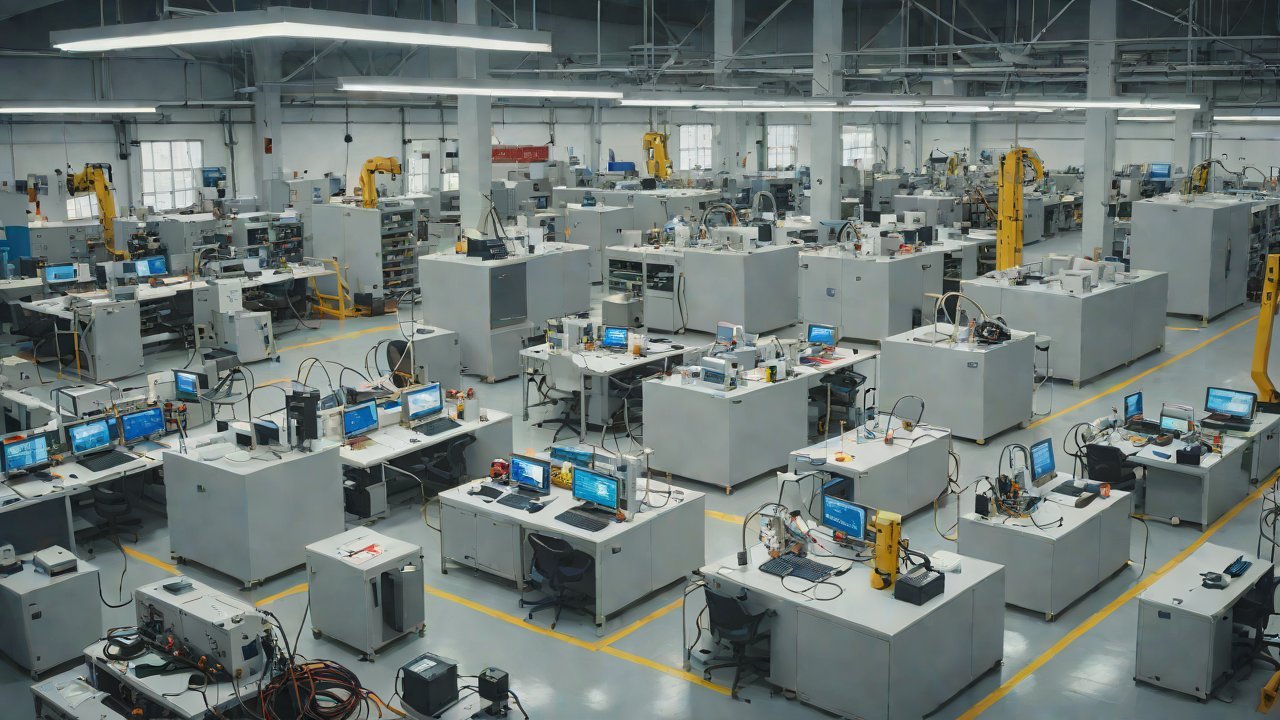
AI IoT project concept not yet realized
The intersection of Artificial Intelligence (AI) and Internet of Things (IoT) has been a topic of immense interest in recent years, with both industries converging to create a new wave of innovative applications. However, despite the excitement surrounding this convergence, many AI IoT project concepts remain unrealized due to various technical, practical, and market-related challenges.
One of the primary reasons for the underutilization of AI IoT projects lies in the complexity of integrating AI algorithms with IoT devices. The sheer number of variables involved in collecting data from various sources, processing it in real-time, and providing actionable insights is daunting. Moreover, the heterogeneity of IoT devices, each with its unique communication protocols, hardware specifications, and software frameworks, adds to the difficulty of developing a seamless integration.
Another significant challenge facing AI IoT project developers is the issue of data quality and accuracy. IoT devices often produce vast amounts of raw data that require significant processing power to clean, filter, and analyze effectively. However, when this data is fed into AI algorithms, it can lead to biased results due to errors or inconsistencies in the input data.
The market landscape for AI IoT projects is also fragmented, with various industries and applications vying for attention. While some sectors, such as industrial automation and smart cities, have shown significant promise, others like healthcare and agriculture are still grappling with regulatory hurdles and technical complexities.
1. Technical Challenges
The integration of AI algorithms with IoT devices poses several technical challenges that need to be addressed.
| Challenge | Description | Impact on AI IoT Projects |
|---|---|---|
| Data Volume and Velocity | Large amounts of data from various sources require efficient processing and storage solutions. | Inefficient data management can lead to delayed insights, increased costs, and compromised security. |
| Device Heterogeneity | Different communication protocols, hardware specifications, and software frameworks complicate integration efforts. | Increased development time, higher costs, and reduced scalability. |
| Real-time Processing | AI algorithms often require real-time processing capabilities to provide timely insights. | Delays in processing can lead to missed opportunities, decreased accuracy, and lower productivity. |

2. Data Quality and Accuracy
The quality of data collected from IoT devices has a direct impact on the accuracy of AI-powered insights.
| Data Quality Challenge | Description | Impact on AI IoT Projects |
|---|---|---|
| Sensor Calibration Errors | Inaccurate or inconsistent sensor readings can lead to biased results. | Decreased accuracy, reduced trust in AI-driven decisions, and increased costs for rework or correction. |
| Data Inconsistencies | Variations in data formats, scales, or units can complicate processing and analysis. | Increased development time, higher costs, and reduced scalability. |
| Security Threats | Unauthorized access or tampering with IoT devices can compromise data integrity and security. | Decreased trust in AI-driven decisions, increased costs for security measures, and potential loss of business reputation. |
3. Market Landscape
The market landscape for AI IoT projects is diverse, with various industries and applications vying for attention.
| Industry/Application | Description | Market Size (2022 est.) |
|---|---|---|
| Industrial Automation | Optimization of manufacturing processes, predictive maintenance, and quality control. | $14.4B |
| Smart Cities | Efficient management of urban infrastructure, transportation systems, and public services. | $10.7B |
| Healthcare | Remote patient monitoring, personalized medicine, and disease prediction. | $6.3B |
| Agriculture | Precision farming, crop yield optimization, and livestock monitoring. | $5.4B |

4. Regulatory Frameworks
Regulatory frameworks play a crucial role in shaping the development and deployment of AI IoT projects.
| Regulatory Body | Description | Key Focus Areas |
|---|---|---|
| General Data Protection Regulation (GDPR) | EU regulation on data protection, emphasizing transparency and consent. | Data protection, consent management, and breach notification. |
| Federal Aviation Administration (FAA) | US regulatory agency for aviation safety, overseeing drone operations. | Drone regulations, airspace management, and pilot training. |
| Environmental Protection Agency (EPA) | US agency responsible for environmental protection, focusing on IoT device emissions. | Device emissions standards, energy efficiency guidelines, and waste reduction strategies. |

5. Future Outlook
Despite the challenges facing AI IoT project developers, the potential benefits of this convergence are vast.
- Improved operational efficiency and productivity
- Enhanced customer experiences through personalized services
- Increased competitiveness in global markets
- New revenue streams from innovative applications and services
To overcome the technical, practical, and market-related challenges, AI IoT project developers must adopt a holistic approach that integrates expertise from various fields, including AI, IoT, data science, and domain-specific knowledge. By doing so, they can unlock the full potential of this convergence and create innovative solutions that transform industries and improve lives.
The future of AI IoT projects holds immense promise, but it requires careful planning, strategic collaboration, and a deep understanding of the technical, market, and regulatory landscapes. As the industry continues to evolve, one thing is clear: the intersection of AI and IoT has the potential to revolutionize the way we live, work, and interact with technology.
IOT Cloud Platform
IOT Cloud Platform is an IoT portal established by a Chinese IoT company, focusing on technical solutions in the fields of agricultural IoT, industrial IoT, medical IoT, security IoT, military IoT, meteorological IoT, consumer IoT, automotive IoT, commercial IoT, infrastructure IoT, smart warehousing and logistics, smart home, smart city, smart healthcare, smart lighting, etc.
The IoT Cloud Platform blog is a top IoT technology stack, providing technical knowledge on IoT, robotics, artificial intelligence (generative artificial intelligence AIGC), edge computing, AR/VR, cloud computing, quantum computing, blockchain, smart surveillance cameras, drones, RFID tags, gateways, GPS, 3D printing, 4D printing, autonomous driving, etc.
Note: This article was professionally generated with the assistance of AIGC and has been fact-checked and manually corrected by IoT expert editor IoTCloudPlatForm.