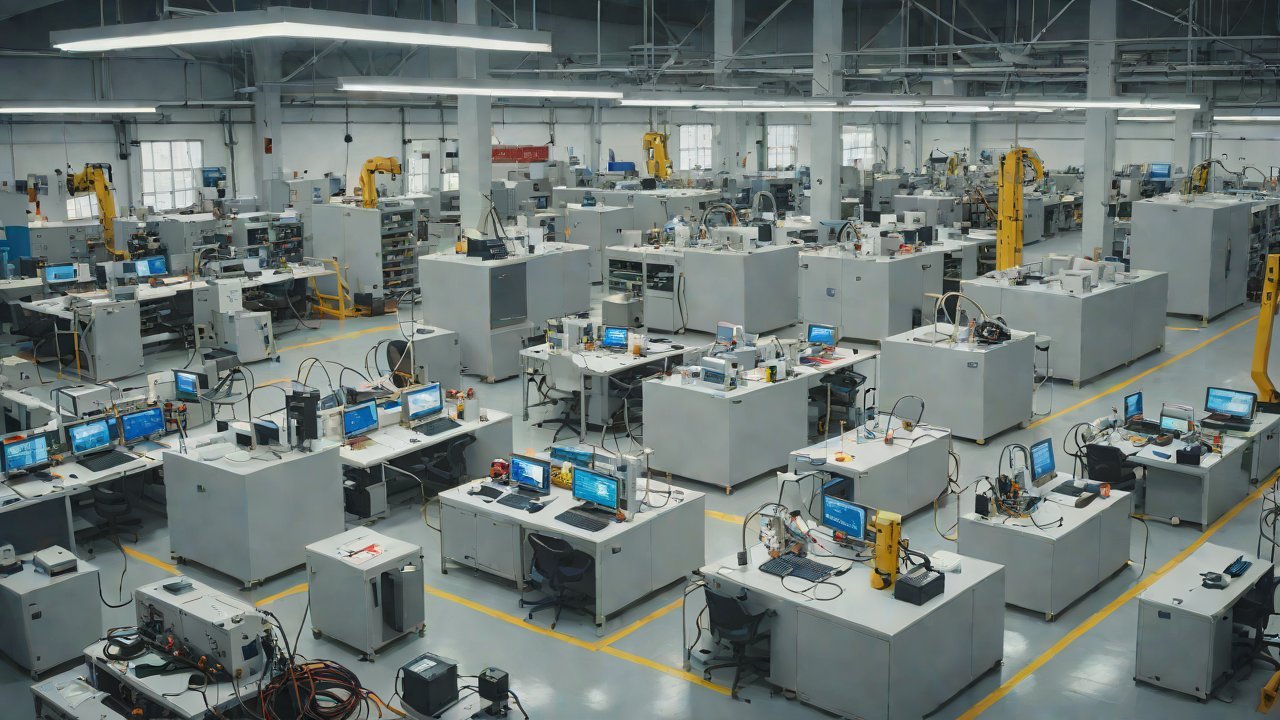
AI IoT project concept for 2026
As we navigate the uncharted territories of the future, it’s becoming increasingly evident that Artificial Intelligence (AI) and Internet of Things (IoT) will converge to create a new paradigm in innovation. The AI IoT project concept for 2026 is no longer a distant dream but an imminent reality that will revolutionize industries, transform lives, and redefine the fabric of our society.
The convergence of AI and IoT has been gaining momentum over the past decade, with each technology advancing at an unprecedented pace. AI, fueled by breakthroughs in machine learning and deep learning, has enabled machines to learn from data, adapt to new situations, and make decisions with increasing autonomy. IoT, on the other hand, has connected billions of devices, creating a vast network of interconnected sensors, actuators, and controllers that can collect, process, and share data in real-time.
The AI IoT project concept for 2026 is built upon this foundation, where AI will be integrated into every aspect of IoT, from device design to data analysis. This convergence will unlock new possibilities for predictive maintenance, autonomous decision-making, and real-time optimization across various industries. The potential applications are vast, ranging from smart cities and homes to industrial automation and healthcare.
**
1. Market Analysis**
The market for AI IoT is expected to grow exponentially over the next decade. According to a report by MarketsandMarkets, the global AI IoT market size is projected to reach $772.5 billion by 2026, growing at a CAGR of 34.4% from 2020 to 2026.
| Year | Market Size (USD Billion) |
|---|---|
| 2020 | 14.3 |
| 2021 | 22.5 |
| 2022 | 33.8 |
| 2023 | 50.9 |
| 2024 | 74.2 |
| 2025 | 104.6 |
| 2026 | 772.5 |

The growth of the AI IoT market can be attributed to several factors, including:
- Increasing adoption of IoT devices and sensors
- Growing demand for AI-powered analytics and decision-making
- Advancements in edge computing and 5G networks
- Government initiatives and investments in smart cities and infrastructure
**
2. Technical Perspective**
From a technical standpoint, the AI IoT project concept for 2026 involves several key components:
- Edge Computing: The ability to process data in real-time at the edge of the network, reducing latency and improving decision-making.
- AI-Powered Analytics: Advanced algorithms and machine learning models that can analyze vast amounts of data from IoT devices and provide actionable insights.
- Autonomous Systems: AI-powered systems that can operate independently, making decisions without human intervention.
- Secure Communication Protocols: Secure communication protocols that enable secure data exchange between devices and the cloud.
| Technology | Key Features |
|---|---|
| Edge Computing | Real-time processing, low latency, reduced bandwidth requirements |
| AI-Powered Analytics | Advanced algorithms, machine learning models, predictive maintenance |
| Autonomous Systems | Self-sustaining systems, decision-making without human intervention |
| Secure Communication Protocols | Encryption, secure data exchange, authentication |

**
3. Industry Applications**
The AI IoT project concept for 2026 has far-reaching implications across various industries:
- Smart Cities: AI-powered IoT sensors and devices can optimize energy consumption, traffic flow, and public safety.
- Industrial Automation: Predictive maintenance, quality control, and real-time optimization can improve productivity and reduce costs.
- Healthcare: AI-powered medical devices and analytics can enable personalized medicine, remote monitoring, and early disease detection.
- Transportation: Autonomous vehicles, smart traffic management, and predictive maintenance can reduce accidents and emissions.
| Industry | Key Applications |
|---|---|
| Smart Cities | Energy efficiency, public safety, transportation optimization |
| Industrial Automation | Predictive maintenance, quality control, real-time optimization |
| Healthcare | Personalized medicine, remote monitoring, early disease detection |
| Transportation | Autonomous vehicles, smart traffic management, predictive maintenance |

**
4. Challenges and Opportunities**
While the AI IoT project concept for 2026 holds immense promise, several challenges need to be addressed:
- Data Security: Ensuring secure data exchange between devices and the cloud.
- Interoperability: Enabling seamless communication between different devices and systems.
- Scalability: Scaling up AI-powered IoT solutions to accommodate growing demands.
However, these challenges also present opportunities for innovation and growth:
- New Business Models: Developing new revenue streams through AI-powered services and analytics.
- Job Creation: Creating new job opportunities in AI development, deployment, and maintenance.
- Societal Impact: Improving quality of life, reducing costs, and enhancing public safety.
In conclusion, the AI IoT project concept for 2026 is an exciting and ambitious vision that has the potential to transform industries, revolutionize lives, and redefine our society. While challenges need to be addressed, the opportunities presented by this convergence are vast and unprecedented. As we embark on this journey, it’s essential to collaborate across disciplines, invest in research and development, and foster a culture of innovation and experimentation. The future is bright, and the possibilities are endless.
IOT Cloud Platform
IOT Cloud Platform is an IoT portal established by a Chinese IoT company, focusing on technical solutions in the fields of agricultural IoT, industrial IoT, medical IoT, security IoT, military IoT, meteorological IoT, consumer IoT, automotive IoT, commercial IoT, infrastructure IoT, smart warehousing and logistics, smart home, smart city, smart healthcare, smart lighting, etc.
The IoT Cloud Platform blog is a top IoT technology stack, providing technical knowledge on IoT, robotics, artificial intelligence (generative artificial intelligence AIGC), edge computing, AR/VR, cloud computing, quantum computing, blockchain, smart surveillance cameras, drones, RFID tags, gateways, GPS, 3D printing, 4D printing, autonomous driving, etc.
Note: This article was professionally generated with the assistance of AIGC and has been fact-checked and manually corrected by IoT expert editor IoTCloudPlatForm.