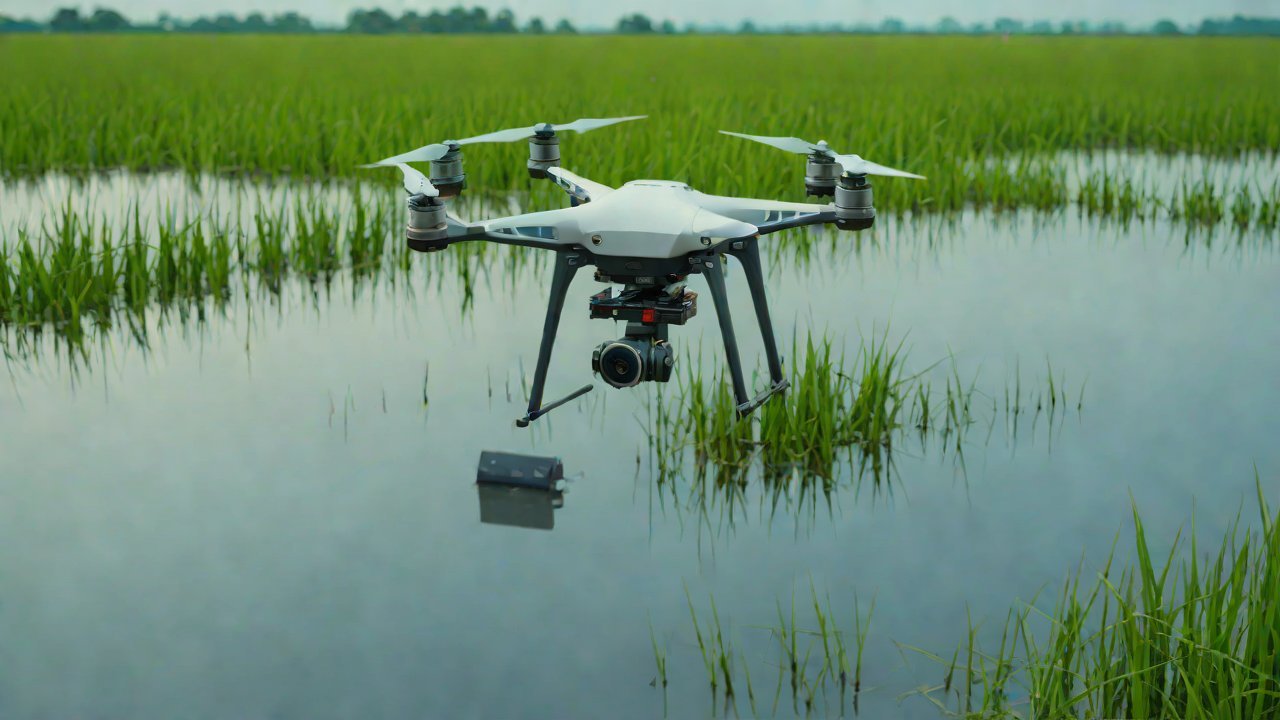
After floods, how can IoT devices quickly restore the monitoring capabilities of paddy fields?
The devastation caused by floods in agricultural regions is a stark reminder of the importance of efficient and reliable crop monitoring systems. Paddy fields, in particular, are highly susceptible to waterlogging, which can lead to significant losses in productivity and revenue. However, with the advent of IoT devices, it is now possible to quickly restore the monitoring capabilities of paddy fields even after floods have ravaged them. This report will delve into the various ways in which IoT devices can help farmers regain control over their crops and minimize losses.
1. Assessment of Current Monitoring Systems
Current crop monitoring systems rely heavily on manual inspections, which can be time-consuming and prone to human error. These systems often involve deploying a team of experts to manually assess the condition of the fields, which can lead to delays in decision-making and action. Furthermore, these systems are often limited by their inability to provide real-time data, making it challenging for farmers to respond quickly to changing conditions.
| Current Monitoring Systems | Limitations |
|---|---|
| Manual Inspections | Time-consuming, prone to human error, lack of real-time data |
| Satellite Imagery | Limited resolution, weather-dependent, high cost |
| Sensors and Drones | Limited coverage, high maintenance costs |
2. Role of IoT Devices in Restoring Monitoring Capabilities
IoT devices can play a crucial role in restoring the monitoring capabilities of paddy fields after floods. These devices can provide real-time data on soil moisture levels, temperature, and other critical parameters that affect crop growth. By leveraging this data, farmers can make informed decisions about irrigation, fertilization, and pest control, thereby minimizing losses and optimizing yields.
| IoT Devices | Benefits |
|---|---|
| Soil Moisture Sensors | Real-time soil moisture data, optimized irrigation |
| Temperature and Humidity Sensors | Accurate temperature and humidity readings, optimal crop growth conditions |
| Drones with Multispectral Cameras | High-resolution images, accurate crop health assessment |
3. Implementation Strategies for IoT Devices
Implementing IoT devices in paddy fields requires a strategic approach that takes into account the specific needs of each farm. The following strategies can be employed to ensure successful implementation:
- Sensor Placement: Carefully select and place sensors in areas where they will provide the most accurate data, such as near water sources or in areas with high soil moisture levels.
- Data Integration: Integrate sensor data with existing farm management systems to provide a comprehensive view of crop health and performance.
- Real-time Monitoring: Provide real-time monitoring capabilities to enable farmers to respond quickly to changing conditions.
| Implementation Strategies | Benefits |
|---|---|
| Sensor Placement | Accurate data, optimized sensor deployment |
| Data Integration | Comprehensive farm management insights, improved decision-making |
| Real-time Monitoring | Quick response to changing conditions, minimized losses |
4. Market Trends and AIGC Perspectives
The market for IoT devices in agriculture is rapidly growing, driven by increasing demand for efficient crop monitoring systems. According to a report by MarketsandMarkets, the global IoT in agriculture market is expected to reach $5.6 billion by 2025.
| Market Trends | AIGC Perspectives |
|---|---|
| Increasing Demand for Efficient Crop Monitoring Systems | AIGC models can help farmers optimize sensor placement and data integration, improving crop yields and reducing losses |
5. Challenges and Future Directions
While IoT devices have the potential to revolutionize crop monitoring in paddy fields, several challenges need to be addressed before widespread adoption can occur. These include:
- Cost: The high cost of IoT devices and infrastructure can be a significant barrier to adoption.
- Interoperability: Ensuring seamless integration between different IoT devices and systems can be challenging.
| Challenges | Future Directions |
|---|---|
| High Cost | Affordable and accessible IoT solutions, government subsidies for farmers |
| Interoperability Challenges | Standardized protocols for IoT device communication, development of open-source platforms |
In conclusion, IoT devices have the potential to quickly restore the monitoring capabilities of paddy fields after floods. By leveraging real-time data from sensors and other sources, farmers can make informed decisions about crop management, thereby minimizing losses and optimizing yields. However, several challenges need to be addressed before widespread adoption can occur.
6. Recommendations
Based on this report, we recommend that:
- Farmers: Invest in IoT devices and infrastructure to improve crop monitoring capabilities.
- Government Agencies: Provide subsidies for farmers to adopt IoT technologies.
- Researchers and Developers: Develop affordable and accessible IoT solutions, standardized protocols for device communication.
By working together, we can ensure that paddy fields are equipped with the latest technology to monitor and respond to changing conditions, thereby reducing losses and improving crop yields.
IOT Cloud Platform
IOT Cloud Platform is an IoT portal established by a Chinese IoT company, focusing on technical solutions in the fields of agricultural IoT, industrial IoT, medical IoT, security IoT, military IoT, meteorological IoT, consumer IoT, automotive IoT, commercial IoT, infrastructure IoT, smart warehousing and logistics, smart home, smart city, smart healthcare, smart lighting, etc.
The IoT Cloud Platform blog is a top IoT technology stack, providing technical knowledge on IoT, robotics, artificial intelligence (generative artificial intelligence AIGC), edge computing, AR/VR, cloud computing, quantum computing, blockchain, smart surveillance cameras, drones, RFID tags, gateways, GPS, 3D printing, 4D printing, autonomous driving, etc.