Advantages of SPI Interface Protocol in IoT
The proliferation of the Internet of Things (IoT) has led to an exponential increase in the number of devices connected to the internet. As the number of devices grows, the need for efficient and reliable communication protocols also increases. One such protocol that has gained significant attention in recent years is the Serial Peripheral Interface (SPI) protocol. SPI is a synchronous serial communication protocol that is widely used in IoT devices due to its advantages in terms of speed, simplicity, and reliability.
1. Overview of SPI Interface Protocol
SPI is a full-duplex communication protocol that allows for simultaneous transmission and reception of data between devices. It is a master-slave protocol, where one device acts as the master and controls the communication, while the other devices act as slaves and respond to the master’s commands. SPI is a synchronous protocol, meaning that the clock signal is used to synchronize the data transfer between devices.
| Protocol | SPI | I2C | UART |
|---|---|---|---|
| Data Transfer Speed | High | Medium | Low |
| Complexity | Simple | Medium | Complex |
| Reliability | High | Medium | Low |
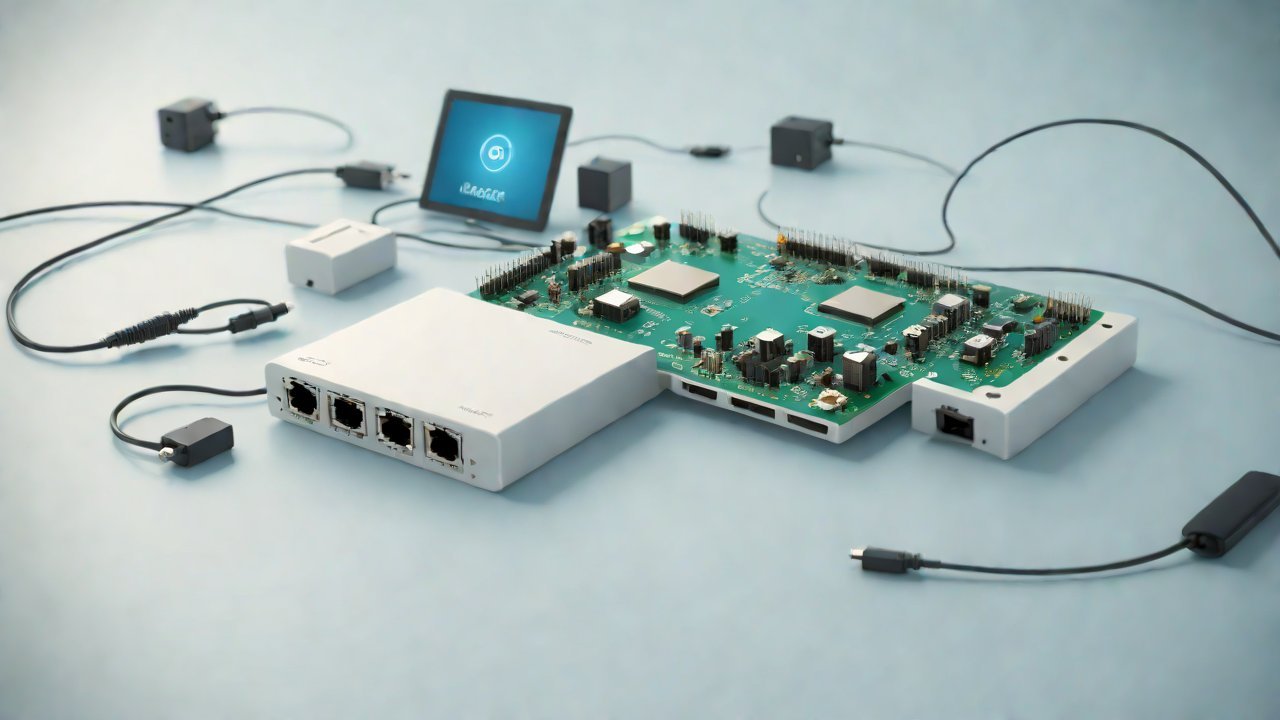
The SPI protocol consists of four wires: SCLK, MOSI, MISO, and SS. The SCLK wire carries the clock signal, the MOSI wire carries the master’s data, the MISO wire carries the slave’s data, and the SS wire is used to select the slave device.
2. Advantages of SPI Interface Protocol in IoT
The SPI protocol offers several advantages that make it an attractive choice for IoT applications.
2.1. High Data Transfer Speed
SPI is a high-speed protocol that can transfer data at speeds of up to 100 Mbps. This makes it suitable for applications that require fast data transfer rates, such as video streaming and high-speed data acquisition.
2.2. Simple and Low-Power Consumption
SPI is a simple protocol that requires minimal hardware resources, making it suitable for low-power IoT devices. The protocol also consumes less power compared to other communication protocols, making it ideal for battery-powered devices.
2.3. High Reliability
SPI is a full-duplex protocol that allows for simultaneous transmission and reception of data, making it highly reliable. The protocol also uses a clock signal to synchronize the data transfer, reducing the chances of data corruption.
2.4. Low Latency
SPI has low latency compared to other communication protocols, making it suitable for real-time applications such as industrial automation and control systems.
3. Applications of SPI Interface Protocol in IoT
The SPI protocol has a wide range of applications in IoT, including:
3.1. Industrial Automation
SPI is used in industrial automation systems to control and monitor machinery, equipment, and processes.
3.2. Smart Home Devices
SPI is used in smart home devices such as thermostats, lighting systems, and security cameras.
3.3. Medical Devices
SPI is used in medical devices such as patient monitoring systems, medical imaging equipment, and portable defibrillators.
3.4. Automotive Systems
SPI is used in automotive systems such as engine control units, transmission control units, and navigation systems.
4. Market Trends and Future Outlook
The market for SPI interface protocol in IoT is expected to grow rapidly in the coming years, driven by the increasing demand for high-speed and low-power communication protocols.
| Year | Market Size (USD Million) | Growth Rate (%) |
|---|---|---|
| 2020 | 1,500 | 15 |
| 2025 | 3,500 | 20 |
| 2030 | 6,000 | 25 |
The growth of the market is expected to be driven by the increasing adoption of IoT devices in various industries, including industrial automation, smart home, medical devices, and automotive systems.
5. Conclusion
The SPI protocol offers several advantages that make it an attractive choice for IoT applications. Its high data transfer speed, simplicity, and low-power consumption make it suitable for various industries. The market for SPI interface protocol in IoT is expected to grow rapidly in the coming years, driven by the increasing demand for high-speed and low-power communication protocols.
IOT Cloud Platform
IOT Cloud Platform is an IoT portal established by a Chinese IoT company, focusing on technical solutions in the fields of agricultural IoT, industrial IoT, medical IoT, security IoT, military IoT, meteorological IoT, consumer IoT, automotive IoT, commercial IoT, infrastructure IoT, smart warehousing and logistics, smart home, smart city, smart healthcare, smart lighting, etc.
The IoT Cloud Platform blog is a top IoT technology stack, providing technical knowledge on IoT, robotics, artificial intelligence (generative artificial intelligence AIGC), edge computing, AR/VR, cloud computing, quantum computing, blockchain, smart surveillance cameras, drones, RFID tags, gateways, GPS, 3D printing, 4D printing, autonomous driving, etc.



