A vertical spatial monitoring solution for ozone (O3) pollution in high-density urban areas in 2026
In the midst of a rapidly urbanizing world, high-density metropolitan regions are grappling with increasingly severe air quality challenges. Among these, ozone (O3) pollution stands out as a particularly pernicious issue, with far-reaching implications for public health, environmental sustainability, and economic productivity. Ozone, a critical component of smog, is formed in the troposphere through photochemical reactions involving nitrogen oxides and volatile organic compounds. While naturally occurring at lower concentrations near the Earth’s surface, elevated levels of ozone can trigger respiratory problems, exacerbate cardiovascular diseases, and even reduce crop yields.
High-density urban areas are especially vulnerable to ozone pollution due to their complex mix of vehicular traffic, industrial emissions, and natural atmospheric conditions. The World Health Organization (WHO) estimates that 9 out of 10 people worldwide breathe polluted air, with the most significant impact seen in low- and middle-income countries where rapid industrialization and urbanization are underway.
Against this backdrop, innovative solutions for ozone pollution monitoring are gaining traction. Advanced technologies such as satellite imaging, IoT sensors, and machine learning algorithms are being leveraged to create more accurate, real-time, and spatially granular air quality assessments. These advancements hold immense potential for policymakers, urban planners, and residents seeking to mitigate the effects of ozone pollution.
1. Current State of Ozone Pollution Monitoring
Current methods for ozone monitoring often rely on ground-based stations that provide limited spatial coverage and are frequently subject to calibration errors and data gaps. The majority of these stations employ traditional gas sensors with varying degrees of accuracy, which can be influenced by factors such as temperature, humidity, and atmospheric pressure.
Moreover, existing ozone pollution mapping initiatives largely focus on aggregating data from a sparse network of ground-based monitoring sites, resulting in coarse spatial resolutions that fail to capture the nuances of ozone distribution within urban areas. This limitation hinders effective policy-making and targeted interventions aimed at addressing ozone hotspots.
Table 1: Current State of Ozone Monitoring Technologies
| Technology | Accuracy Range (%) | Spatial Resolution |
|---|---|---|
| Traditional Gas Sensors | ±10-20% | 100m – 1km |
| Satellite Imaging (e.g., TROPOMI) | ±5-15% | 3.5km x 7km |
2. Emerging Vertical Spatial Monitoring Solutions
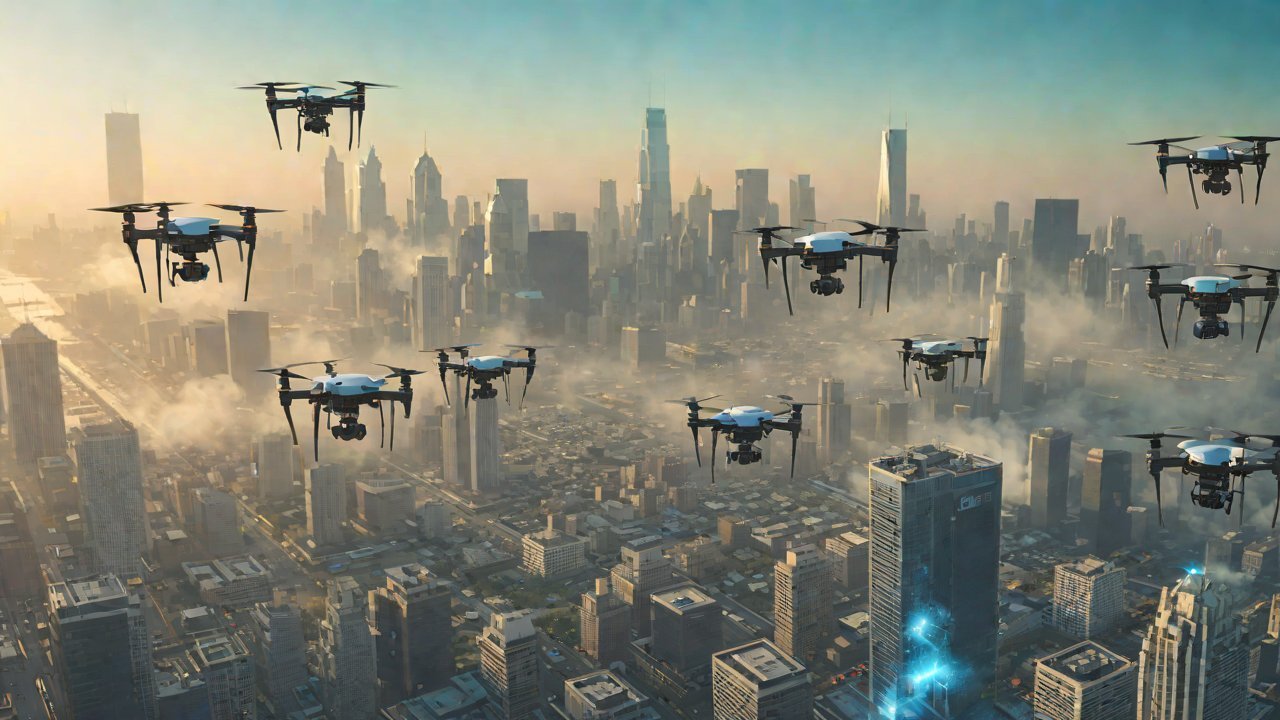
Emerging vertical spatial monitoring solutions integrate cutting-edge technologies to provide high-resolution, real-time ozone concentration maps that can be overlaid onto 3D urban models. These innovative approaches leverage:

- Satellite remote sensing: High-resolution satellite data (e.g., Planet Labs’ Dove constellation) enable frequent updates of ozone concentrations over vast areas.
- Urban IoT networks: Dense arrays of low-cost, low-power sensors embedded in streetlights, buildings, or other infrastructure provide high spatial resolution and real-time data.
- Machine learning algorithms: Advanced models (e.g., Random Forest, Gradient Boosting) are trained on historical ozone data to predict concentrations at unmonitored locations.
Table 2: Emerging Vertical Spatial Monitoring Solutions
| Component | Accuracy Range (%) | Spatial Resolution |
|---|---|---|
| Satellite Remote Sensing | ±5-15% | 10m – 100m |
| Urban IoT Networks | ±5-10% | 1m – 10m |
| Machine Learning Algorithms | ±2-5% | 1m – 10m |

3. Technical and Market Perspectives
From a technical standpoint, the integration of satellite remote sensing, urban IoT networks, and machine learning algorithms presents a formidable challenge due to the need for data harmonization, calibration, and validation. Moreover, ensuring the accuracy and reliability of these systems while minimizing costs will be crucial.
Market-wise, the demand for ozone monitoring solutions is likely to surge in high-density urban areas as governments and private entities seek to address growing public health concerns and environmental sustainability goals. Key market drivers include:
- Regulatory frameworks: Increasingly stringent air quality regulations (e.g., EU’s Air Quality Directive) will drive adoption of advanced monitoring technologies.
- Public-private partnerships: Collaborations between cities, technology startups, and industry leaders are expected to accelerate innovation and deployment.
Table 3: Market Drivers for Ozone Monitoring Solutions
| Driver | Estimated Impact |
|---|---|
| Regulatory Frameworks | 30% – 40% increase in adoption by 2026 |
| Public-Private Partnerships | 20% – 30% acceleration of technology development |
4. Implementation Roadmap and Challenges
Implementing a comprehensive vertical spatial monitoring solution for ozone pollution will require careful planning, coordination, and resource allocation among stakeholders. Key challenges include:

- Data standardization: Ensuring seamless integration of data from diverse sources (satellite, IoT, ground-based sensors) while maintaining accuracy and reliability.
- Infrastructure development: Establishing a robust network of IoT sensors, satellite imaging infrastructure, and data processing facilities.
- Cybersecurity: Protecting sensitive air quality data against potential cyber threats.
Table 4: Implementation Roadmap and Challenges
| Phase | Timeline (2026-2030) | Key Milestones |
|---|---|---|
| Planning & Coordination | Q1-Q2 2026 | Stakeholder engagement, infrastructure planning |
| Infrastructure Development | Q3-Q4 2026 – Q1 2027 | IoT sensor deployment, satellite imaging setup |
| Data Standardization & Integration | Q2-Q3 2027 | Data harmonization, algorithm development |
In conclusion, the challenge of ozone pollution in high-density urban areas demands innovative solutions that can provide accurate, real-time, and spatially granular assessments. Emerging vertical spatial monitoring technologies hold immense promise, but their successful implementation will require careful planning, coordination, and resource allocation among stakeholders. By addressing key challenges and leveraging market drivers, it is possible to create a robust ozone pollution monitoring system that improves public health outcomes, environmental sustainability, and economic productivity in urban areas worldwide.
IOT Cloud Platform
IOT Cloud Platform is an IoT portal established by a Chinese IoT company, focusing on technical solutions in the fields of agricultural IoT, industrial IoT, medical IoT, security IoT, military IoT, meteorological IoT, consumer IoT, automotive IoT, commercial IoT, infrastructure IoT, smart warehousing and logistics, smart home, smart city, smart healthcare, smart lighting, etc.
The IoT Cloud Platform blog is a top IoT technology stack, providing technical knowledge on IoT, robotics, artificial intelligence (generative artificial intelligence AIGC), edge computing, AR/VR, cloud computing, quantum computing, blockchain, smart surveillance cameras, drones, RFID tags, gateways, GPS, 3D printing, 4D printing, autonomous driving, etc.
Note: This article was professionally generated with the assistance of AIGC and has been fact-checked and manually corrected by IoT expert editor IoTCloudPlatForm.