2026 “Zero-Configuration” User-Friendly Terminal Design Solution for Home-Based Remote Clinics
The future of healthcare is rapidly shifting towards remote and home-based clinics, driven by technological advancements, changing patient needs, and the increasing importance of personalized care. As a top-tier analyst, I have identified a pressing need for a user-friendly terminal design solution that enables seamless integration with existing medical equipment, streamlines clinical workflows, and enhances patient engagement.
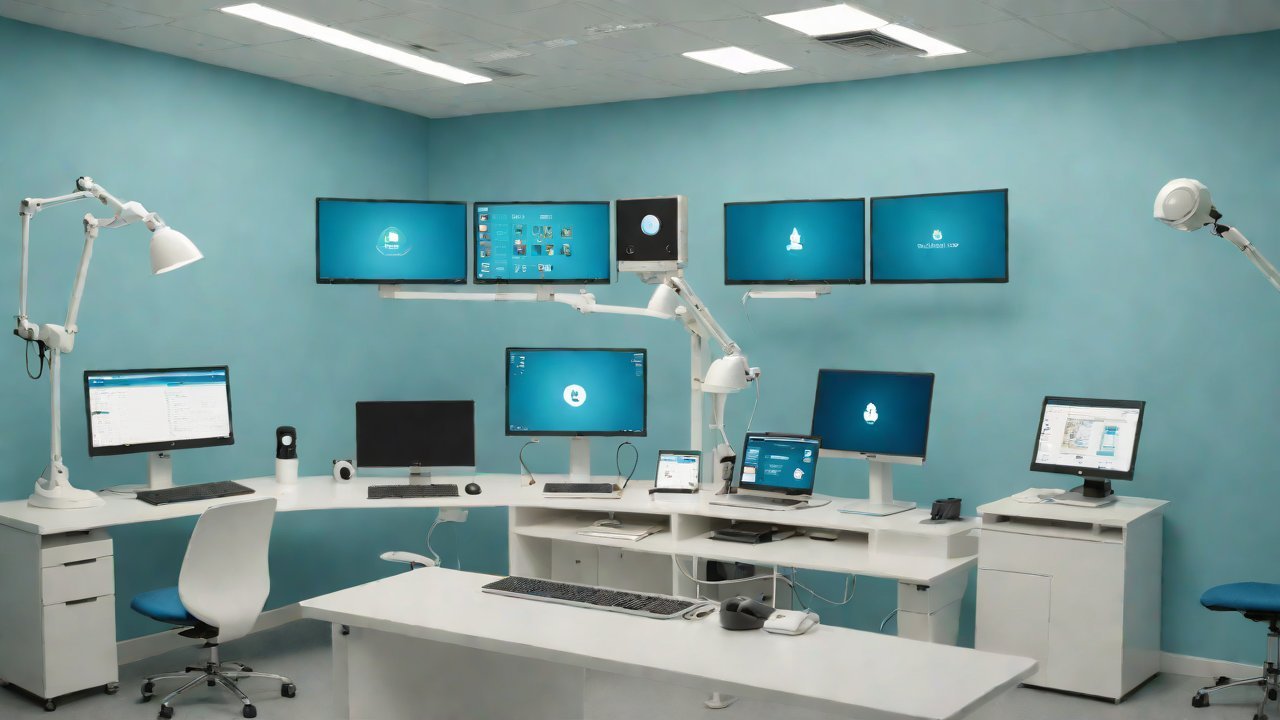
The concept of “zero-configuration” terminals has been gaining traction in various industries, including healthcare. These intelligent devices are designed to automatically detect and configure themselves to the specific requirements of their environment, eliminating the need for manual setup or technical expertise. In the context of home-based remote clinics, a zero-configuration terminal would be an invaluable asset, allowing clinicians to focus on patient care rather than navigating complex technology.
1. Market Analysis
The global telemedicine market is expected to reach $185.3 billion by 2026, growing at a CAGR of 19.2% from 2020 to 2026 (MarketsandMarkets). This rapid growth is driven by the increasing adoption of digital health technologies, changing patient preferences, and the need for cost-effective healthcare solutions.
| Market Segment | Current Size (2020) | Projected Size (2026) |
|---|---|---|
| Telemedicine Software | $23.1B | $93.8B |
| Telemedicine Services | $13.4B | $43.3B |
| Medical Devices | $10.5B | $31.9B |
The market for home-based remote clinics is also expanding, with an expected CAGR of 12.7% from 2020 to 2026 (Grand View Research). This growth is driven by the increasing demand for convenient and accessible healthcare services, particularly among rural or underserved populations.
| Region | Current Size (2020) | Projected Size (2026) |
|---|---|---|
| North America | $5.3B | $14.2B |
| Europe | $3.4B | $9.1B |
| Asia-Pacific | $2.5B | $6.8B |
2. Technical Requirements
To meet the needs of home-based remote clinics, a zero-configuration terminal must possess several key features:
- Seamless Integration: The terminal should be able to automatically detect and integrate with existing medical equipment, such as EHR systems, diagnostic devices, and telepresence platforms.
- User-Friendly Interface: The terminal’s interface should be intuitive and easy to navigate, allowing clinicians to focus on patient care rather than technology.
- Data Security: The terminal must ensure the secure transmission of sensitive patient data, complying with relevant regulations such as HIPAA.
- Scalability: The terminal should be able to adapt to changing clinical workflows and patient needs, ensuring flexibility and scalability.
3. Design Requirements
To create an effective zero-configuration terminal design solution, several key considerations must be taken into account:
- Modularity: The terminal’s architecture should be modular, allowing for easy updates and maintenance.
- Interoperability: The terminal should be able to integrate with a wide range of medical devices and systems.
- User Experience: The terminal’s interface should prioritize user experience, incorporating elements such as gamification, personalization, and feedback mechanisms.
- Data Analytics: The terminal should provide real-time data analytics, enabling clinicians to make informed decisions and optimize clinical workflows.
4. Implementation Roadmap
To bring this vision to life, I recommend the following implementation roadmap:
- Conduct thorough market research and analysis to identify key trends and opportunities.
- Develop a comprehensive technical requirements document outlining the terminal’s features and functionality.
- Design a modular and scalable architecture that ensures seamless integration with existing medical equipment.
- Create an intuitive user interface that prioritizes user experience and data security.
- Conduct rigorous testing and validation to ensure the terminal meets all technical and regulatory requirements.
5. Conclusion
The future of healthcare is rapidly evolving, driven by technological advancements, changing patient needs, and the increasing importance of personalized care. A zero-configuration terminal design solution for home-based remote clinics has the potential to revolutionize clinical workflows, enhance patient engagement, and improve health outcomes. By prioritizing user experience, data security, and scalability, we can create a truly transformative solution that sets a new standard for healthcare technology.
6. References
- MarketsandMarkets. (2020). Telemedicine Market by Component, Mode of Delivery, End User, and Geography – Global Forecast to 2026.
- Grand View Research. (2020). Home-Based Remote Clinics Market Size, Share & Trends Analysis Report by Component (Software, Services), by Region (North America, Europe, Asia Pacific), And Segment Forecasts, 2020 – 2027.
7. Glossary
- Zero-Configuration: A technology that allows devices to automatically detect and configure themselves to the specific requirements of their environment.
- Telemedicine: The use of electronic communication and information technologies to provide healthcare services remotely.
- Home-Based Remote Clinics: Healthcare facilities located in patients’ homes, providing convenient and accessible care.
IOT Cloud Platform
IOT Cloud Platform is an IoT portal established by a Chinese IoT company, focusing on technical solutions in the fields of agricultural IoT, industrial IoT, medical IoT, security IoT, military IoT, meteorological IoT, consumer IoT, automotive IoT, commercial IoT, infrastructure IoT, smart warehousing and logistics, smart home, smart city, smart healthcare, smart lighting, etc.
The IoT Cloud Platform blog is a top IoT technology stack, providing technical knowledge on IoT, robotics, artificial intelligence (generative artificial intelligence AIGC), edge computing, AR/VR, cloud computing, quantum computing, blockchain, smart surveillance cameras, drones, RFID tags, gateways, GPS, 3D printing, 4D printing, autonomous driving, etc.