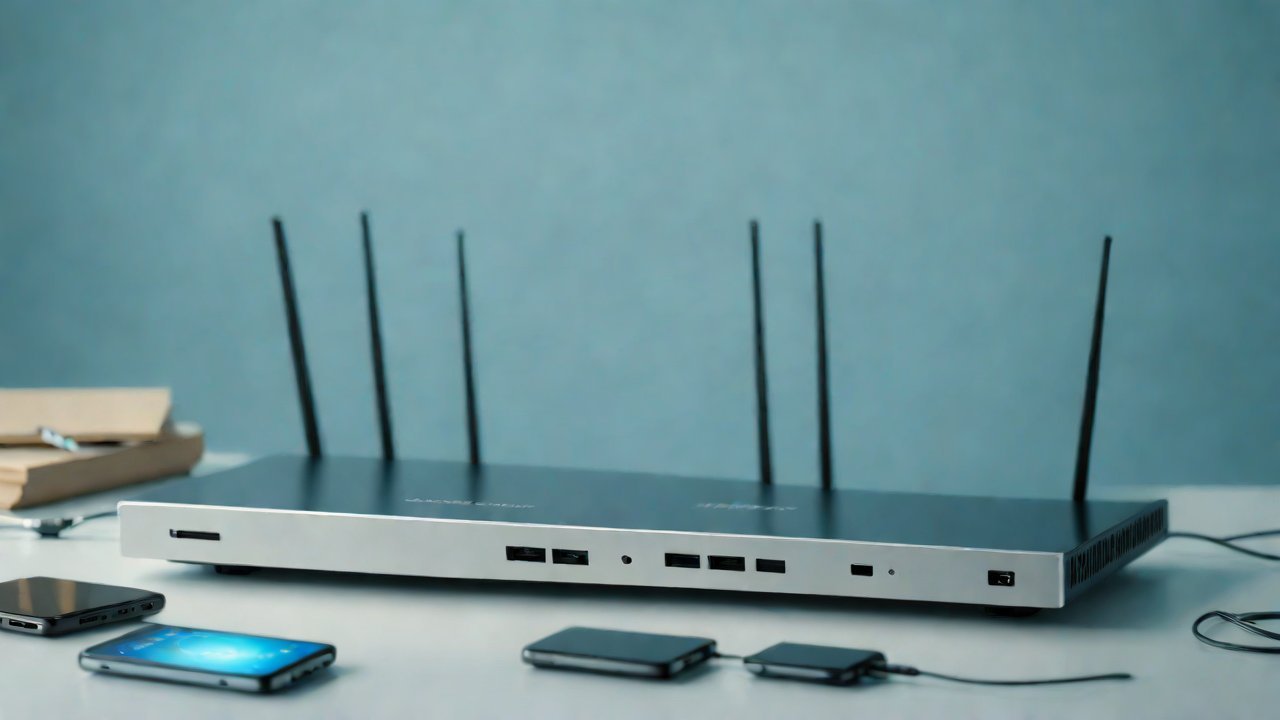
2026 Solution to Prevent Signal Interruptions in Remote Monitoring Data Due to Overlapping WiFi Frequencies
As the world becomes increasingly reliant on remote monitoring systems, the importance of maintaining a stable and uninterrupted signal has become paramount. The proliferation of wireless fidelity (WiFi) networks has led to a surge in connectivity, but it also poses significant challenges for remote monitoring applications. Overlapping WiFi frequencies can cause signal interruptions, rendering data transmission unreliable and hindering the effectiveness of these systems.
Remote monitoring systems are used extensively across various industries, including manufacturing, healthcare, and energy management. These systems enable real-time monitoring and control of equipment, machines, and processes, allowing organizations to optimize efficiency, reduce downtime, and improve overall productivity.
However, as WiFi networks become increasingly ubiquitous, they also introduce interference risks that can compromise the integrity of remote monitoring data. When multiple WiFi frequencies overlap, it creates a phenomenon known as co-channel interference (CCI), which can lead to signal degradation or loss.
1. Problem Statement
Remote monitoring systems rely on stable and reliable communication links to transmit data between sensors, devices, and central control units. However, the increasing number of WiFi networks operating in close proximity has created a complex problem for remote monitoring applications. The overlapping frequencies not only cause signal interference but also lead to packet loss, latency, and data corruption.
The severity of this issue is exacerbated by several factors:
- Growing demand for connectivity: As more devices are connected to the internet, the number of WiFi networks operating in close proximity increases.
- Co-channel interference (CCI): When multiple WiFi frequencies overlap, it creates CCI, which can lead to signal degradation or loss.
- Signal strength and quality: The signal strength and quality of remote monitoring data transmission are significantly affected by overlapping WiFi frequencies.
2. Impact on Remote Monitoring Applications
The consequences of signal interruptions in remote monitoring applications are far-reaching and can have significant financial implications for organizations.

- Equipment downtime: Signal interruptions can lead to equipment downtime, resulting in reduced productivity and increased maintenance costs.
- Data corruption: Overlapping WiFi frequencies can cause data corruption, rendering it unreliable and compromising the integrity of remote monitoring systems.
- Security risks: Signal interruptions can expose remote monitoring systems to security risks, including unauthorized access or data breaches.
3. Current Solutions
Several solutions have been proposed to mitigate the effects of overlapping WiFi frequencies on remote monitoring applications. These include:
- Frequency hopping spread spectrum (FHSS): This technique involves rapidly switching between different frequency channels to minimize interference.
- Direct sequence spread spectrum (DSSS): This method uses a pseudo-random sequence to encode data, allowing for multiple devices to share the same frequency channel.
- Channel bonding: This approach involves aggregating multiple frequency channels to create a single high-speed channel.
However, these solutions have their limitations and may not be effective in all scenarios. For instance:

- Complexity and cost: Implementing FHSS or DSSS requires complex hardware and software modifications, which can increase costs.
- Interoperability issues: Channel bonding may lead to interoperability issues between devices from different manufacturers.
4. Emerging Trends
Several emerging trends are expected to shape the future of remote monitoring applications and mitigate the effects of overlapping WiFi frequencies:
- Artificial intelligence (AI) and machine learning (ML): AI and ML can be used to predict signal interruptions and optimize communication protocols.
- Software-defined networking (SDN): SDN enables network administrators to program and manage networks using software, allowing for more efficient resource allocation and reduced latency.
- Internet of Things (IoT) security: As IoT devices become increasingly integrated into remote monitoring systems, ensuring their security is crucial.
5. Future Directions
To prevent signal interruptions in remote monitoring data due to overlapping WiFi frequencies, future research should focus on:

- Developing more efficient communication protocols: Researchers should explore new communication protocols that can adapt to changing network conditions and mitigate the effects of CCI.
- Improving signal strength and quality: Techniques such as beamforming and multiple-input multiple-output (MIMO) antennas can be used to enhance signal strength and quality.
- Enhancing AI and ML capabilities: AI and ML algorithms should be developed to predict and adapt to changing network conditions, ensuring reliable data transmission.
6. Conclusion
The problem of overlapping WiFi frequencies causing signal interruptions in remote monitoring applications is complex and multifaceted. While current solutions offer some relief, they have limitations and may not be effective in all scenarios. Emerging trends such as AI, ML, SDN, and IoT security hold promise for mitigating the effects of CCI and ensuring reliable data transmission.
7. Recommendations
Based on this analysis, we recommend that organizations and researchers focus on:
- Developing more efficient communication protocols: Researchers should explore new communication protocols that can adapt to changing network conditions.
- Improving signal strength and quality: Techniques such as beamforming and MIMO antennas can be used to enhance signal strength and quality.
- Enhancing AI and ML capabilities: AI and ML algorithms should be developed to predict and adapt to changing network conditions, ensuring reliable data transmission.
By addressing these areas, we can create a more robust and resilient remote monitoring infrastructure that minimizes the impact of overlapping WiFi frequencies on signal integrity.
IOT Cloud Platform
IOT Cloud Platform is an IoT portal established by a Chinese IoT company, focusing on technical solutions in the fields of agricultural IoT, industrial IoT, medical IoT, security IoT, military IoT, meteorological IoT, consumer IoT, automotive IoT, commercial IoT, infrastructure IoT, smart warehousing and logistics, smart home, smart city, smart healthcare, smart lighting, etc.
The IoT Cloud Platform blog is a top IoT technology stack, providing technical knowledge on IoT, robotics, artificial intelligence (generative artificial intelligence AIGC), edge computing, AR/VR, cloud computing, quantum computing, blockchain, smart surveillance cameras, drones, RFID tags, gateways, GPS, 3D printing, 4D printing, autonomous driving, etc.