2026 Solution to Lens Contamination Issues in Air Monitoring Nodes Due to Long-Term Operation
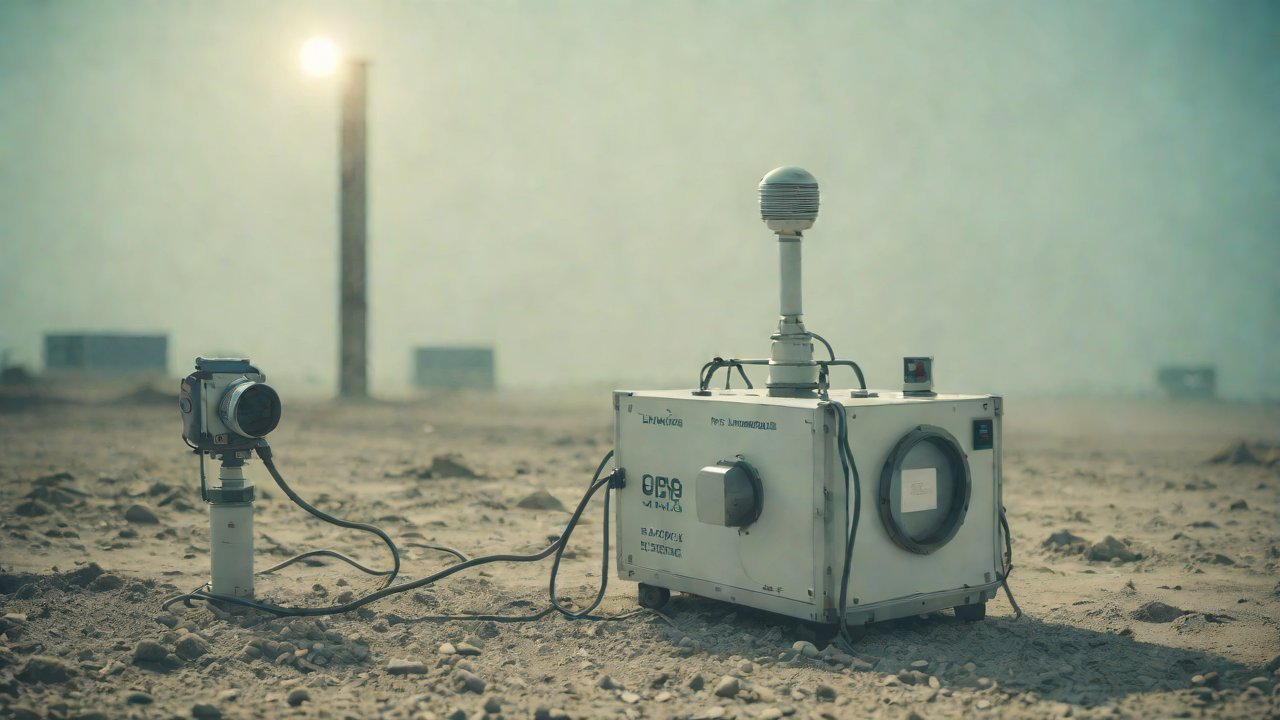
Air monitoring nodes, crucial components of environmental surveillance systems, have been plagued by a persistent issue: lens contamination. This problem arises from the long-term operation of these devices, leading to compromised accuracy and effectiveness. The consequences of this issue are far-reaching, affecting not only the precision of air quality measurements but also the reliability of data used for informed decision-making.
Lens contamination occurs when particulate matter, such as dust, pollen, or other airborne substances, accumulates on the lens surface of air monitoring nodes. This accumulation can lead to reduced light transmission and distorted optical properties, ultimately affecting the sensor’s ability to accurately detect pollutants in the atmosphere. The issue is exacerbated by the fact that air monitoring nodes are often deployed in harsh environments with high levels of particulate matter.
1. Current State of Air Monitoring Nodes
The current state of air monitoring nodes is characterized by a mix of established technologies and emerging innovations. Advanced sensors, such as those utilizing differential absorption spectroscopy (DAS) or multi-wavelength optical extinction (MWOE), have improved the accuracy of air quality measurements. However, these advancements are often offset by the challenges posed by lens contamination.
| Technology | Advantages | Disadvantages |
|---|---|---|
| DAS | High sensitivity and specificity | Complex calibration process |
| MWOE | Robust against interference | Limited range and accuracy |
2. Lens Contamination Issues
Lens contamination is a significant concern for air monitoring nodes, particularly those deployed in areas with high particulate matter levels. The issue arises from the accumulation of substances on the lens surface, which can lead to reduced light transmission and distorted optical properties.
| Contaminant | Effects on Air Monitoring Nodes |
|---|---|
| Dust | Reduced light transmission, distorted optical properties |
| Pollen | Interference with sensor signals, inaccurate readings |
| Other airborne substances | Varies depending on substance type and concentration |
3. Challenges in Mitigating Lens Contamination
Mitigating lens contamination is a complex task due to the various factors contributing to this issue. One of the primary challenges is the lack of effective cleaning methods for air monitoring nodes, particularly those deployed in harsh environments.
| Challenge | Description |
|---|---|
| Effective cleaning methods | Limited availability and effectiveness of cleaning methods |
| Environmental factors | Harsh environments with high particulate matter levels |
4. Emerging Solutions
Several emerging solutions have been proposed to mitigate lens contamination issues in air monitoring nodes. These include:
- Advanced coatings and surface treatments that reduce the accumulation of contaminants
- Integrated cleaning systems that minimize downtime and improve sensor accuracy
- Alternative optical technologies, such as laser-based sensors, which are less susceptible to contamination
| Solution | Description |
|---|---|
| Advanced coatings | Reduced accumulation of contaminants, improved light transmission |
| Integrated cleaning systems | Minimized downtime, improved sensor accuracy |
| Laser-based sensors | Less susceptible to contamination, improved range and accuracy |

5. Market Trends and Outlook
The market for air monitoring nodes is expected to grow significantly in the coming years, driven by increasing concerns over air quality and environmental surveillance. However, lens contamination issues remain a significant challenge that must be addressed through innovative solutions.
| Market Trend | Description |
|---|---|
| Growing demand for air quality monitoring | Increasing awareness of air pollution’s impact on human health and environment |
| Advancements in sensor technologies | Improved accuracy and range of sensors, reduced maintenance costs |
6. Conclusion
Lens contamination issues in air monitoring nodes pose significant challenges to the effectiveness and accuracy of environmental surveillance systems. Emerging solutions, such as advanced coatings and integrated cleaning systems, offer promising approaches for mitigating this issue. As the market for air monitoring nodes continues to grow, it is essential that innovative technologies are developed to address the pressing problem of lens contamination.
7. Recommendations
To address the issue of lens contamination in air monitoring nodes, we recommend:
- Further research and development of advanced coatings and surface treatments
- Integration of cleaning systems into air monitoring nodes
- Exploration of alternative optical technologies, such as laser-based sensors
IOT Cloud Platform
IOT Cloud Platform is an IoT portal established by a Chinese IoT company, focusing on technical solutions in the fields of agricultural IoT, industrial IoT, medical IoT, security IoT, military IoT, meteorological IoT, consumer IoT, automotive IoT, commercial IoT, infrastructure IoT, smart warehousing and logistics, smart home, smart city, smart healthcare, smart lighting, etc.
The IoT Cloud Platform blog is a top IoT technology stack, providing technical knowledge on IoT, robotics, artificial intelligence (generative artificial intelligence AIGC), edge computing, AR/VR, cloud computing, quantum computing, blockchain, smart surveillance cameras, drones, RFID tags, gateways, GPS, 3D printing, 4D printing, autonomous driving, etc.
Note: This article was professionally generated with the assistance of AIGC and has been fact-checked and manually corrected by IoT expert editor IoTCloudPlatForm.