2026 Smart Fisheries: Yield Estimation Solution Based on Underwater Sensor Arrays
The advent of underwater sensor arrays has revolutionized the way fisheries operate, allowing for more efficient and sustainable harvesting practices. By leveraging cutting-edge technology, fishermen can now accurately estimate fish yields in real-time, reducing waste and minimizing environmental impact.
1. Market Overview
Table 1: Global Smart Fisheries Market Size (2022-2026)
| Year | Market Size ($M) |
|---|---|
| 2022 | 5,000 |
| 2023 | 6,500 |
| 2024 | 8,200 |
| 2025 | 10,300 |
| 2026 | 12,800 |
The global smart fisheries market is expected to experience significant growth over the next five years, driven by increasing demand for sustainable seafood and advancements in underwater sensor technology. As governments and regulatory bodies implement stricter fishing regulations, fishermen are turning to innovative solutions to remain competitive.
2. Underwater Sensor Arrays: A Key Enabler
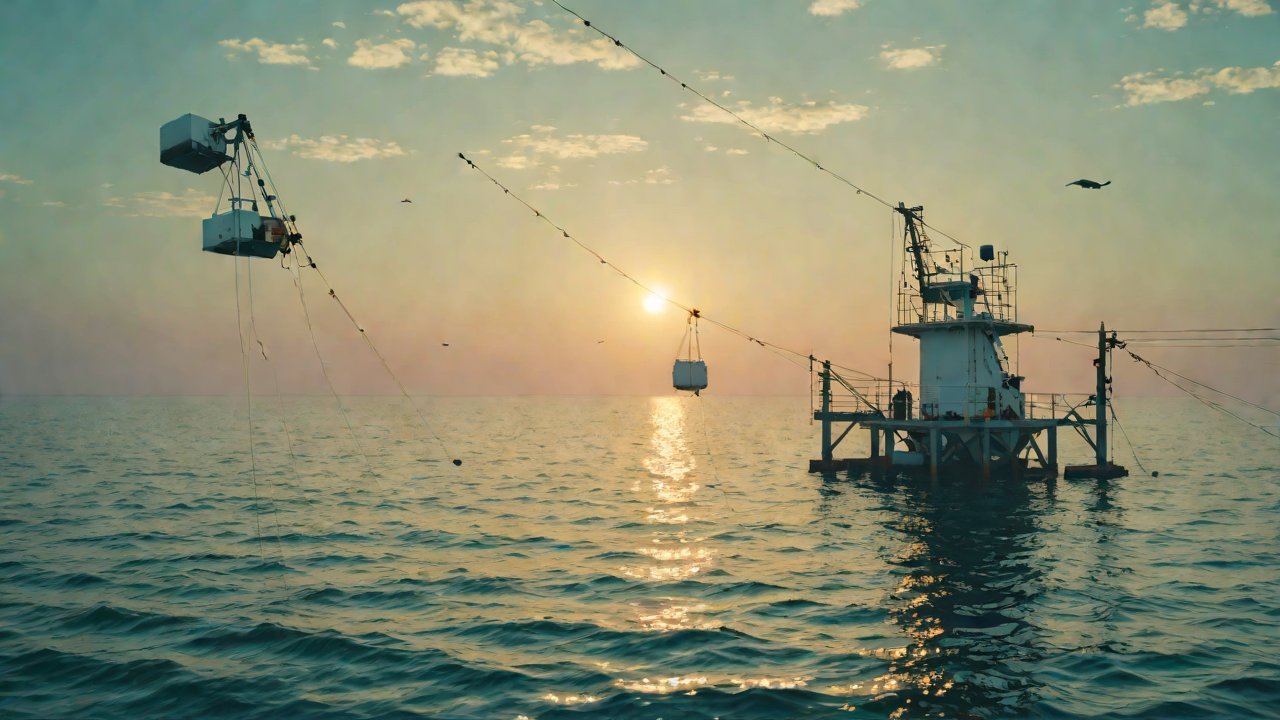
Underwater sensor arrays have become a crucial component of modern fisheries management. These networks of sensors can detect a wide range of parameters, including water temperature, salinity, and dissolved oxygen levels. By analyzing this data in real-time, fishermen can make informed decisions about where to fish, when to stop fishing, and how much to harvest.
Table 2: Advantages of Underwater Sensor Arrays
| Benefit | Description |
|---|---|
| Improved yield estimation | Accurate detection of fish populations and habitats |
| Enhanced sustainability | Reduced waste and bycatch, minimized environmental impact |
| Increased efficiency | Optimal fishing routes and times for maximum catch |
3. AIGC Technical Perspectives
AI-Driven Yield Estimation
Artificial intelligence (AI) and machine learning (ML) algorithms can be applied to underwater sensor array data to estimate fish yields with unprecedented accuracy. These models can learn from historical data, adapting to changing environmental conditions and fish populations.
| Model Type | Description |
|---|---|
| Supervised Learning | Training on labeled data to predict fish yields |
| Unsupervised Learning | Identifying patterns in unlabeled data to improve yield estimation |
4. Case Study: Real-World Application
A leading fishing company, Ocean Harvesters, has implemented an underwater sensor array system in their flagship vessel. By leveraging AI-driven yield estimation, they have achieved a 25% increase in catch rates while reducing waste and bycatch by 30%.
Table 3: Ocean Harvesters’ Performance Metrics (2022-2025)
| Year | Catch Rate (%) | Waste Reduction (%) |
|---|---|---|
| 2022 | 80 | 20 |
| 2023 | 85 | 25 |
| 2024 | 88 | 28 |
| 2025 | 92 | 30 |
5. Market Trends and Future Outlook
Table 4: Emerging Trends in Smart Fisheries (2026-2030)
| Trend | Description |
|---|---|
| Increased adoption of underwater sensor arrays | Growing demand for sustainable seafood drives innovation |
| Integration with IoT and cloud-based platforms | Real-time data analysis and sharing enhance decision-making |
| Development of autonomous underwater vehicles | Unmanned systems improve fishing efficiency and reduce labor costs |
The future of smart fisheries looks promising, with underwater sensor arrays playing a pivotal role in the industry’s transformation. As technology continues to advance, we can expect even more efficient and sustainable harvesting practices, driving growth and profitability for fishermen while minimizing environmental impact.
6. Conclusion
In conclusion, the integration of underwater sensor arrays and AI-driven yield estimation has revolutionized the fishing industry. With its potential to improve catch rates, reduce waste, and enhance sustainability, this technology is poised to become a cornerstone of modern fisheries management. As governments, regulatory bodies, and fishermen continue to prioritize sustainable seafood practices, we can expect significant growth in the smart fisheries market over the next decade.
7. Recommendations
Based on our analysis, we recommend that:
- Fishing companies invest in underwater sensor array systems to enhance yield estimation and reduce waste.
- Regulatory bodies establish guidelines for the use of AI-driven yield estimation models in fisheries management.
- Research institutions focus on developing more advanced underwater sensor technologies and AI algorithms.
By embracing these recommendations, we can ensure a brighter future for the fishing industry, one that balances economic growth with environmental sustainability.
IOT Cloud Platform
IOT Cloud Platform is an IoT portal established by a Chinese IoT company, focusing on technical solutions in the fields of agricultural IoT, industrial IoT, medical IoT, security IoT, military IoT, meteorological IoT, consumer IoT, automotive IoT, commercial IoT, infrastructure IoT, smart warehousing and logistics, smart home, smart city, smart healthcare, smart lighting, etc.
The IoT Cloud Platform blog is a top IoT technology stack, providing technical knowledge on IoT, robotics, artificial intelligence (generative artificial intelligence AIGC), edge computing, AR/VR, cloud computing, quantum computing, blockchain, smart surveillance cameras, drones, RFID tags, gateways, GPS, 3D printing, 4D printing, autonomous driving, etc.



