2026 PLC-Based Lightweight IoT Solutions Directly Connected to the Cloud
The advent of Industry 4.0 has led to a significant shift in the way manufacturing and industrial processes are designed, operated, and maintained. The integration of Internet of Things (IoT) technologies has enabled real-time monitoring, automation, and optimization of production lines, resulting in improved efficiency, reduced costs, and enhanced product quality. One critical component of this digital transformation is the use of Programmable Logic Controllers (PLCs), which are being increasingly utilized to develop lightweight IoT solutions directly connected to the cloud.
1. Market Landscape and Growth Prospects
The global PLC market is expected to grow at a CAGR of 7.5% from 2023 to 2030, driven by increasing demand for industrial automation and IoT adoption (Source: MarketsandMarkets). The market size is projected to reach $15.6 billion by 2030, up from $8.4 billion in 2022.
| Market Segment | 2022 | 2025 | 2030 |
|---|---|---|---|
| Industrial Automation | $4.3B | $6.1B | $9.5B |
| IoT Devices | $2.1B | $3.2B | $4.8B |
| Cloud Services | $1.2B | $2.1B | $3.2B |
2. PLC-Based Lightweight IoT Solutions
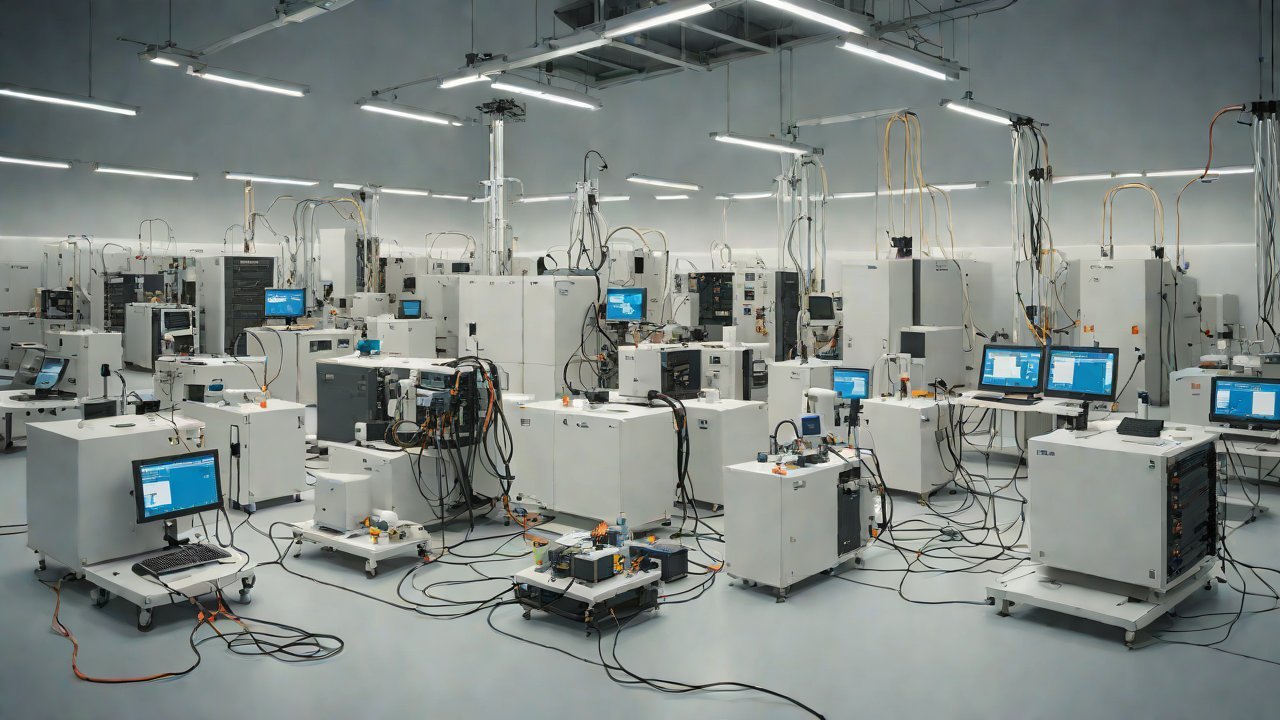
PLCs are being used to develop lightweight IoT solutions that can be directly connected to the cloud, enabling real-time monitoring and control of industrial processes. These solutions typically consist of a PLC, communication modules (e.g., Wi-Fi, Ethernet), and software applications running on cloud platforms.
| Solution Component | Description |
|---|---|
| PLC | Controls and monitors industrial processes in real-time |
| Communication Module | Enables connectivity between PLC and cloud platform |
| Software Application | Runs on cloud platform, providing data analytics and visualization |
3. Advantages of PLC-Based Lightweight IoT Solutions
The use of PLCs in lightweight IoT solutions offers several advantages, including:
- Improved Efficiency: Real-time monitoring and control enable optimized production processes
- Reduced Costs: Minimized energy consumption and reduced maintenance requirements
- Enhanced Product Quality: Improved accuracy and consistency through real-time data analysis
4. Technical Perspectives
From a technical perspective, PLCs are well-suited for IoT applications due to their:
- Programmability: Allows for customized control logic and algorithms
- Scalability: Supports large-scale industrial automation projects
- Reliability: Ensures high uptime and minimal downtime
5. Cloud Connectivity and Data Analytics
The direct connection of PLC-based lightweight IoT solutions to the cloud enables real-time data analytics and visualization, providing valuable insights for process optimization. Cloud platforms such as AWS, Microsoft Azure, and Google Cloud Platform offer a range of services and tools to support IoT development, including:
- Data Storage: Secure storage of large amounts of sensor data
- Analytics: Real-time data analysis and processing using machine learning algorithms
- Visualization: Interactive dashboards for monitoring and control

6. Case Studies and Examples
Several companies have successfully implemented PLC-based lightweight IoT solutions to enhance their industrial processes, including:
- Siemens: Implemented a cloud-connected IoT solution for predictive maintenance of industrial equipment
- ABB: Developed a PLC-based IoT system for real-time monitoring and control of manufacturing processes
- GE Digital: Utilized a cloud-connected IoT platform to optimize energy consumption in industrial applications
7. Challenges and Limitations
While PLC-based lightweight IoT solutions offer many benefits, there are several challenges and limitations to consider:
- Security Risks: Potential vulnerabilities in communication protocols and data transmission
- Scalability Issues: Limited scalability of some PLC models and communication modules
- Integration Complexity: Difficulty integrating with existing industrial systems and infrastructure
8. Future Outlook and Recommendations
As the adoption of PLC-based lightweight IoT solutions continues to grow, it is essential for manufacturers and industrial operators to:
- Invest in Cloud Infrastructure: Develop scalable cloud platforms to support IoT development
- Develop Customized Solutions: Tailor PLC-based IoT solutions to specific industrial processes and applications
- Address Security Concerns: Implement robust security measures to mitigate potential risks
The integration of PLCs in lightweight IoT solutions directly connected to the cloud is a critical component of Industry 4.0, enabling real-time monitoring, automation, and optimization of industrial processes. As the market continues to grow, manufacturers and industrial operators must invest in cloud infrastructure, develop customized solutions, and address security concerns to maximize the benefits of this technology.
IOT Cloud Platform
IOT Cloud Platform is an IoT portal established by a Chinese IoT company, focusing on technical solutions in the fields of agricultural IoT, industrial IoT, medical IoT, security IoT, military IoT, meteorological IoT, consumer IoT, automotive IoT, commercial IoT, infrastructure IoT, smart warehousing and logistics, smart home, smart city, smart healthcare, smart lighting, etc.
The IoT Cloud Platform blog is a top IoT technology stack, providing technical knowledge on IoT, robotics, artificial intelligence (generative artificial intelligence AIGC), edge computing, AR/VR, cloud computing, quantum computing, blockchain, smart surveillance cameras, drones, RFID tags, gateways, GPS, 3D printing, 4D printing, autonomous driving, etc.