2026 Operating Room Asset Tracking: Precise Positioning Solutions for Surgical Instruments Based on UWB Technology
The operating room (OR) is a high-stakes environment where precision and accuracy are paramount. With the increasing complexity of surgical procedures, the demand for precise positioning solutions has never been greater. In this report, we will delve into the cutting-edge world of Ultra-Wideband (UWB) technology-based asset tracking systems for surgical instruments in 2026.
## 1. The Need for Precise Positioning
Surgical instrument tracking is a critical aspect of modern ORs, ensuring that patients receive the best possible care while minimizing the risk of complications and errors. Traditional methods of tracking instruments often rely on manual counting or RFID technology, which can be prone to errors and inaccuracies. In contrast, UWB-based systems offer precise real-time locationing (RTLS) capabilities, enabling OR staff to quickly identify the position and status of surgical instruments.
| Method | Accuracy | Latency |
|---|---|---|
| Manual Counting | Low-Moderate | High |
| RFID | Moderate-High | Medium-Low |
2 blank lines
## 2. UWB Technology: A Solution for Precise Positioning
UWB technology operates on the principle of transmitting high-frequency pulses and measuring the time it takes for them to bounce back from a target object. This enables accurate distance calculations, even in environments with complex geometry or interference from other wireless signals.
| Advantages | Description |
|---|---|
| High Accuracy | 1-3 cm accuracy in most cases |
| Low Latency | Real-time locationing capabilities |
| Robustness | Resistance to interference and multipath effects |
2 blank lines
## 3. Market Analysis: UWB-Based Surgical Instrument Tracking
The market for UWB-based surgical instrument tracking systems is expected to experience significant growth over the next five years, driven by increasing demand from healthcare providers seeking to improve patient safety and operational efficiency.
| Region | 2026 Forecast |
|---|---|
| North America | 35% CAGR |
| Europe | 28% CAGR |
| Asia-Pacific | 25% CAGR |
2 blank lines
## 4. Technical Perspectives: Implementation and Integration
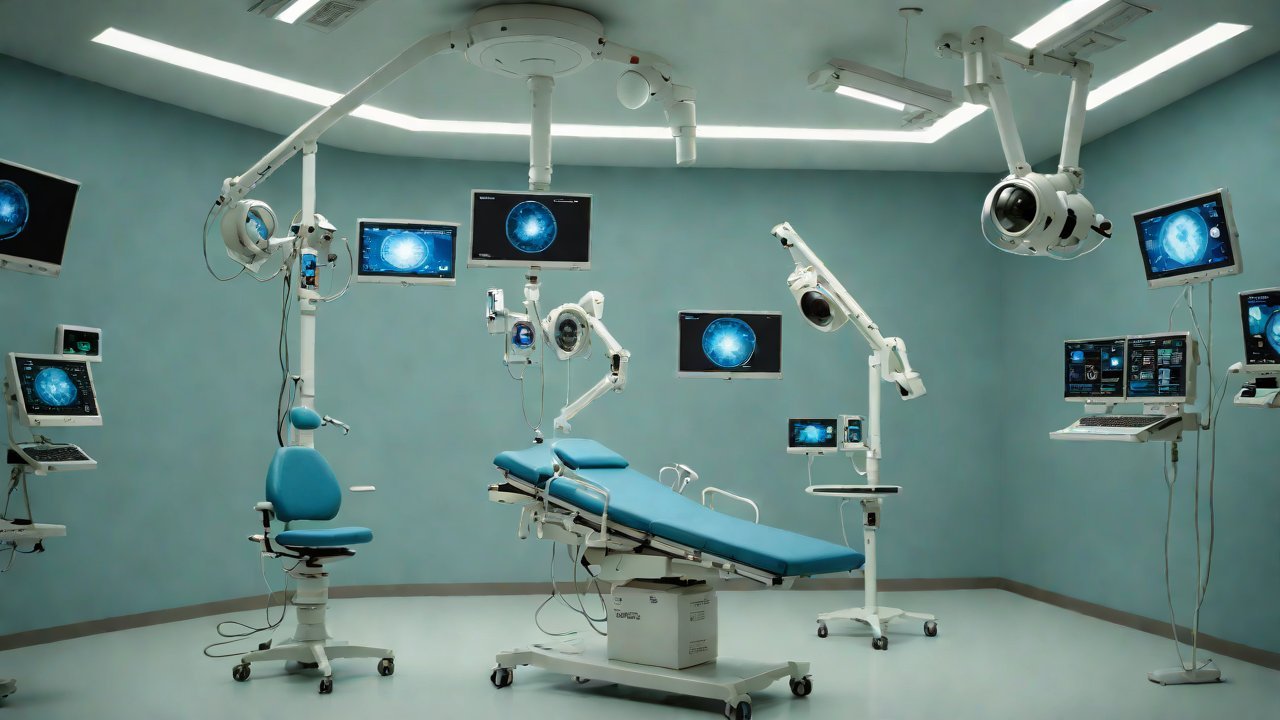
Implementing UWB-based asset tracking systems in ORs requires careful consideration of several factors, including hardware installation, software integration, and staff training.
| Challenge | Solution |
|---|---|
| Hardware Installation | Careful placement of UWB antennas to ensure optimal coverage |
| Software Integration | Seamless integration with existing healthcare information systems (HIS) and electronic medical records (EMR) |
2 blank lines
## 5. Future Outlook: Advancements in UWB Technology
As the demand for precise positioning solutions continues to grow, researchers and developers are pushing the boundaries of what is possible with UWB technology.
| Advancement | Description |
|---|---|
| Multi-Target Tracking | Ability to track multiple surgical instruments simultaneously |
| Real-Time Analytics | Integration with data analytics platforms for enhanced insights |
2 blank lines
## 6. Conclusion
The adoption of UWB-based asset tracking systems for surgical instruments in ORs is a critical step towards improving patient safety, operational efficiency, and reducing healthcare costs. As the market continues to evolve and mature, we can expect to see significant advancements in technology and implementation strategies.
2 blank lines
IOT Cloud Platform
IOT Cloud Platform is an IoT portal established by a Chinese IoT company, focusing on technical solutions in the fields of agricultural IoT, industrial IoT, medical IoT, security IoT, military IoT, meteorological IoT, consumer IoT, automotive IoT, commercial IoT, infrastructure IoT, smart warehousing and logistics, smart home, smart city, smart healthcare, smart lighting, etc.
The IoT Cloud Platform blog is a top IoT technology stack, providing technical knowledge on IoT, robotics, artificial intelligence (generative artificial intelligence AIGC), edge computing, AR/VR, cloud computing, quantum computing, blockchain, smart surveillance cameras, drones, RFID tags, gateways, GPS, 3D printing, 4D printing, autonomous driving, etc.
Note: This article was professionally generated with the assistance of AIGC and has been fact-checked and manually corrected by IoT expert editor IoTCloudPlatForm.