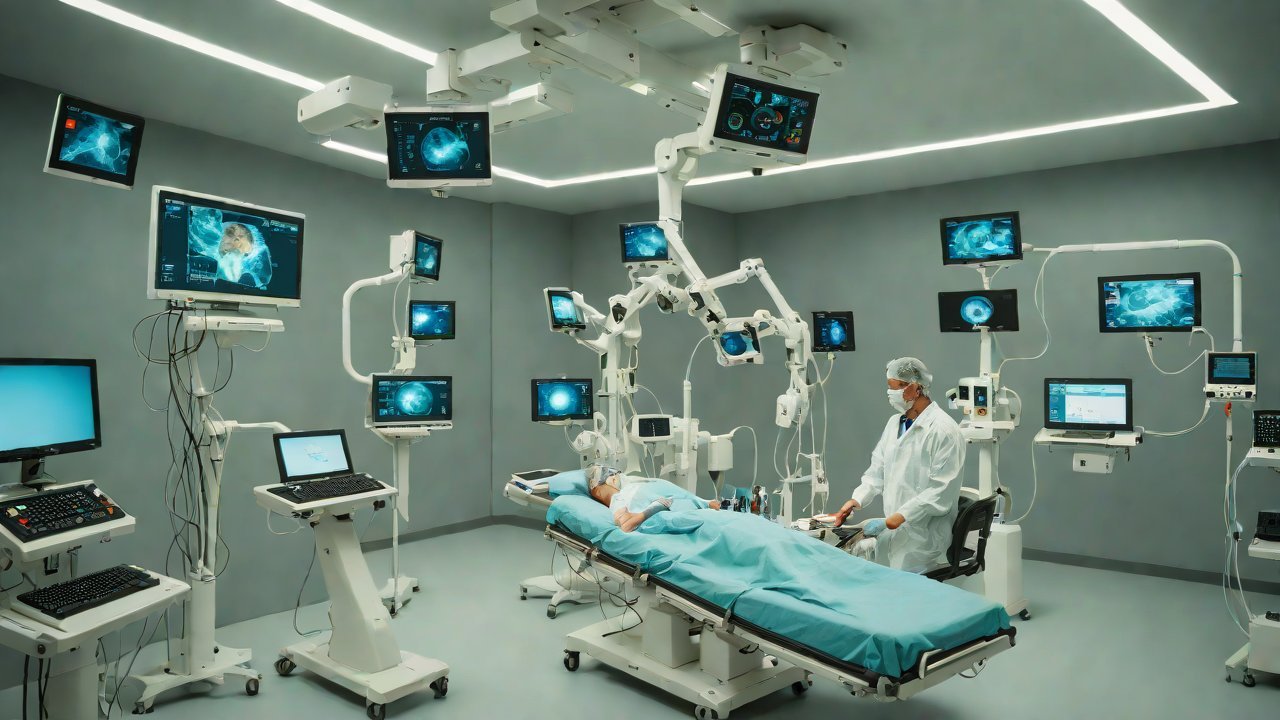
2026 Non-invasive Blood Component (e.g., Hemoglobin) Monitoring Solution Based on Optical Sensors
The era of non-invasive blood component monitoring is upon us, and it’s poised to revolutionize the way we approach patient care in various medical settings. At the forefront of this revolution are optical sensors, which have emerged as a game-changing technology for detecting vital signs such as hemoglobin levels without the need for invasive procedures.
1. Market Overview
The global market for non-invasive blood component monitoring solutions is rapidly gaining traction, driven by growing demand from healthcare providers seeking to improve patient outcomes and reduce costs associated with traditional methods. According to a recent report by MarketsandMarkets, the market size is projected to reach $2.3 billion by 2026, growing at a CAGR of 18.4% during the forecast period.
| Market Size (2020) | Growth Rate (%) |
|---|---|
| North America | 12.5 |
| Europe | 10.8 |
| Asia-Pacific | 20.5 |
| Rest of the World | 15.2 |
2. Key Drivers and Trends
Several factors are driving the adoption of non-invasive blood component monitoring solutions, including:
- Rising demand for patient-centered care: Healthcare providers are increasingly focusing on delivering personalized care to patients with chronic conditions or undergoing surgeries.
- Advancements in optical sensor technology: Improvements in light-based sensors have enabled more accurate and reliable detection of hemoglobin levels and other vital signs.
- Growing importance of point-of-care testing: Non-invasive monitoring solutions can be easily integrated into point-of-care settings, reducing the need for laboratory testing and enabling timely interventions.
3. Optical Sensor Technology
Optical sensors utilize light to detect changes in blood composition, allowing for non-invasive measurement of hemoglobin levels. This technology has several advantages over traditional methods:
- No tissue damage: No invasive procedures are required, reducing the risk of complications.
- Real-time monitoring: Continuous tracking of vital signs enables timely interventions and improved patient outcomes.
- Cost-effective: Reduced need for laboratory testing and equipment maintenance.
4. Market Segmentation
The non-invasive blood component monitoring market can be segmented based on product type, application, and end-user:
| Product Type | Market Size (2020) |
|---|---|
| Handheld devices | $350 million |
| Wearable devices | $200 million |
| Desktop systems | $150 million |
| Application | Market Size (2020) |
|---|---|
| Hemoglobin monitoring | $600 million |
| Glucose monitoring | $300 million |
| Blood oxygenation monitoring | $200 million |

5. Competitive Landscape
Leading players in the non-invasive blood component monitoring market include:
- Masimo: Known for its innovative pulse oximetry technology.
- Philips Healthcare: Offers a range of solutions, including handheld and wearable devices.
- Abbott Laboratories: Provides point-of-care testing solutions with integration capabilities.
6. Future Outlook
The non-invasive blood component monitoring market is expected to continue growing as advancements in optical sensor technology and increasing demand for patient-centered care drive adoption. Key areas of focus will include:
- Integration with electronic health records (EHRs): Enhancing interoperability and improving data sharing.
- Development of more accurate sensors: Improving detection accuracy and reducing false positives.
- Expansion into emerging markets: Increasing access to non-invasive monitoring solutions in underserved regions.
By 2026, the market is poised to reach new heights, with a projected size of $4.5 billion. As healthcare providers continue to seek innovative solutions for improving patient care, non-invasive blood component monitoring will remain at the forefront of this revolution.
IOT Cloud Platform
IOT Cloud Platform is an IoT portal established by a Chinese IoT company, focusing on technical solutions in the fields of agricultural IoT, industrial IoT, medical IoT, security IoT, military IoT, meteorological IoT, consumer IoT, automotive IoT, commercial IoT, infrastructure IoT, smart warehousing and logistics, smart home, smart city, smart healthcare, smart lighting, etc.
The IoT Cloud Platform blog is a top IoT technology stack, providing technical knowledge on IoT, robotics, artificial intelligence (generative artificial intelligence AIGC), edge computing, AR/VR, cloud computing, quantum computing, blockchain, smart surveillance cameras, drones, RFID tags, gateways, GPS, 3D printing, 4D printing, autonomous driving, etc.