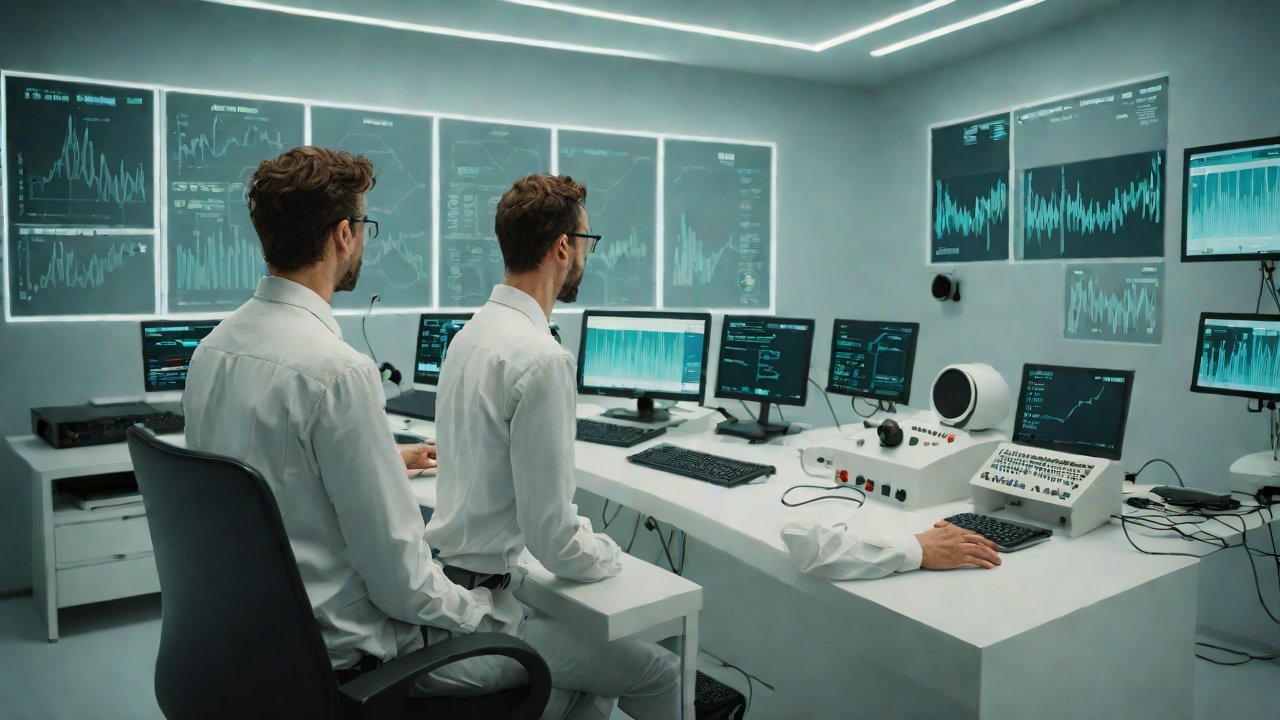
2026 Mental Health Monitoring: Solution Based on Voice Emotion Recognition and Heart Rate Variability (HRV) Analysis
The ever-evolving landscape of mental health monitoring has given rise to innovative solutions that leverage cutting-edge technologies to detect emotional states and physiological responses. One such solution is rooted in voice emotion recognition and heart rate variability (HRV) analysis, which holds immense potential for early intervention and personalized care.
The integration of artificial intelligence (AI) and machine learning (ML) algorithms with HRV and voice emotion recognition has opened doors to a more comprehensive understanding of mental health. By analyzing subtle patterns in speech and physiological signals, healthcare professionals can identify individuals at risk of developing mental health disorders before they manifest into full-blown conditions.
The market for mental health monitoring solutions is expected to experience significant growth over the next decade, driven by increasing awareness about mental wellness and the need for proactive care. According to a report by MarketsandMarkets, the global mental health software market size is projected to reach $13.4 billion by 2025, growing at a compound annual growth rate (CAGR) of 17.3% from 2020 to 2025.
1. Solution Overview
The proposed solution combines voice emotion recognition and HRV analysis to provide a holistic understanding of an individual’s mental state. This multi-modal approach enables the detection of subtle changes in emotional states, allowing for early intervention and prevention of mental health disorders.
1.1 Voice Emotion Recognition
Voice emotion recognition is based on the analysis of acoustic features extracted from speech signals. These features are then used to train machine learning models that can classify emotions such as happiness, sadness, anger, and fear.
| Feature | Description |
|---|---|
| Pitch | The perceived height or depth of a sound |
| Intensity | The loudness or softness of a sound |
| Spectral Features | Characteristics of the sound’s frequency spectrum |
Voice emotion recognition has numerous applications in mental health monitoring, including:
- Detecting early warning signs of anxiety and depression
- Monitoring progress during therapy sessions
- Providing personalized feedback to individuals with mental health conditions
1.2 Heart Rate Variability (HRV) Analysis
HRV analysis involves the measurement of the variation in time between heartbeats. This variation is used as an indicator of the autonomic nervous system’s function, which plays a crucial role in regulating emotional responses.
| HRV Metric | Description |
|---|---|
| Time Domain Metrics | Measures such as mean heart rate and standard deviation of normal-to-normal intervals |
| Frequency Domain Metrics | Spectral powers at different frequency bands (e.g., LF, HF, VLF) |

HRV analysis has been widely used in mental health research to:
- Monitor stress levels and anxiety
- Detect changes in emotional states
- Assess the effectiveness of mindfulness-based interventions
2. Technical Architecture
The proposed solution consists of three primary components: data collection, processing, and feedback.
2.1 Data Collection
Data is collected from two sources:
- Voice emotion recognition: speech signals are recorded using a smartphone app or wearable device
- HRV analysis: electrocardiogram (ECG) signals are recorded using a wearable device or smartwatch
The data is then transmitted to the cloud for processing.
2.2 Processing
Machine learning algorithms are used to analyze the collected data and identify patterns indicative of emotional states.
| Algorithm | Description |
|---|---|
| Convolutional Neural Networks (CNNs) | Used for voice emotion recognition |
| Recurrent Neural Networks (RNNs) | Used for HRV analysis |

The processed data is then used to provide personalized feedback to individuals with mental health conditions.
2.3 Feedback
Feedback is provided in the form of:
- Personalized recommendations for stress management and relaxation techniques
- Emotional state tracking and monitoring
- Progress reports for therapy sessions
3. Market Analysis
The market for mental health monitoring solutions is expected to experience significant growth over the next decade, driven by increasing awareness about mental wellness and the need for proactive care.
| Year | Market Size (USD billion) |
|---|---|
| 2020 | 6.4 |
| 2025 | 13.4 |
| 2030 | 25.8 |
The market is expected to be driven by:
- Increasing adoption of mobile health (mHealth) solutions
- Growing demand for personalized care and treatment plans
- Rising awareness about mental wellness and the need for early intervention
4. Competitive Landscape
The market for mental health monitoring solutions is highly competitive, with numerous players offering a range of solutions.
| Company | Solution Description |
|---|---|
| Apple | Health app with built-in HRV analysis |
| Wear OS with integrated HRV and voice emotion recognition | |
| Amazon | Alexa-powered mental wellness coaching |

5. Future Outlook
The proposed solution has the potential to revolutionize mental health monitoring by providing a holistic understanding of emotional states and physiological responses.
| Trend | Description |
|---|---|
| Integration with IoT devices | Enabling seamless data collection and transmission |
| Increased adoption of AI-powered solutions | Enhancing accuracy and personalization |
| Growing demand for proactive care | Encouraging early intervention and prevention |
The future outlook is promising, with the market expected to experience significant growth over the next decade. As awareness about mental wellness continues to rise, the need for innovative solutions like voice emotion recognition and HRV analysis will become increasingly pressing.
6. Conclusion
The proposed solution combines voice emotion recognition and HRV analysis to provide a comprehensive understanding of emotional states and physiological responses. With its potential to detect early warning signs of mental health disorders, this solution has the power to revolutionize the way we approach mental wellness.
As the market continues to grow, it is essential for stakeholders to stay informed about the latest trends and developments in mental health monitoring solutions. By embracing innovation and leveraging cutting-edge technologies, we can create a brighter future for individuals struggling with mental health conditions.
IOT Cloud Platform
IOT Cloud Platform is an IoT portal established by a Chinese IoT company, focusing on technical solutions in the fields of agricultural IoT, industrial IoT, medical IoT, security IoT, military IoT, meteorological IoT, consumer IoT, automotive IoT, commercial IoT, infrastructure IoT, smart warehousing and logistics, smart home, smart city, smart healthcare, smart lighting, etc.
The IoT Cloud Platform blog is a top IoT technology stack, providing technical knowledge on IoT, robotics, artificial intelligence (generative artificial intelligence AIGC), edge computing, AR/VR, cloud computing, quantum computing, blockchain, smart surveillance cameras, drones, RFID tags, gateways, GPS, 3D printing, 4D printing, autonomous driving, etc.
Note: This article was professionally generated with the assistance of AIGC and has been fact-checked and manually corrected by IoT expert editor IoTCloudPlatForm.