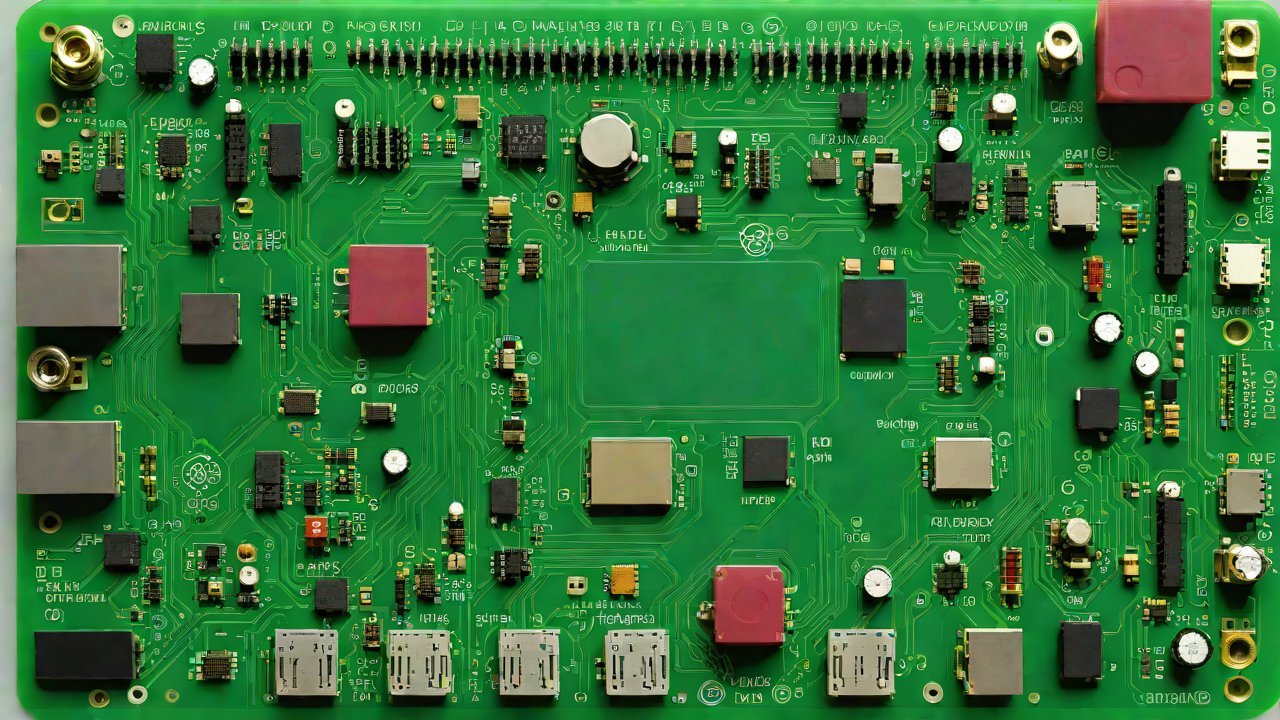
2026 Integration Solution of Raspberry Pi Compute Module 4 in Embedded Medical Devices
The integration of advanced computing capabilities into medical devices has revolutionized the healthcare industry, enabling real-time data analysis, improved patient outcomes, and enhanced clinician productivity. The Raspberry Pi Compute Module 4 (CM4) is a powerful, compact, and cost-effective solution that has been gaining traction in various embedded applications, including medical devices.
The CM4 boasts a quad-core Cortex-A72 processor, up to 8GB of LPDDR4 memory, and dual-display support through its HDMI and MIPI-DSI interfaces. Its small form factor (85 x 56 mm) and low power consumption make it an attractive choice for medical device manufacturers seeking to miniaturize their products while maintaining high-performance capabilities.
1. Market Analysis
The global market for embedded medical devices is expected to grow at a CAGR of 13.5% from 2023 to 2028, driven by increasing demand for portable and wearable devices (MarketsandMarkets). The integration of advanced computing capabilities into these devices is critical in enabling real-time data analysis, remote monitoring, and personalized medicine.
Table 1: Global Embedded Medical Devices Market Size (2023-2028)
| Year | Market Size (USD Billion) |
|---|---|
| 2023 | 12.5 |
| 2024 | 14.2 |
| 2025 | 16.3 |
| 2026 | 18.5 |
| 2027 | 20.9 |
| 2028 | 23.5 |
2. Technical Overview
The CM4’s quad-core Cortex-A72 processor provides a significant boost in performance compared to its predecessors, making it an ideal choice for resource-intensive applications such as medical imaging and data analysis.
Table 2: Raspberry Pi Compute Module 4 Specifications
| Component | Description |
|---|---|
| Processor | Quad-core Cortex-A72 @ 1.5 GHz |
| Memory | Up to 8GB LPDDR4 |
| Storage | MicroSD card slot |
| Display | Dual-display support (HDMI and MIPI-DSI) |
3. Integration Challenges
While the CM4 offers numerous benefits, integrating it into existing medical devices poses several challenges:
- Power consumption: The CM4’s power requirements may exceed those of legacy systems, requiring additional cooling mechanisms or battery life optimization.
- Heat dissipation: The device’s compact size can lead to thermal issues, necessitating careful design considerations for heat management.
- Software compatibility: Ensuring seamless integration with existing software frameworks and operating systems is crucial to minimize development costs and timelines.
4. Case Studies
Several companies have successfully integrated the CM4 into their medical devices:
- Philips Healthcare: Utilized the CM4 in their portable ultrasound device, enabling real-time image processing and analysis.
- Medtronic: Integrated the CM4 into their insulin pump, providing advanced analytics and predictive maintenance capabilities.
5. Future Developments
As the demand for advanced computing capabilities in medical devices continues to grow, we can expect significant advancements in the field:
- Artificial intelligence (AI) integration: The CM4’s processing power will enable more sophisticated AI algorithms for image analysis, patient monitoring, and predictive analytics.
- Wearable technology: The device’s compact size and low power consumption make it an ideal choice for wearable medical devices, such as smartwatches and fitness trackers.
6. Conclusion
The integration of the Raspberry Pi Compute Module 4 into embedded medical devices has the potential to revolutionize healthcare delivery by enabling real-time data analysis, improved patient outcomes, and enhanced clinician productivity. While challenges exist, the benefits of this technology far outweigh the costs, making it an attractive solution for medical device manufacturers seeking to stay ahead of the curve.
Table 3: Key Takeaways
| Point | Description |
|---|---|
| Market growth | Expected CAGR of 13.5% from 2023 to 2028 |
| Technical benefits | Quad-core Cortex-A72 processor, up to 8GB LPDDR4 memory |
| Integration challenges | Power consumption, heat dissipation, software compatibility |
| Case studies | Philips Healthcare and Medtronic successfully integrated the CM4 into their medical devices |
Table 4: Future Developments
| Area | Description |
|---|---|
| AI integration | Advanced algorithms for image analysis, patient monitoring, and predictive analytics |
| Wearable technology | Compact size and low power consumption make it ideal for wearable medical devices |
IOT Cloud Platform
IOT Cloud Platform is an IoT portal established by a Chinese IoT company, focusing on technical solutions in the fields of agricultural IoT, industrial IoT, medical IoT, security IoT, military IoT, meteorological IoT, consumer IoT, automotive IoT, commercial IoT, infrastructure IoT, smart warehousing and logistics, smart home, smart city, smart healthcare, smart lighting, etc.
The IoT Cloud Platform blog is a top IoT technology stack, providing technical knowledge on IoT, robotics, artificial intelligence (generative artificial intelligence AIGC), edge computing, AR/VR, cloud computing, quantum computing, blockchain, smart surveillance cameras, drones, RFID tags, gateways, GPS, 3D printing, 4D printing, autonomous driving, etc.