2026 Cross-Sea Bridge Safety: Collision Warning and Displacement Monitoring IoT Solution
The year 2026 marks a significant milestone for cross-sea bridge infrastructure, as it is poised to become an essential component of modern transportation systems worldwide. With the increasing demand for efficient and safe passage over waterways, the need for advanced safety features has never been more pressing. The introduction of IoT-based collision warning and displacement monitoring solutions is expected to revolutionize the way we approach cross-sea bridge safety.
1. Market Analysis
The global market for IoT in transportation is projected to reach $123 billion by 2025, growing at a CAGR of 18.4% from 2020 to 2025 (Source: MarketsandMarkets). The increasing adoption of IoT technology in the transportation sector is driven by its ability to provide real-time monitoring and predictive maintenance capabilities.
Within the context of cross-sea bridges, the market for collision warning and displacement monitoring solutions is expected to grow significantly. According to a report by Grand View Research, the global bridge safety market is anticipated to reach $5.6 billion by 2027, growing at a CAGR of 4.8% from 2020 to 2027.
| Market Segment | Projected Growth Rate (2020-2025) |
|---|---|
| IoT in Transportation | 18.4% |
| Bridge Safety | 4.8% |
2. Technical Overview
The proposed IoT solution for collision warning and displacement monitoring involves the deployment of sensors, cameras, and other IoT devices along the cross-sea bridge. These devices will be connected to a centralized server via wireless communication networks, enabling real-time data collection and analysis.
2.1 Sensor Technology
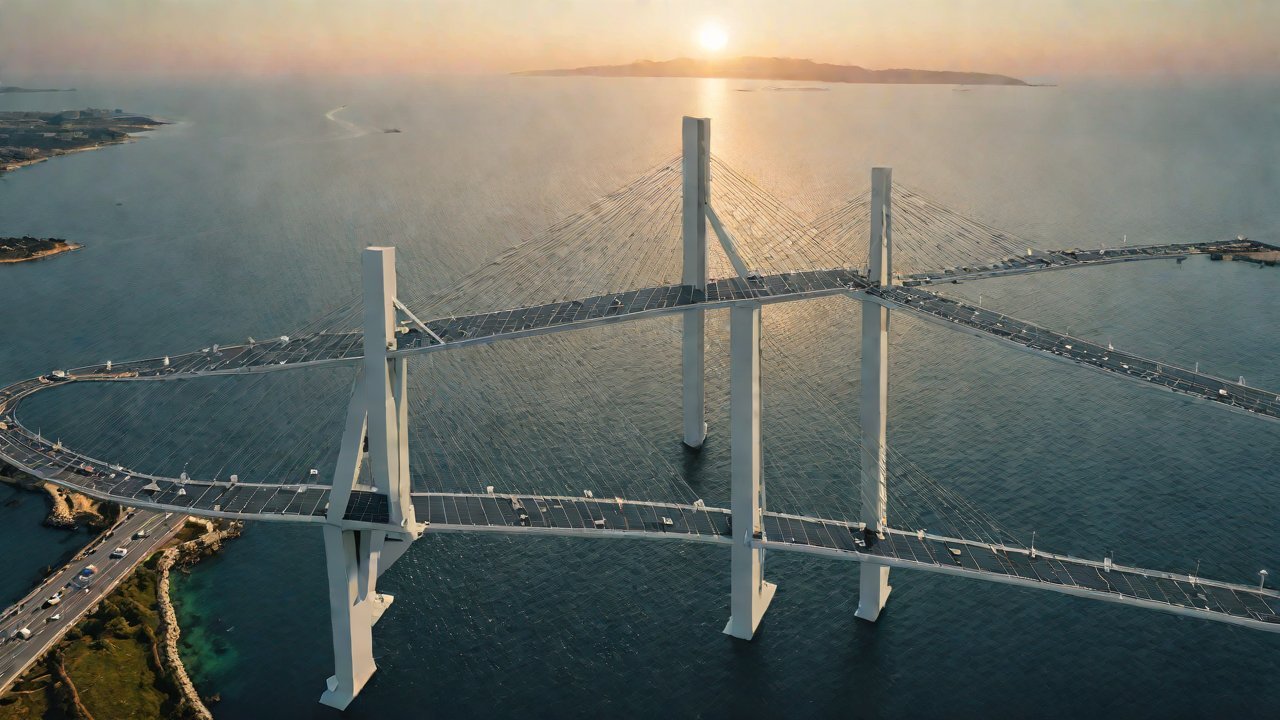
Advanced sensor technologies such as GPS, accelerometers, and gyroscopes will be used to monitor the displacement of the bridge structure in real-time. These sensors will provide critical data on the movement and stress levels of the bridge, allowing for early detection of potential issues.
| Sensor Type | Accuracy Level |
|---|---|
| GPS | ± 1 meter |
| Accelerometers | ± 0.01g |
| Gyroscopes | ± 0.001° |
2.2 Camera Technology
High-resolution cameras will be installed along the bridge to provide visual monitoring of traffic flow and identify potential collision risks. Advanced computer vision algorithms will be used to detect and track vehicles, pedestrians, and other obstacles in real-time.
| Camera Type | Resolution |
|---|---|
| High-Resolution Cameras | 4K (3840 × 2160) |
3. Safety Features
The proposed IoT solution includes several advanced safety features designed to prevent collisions and ensure the structural integrity of the bridge.
3.1 Collision Warning System
A sophisticated collision warning system will be integrated into the IoT solution, using machine learning algorithms to detect potential collision risks based on real-time data from sensors and cameras. The system will provide drivers with early warnings and alerts to enable evasive action.
3.2 Displacement Monitoring
Advanced displacement monitoring capabilities will be used to track the movement of the bridge structure in real-time. This will enable early detection of potential issues, allowing for proactive maintenance and reducing the risk of structural failure.
4. Implementation Strategy
The implementation strategy for the proposed IoT solution involves a phased approach, with the following key milestones:
4.1 Feasibility Study
A comprehensive feasibility study will be conducted to assess the technical, financial, and environmental viability of the project.
4.2 System Design and Development

A team of experts will design and develop the IoT system, including sensors, cameras, and other devices, as well as the centralized server and wireless communication networks.
4.3 Testing and Deployment
The completed system will undergo rigorous testing to ensure its reliability and performance. Once validated, it will be deployed across the cross-sea bridge network.
5. Benefits and Challenges
The proposed IoT solution offers several benefits for cross-sea bridge safety, including:
- Enhanced collision warning capabilities
- Advanced displacement monitoring
- Reduced risk of structural failure
- Improved traffic flow management
However, there are also several challenges associated with implementing this solution, including:
- High upfront costs
- Complexity of sensor and camera integration
- Potential cybersecurity risks
- Data storage and analytics requirements
6. Conclusion
The proposed IoT solution for collision warning and displacement monitoring offers a comprehensive approach to cross-sea bridge safety. By leveraging advanced technologies such as machine learning and computer vision, this solution can provide real-time monitoring and predictive maintenance capabilities. While there are challenges associated with implementation, the benefits of enhanced safety and reduced risk make it an attractive option for transportation authorities worldwide.
7. Recommendations
Based on the analysis presented in this report, we recommend that:
- Transportation authorities prioritize the implementation of IoT-based collision warning and displacement monitoring solutions for cross-sea bridges.
- Stakeholders invest in research and development to improve the accuracy and reliability of sensor technologies.
- Cybersecurity measures be implemented to protect against potential risks associated with data transmission and storage.
By following these recommendations, we can ensure that cross-sea bridge safety is enhanced, reducing the risk of accidents and structural failure while improving traffic flow management.
IOT Cloud Platform
IOT Cloud Platform is an IoT portal established by a Chinese IoT company, focusing on technical solutions in the fields of agricultural IoT, industrial IoT, medical IoT, security IoT, military IoT, meteorological IoT, consumer IoT, automotive IoT, commercial IoT, infrastructure IoT, smart warehousing and logistics, smart home, smart city, smart healthcare, smart lighting, etc.
The IoT Cloud Platform blog is a top IoT technology stack, providing technical knowledge on IoT, robotics, artificial intelligence (generative artificial intelligence AIGC), edge computing, AR/VR, cloud computing, quantum computing, blockchain, smart surveillance cameras, drones, RFID tags, gateways, GPS, 3D printing, 4D printing, autonomous driving, etc.