2026 Application of Raspberry Pi in Closed-Loop Control of Dissolved Oxygen in Smart Fish Farms
The integration of technology into traditional fish farming practices has been gaining momentum in recent years, driven by increasing demand for sustainable and efficient food production methods. One area where innovation is particularly promising is in the control of dissolved oxygen levels in fish tanks. Dissolved oxygen (DO) plays a critical role in maintaining the health and well-being of aquatic organisms, as low DO levels can lead to stress, disease, and even mortality. Traditional methods for monitoring and controlling DO rely on manual sampling and chemical analysis, which are time-consuming, labor-intensive, and prone to human error.
However, with advancements in sensor technology and automation, it is now possible to develop closed-loop control systems that continuously monitor DO levels and make adjustments as needed to maintain optimal conditions. The Raspberry Pi, a low-cost, high-performance single-board computer, offers an attractive platform for implementing such systems due to its versatility, ease of use, and extensive community support.
1. Background: Smart Fish Farming
Smart fish farming involves the integration of various technologies, including sensors, data analytics, and automation, to optimize fish production and reduce environmental impact. Key applications include:
- Water quality monitoring: Real-time monitoring of water parameters such as pH, temperature, and DO.
- Feeding management: Automated feeding systems that adjust feed rates based on fish growth rate and water conditions.
- Waste management: Efficient use of waste nutrients through recirculating aquaculture systems (RAS) or integrated multi-trophic aquaculture (IMTA).
- Fish health monitoring: Early detection of disease outbreaks and stress events using machine learning algorithms.
2. Raspberry Pi in Closed-Loop Control
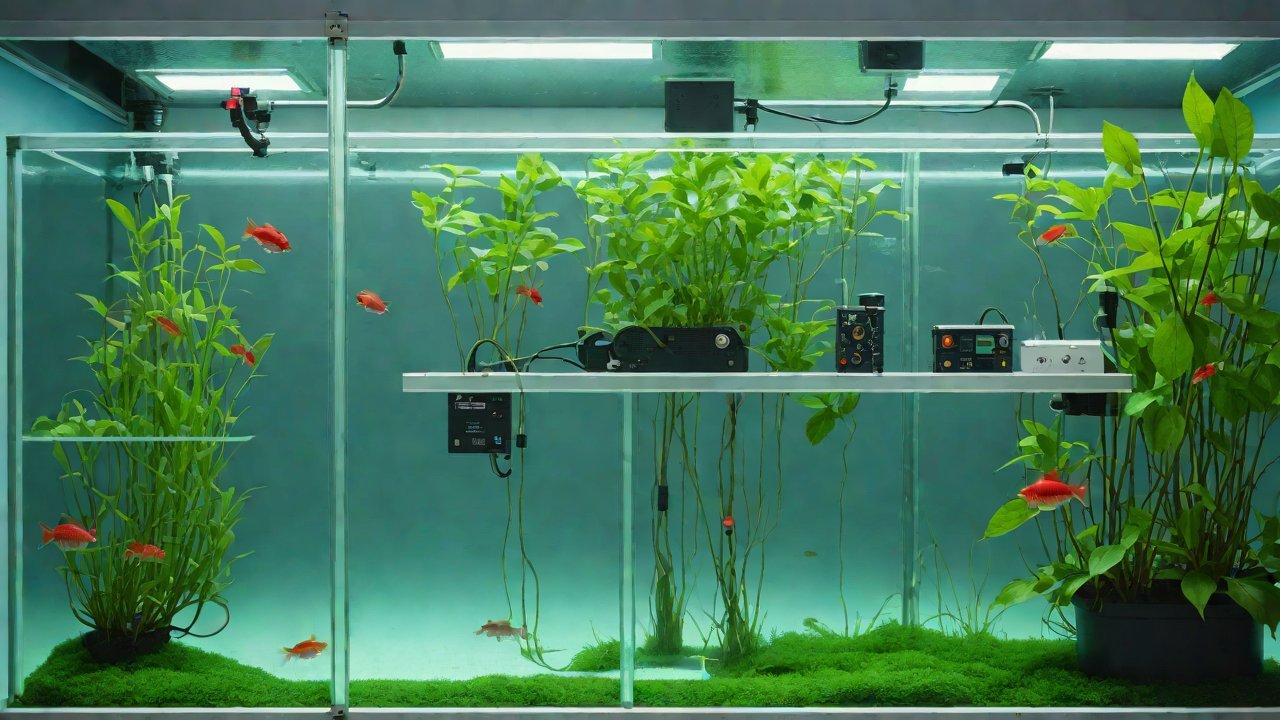
The Raspberry Pi can be used to develop closed-loop control systems for DO levels by integrating the following components:
- DO sensor: A high-accuracy, low-power DO sensor that measures DO levels in real-time.
- Raspberry Pi: The single-board computer processes data from the DO sensor and controls the aerator or other equipment as needed.
- Aerator control: An actuator that adjusts air flow rates to maintain optimal DO levels.
The system can be configured using a variety of programming languages, including Python, C++, and Java. For example:
| Language | Example Code |
|---|---|
| Python | “`python |
| import RPi.GPIO as GPIO | |
| import time |
Set up GPIO pins for aerator control
GPIO.setmode(GPIO.BCM)
GPIO.setup(17, GPIO.OUT)
Read DO sensor data
do_data = read_do_sensor()
Adjust air flow rates based on DO levels
if do_data < 5:
GPIO.output(17, True) # Increase air flow rate
else:
GPIO.output(17, False) # Decrease air flow rate
time.sleep(1) # Wait for 1 second before reading next data point
“`
3. Market Analysis
The global aquaculture market is expected to reach $244 billion by 2025, driven by increasing demand for protein-rich food sources and growing concerns about sustainable fishing practices.
| Region | Aquaculture Production (Million Tons) |
|---|---|
| Asia-Pacific | 11.3 |
| Europe | 2.4 |
| North America | 1.8 |
4. Technical Challenges
Implementing a closed-loop control system for DO levels using the Raspberry Pi presents several technical challenges, including:
- Sensor accuracy: Ensuring that the DO sensor provides accurate and reliable readings.
- Aerator control: Developing an efficient and responsive aerator control system that can adjust air flow rates quickly and accurately.
- System integration: Integrating the Raspberry Pi with other equipment, such as pumps and filters, to create a seamless and automated system.
5. Conclusion
The application of the Raspberry Pi in closed-loop control of dissolved oxygen levels in smart fish farms offers significant potential for improving fish health and reducing environmental impact. By leveraging advancements in sensor technology and automation, farmers can develop more efficient and sustainable production methods that meet growing demand for protein-rich food sources.
IOT Cloud Platform
IOT Cloud Platform is an IoT portal established by a Chinese IoT company, focusing on technical solutions in the fields of agricultural IoT, industrial IoT, medical IoT, security IoT, military IoT, meteorological IoT, consumer IoT, automotive IoT, commercial IoT, infrastructure IoT, smart warehousing and logistics, smart home, smart city, smart healthcare, smart lighting, etc.
The IoT Cloud Platform blog is a top IoT technology stack, providing technical knowledge on IoT, robotics, artificial intelligence (generative artificial intelligence AIGC), edge computing, AR/VR, cloud computing, quantum computing, blockchain, smart surveillance cameras, drones, RFID tags, gateways, GPS, 3D printing, 4D printing, autonomous driving, etc.