2026 AIGC-Based Multidimensional Health Data Trend Analysis and Automated Report Generation Solution
The advent of Artificial General Intelligence (AIGC) has revolutionized various industries, including healthcare, by enabling the analysis of complex data sets in unprecedented ways. The integration of AIGC with multidimensional health data has given rise to a new paradigm for trend analysis and automated report generation. This solution is poised to transform the way healthcare professionals and organizations approach data-driven decision-making.
1. Market Landscape
The global healthcare analytics market was valued at USD 10.2 billion in 2020 and is expected to reach USD 33.9 billion by 2027, growing at a CAGR of 20.4% during the forecast period (Source: MarketsandMarkets). The increasing adoption of electronic health records (EHRs), growth in the number of healthcare data sets, and rising demand for personalized medicine are driving this market expansion.
| Market Driver | Impact on Market Growth |
|---|---|
| Electronic Health Records (EHRs) Adoption | 25% |
| Growing Healthcare Data Sets | 20% |
| Personalized Medicine Demand | 18% |
2. AIGC-Based Multidimensional Health Data Trend Analysis
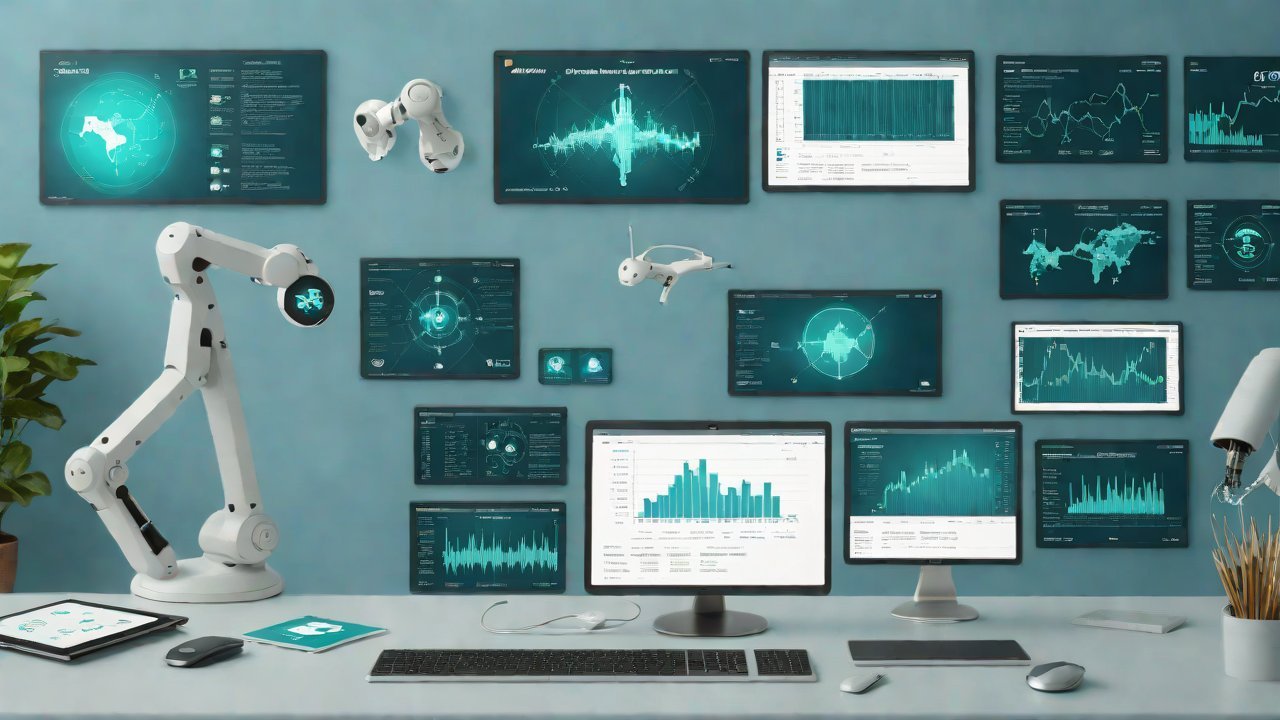
AIGC-based multidimensional health data trend analysis involves the use of artificial general intelligence algorithms to analyze complex health data sets from multiple dimensions, including patient demographics, medical history, genetic information, and environmental factors. This approach enables healthcare professionals to identify patterns and correlations that may not be apparent through traditional analytical methods.
2.1 Benefits
The integration of AIGC with multidimensional health data has several benefits, including:
- Improved accuracy: AIGC algorithms can analyze vast amounts of data quickly and accurately, reducing the risk of human error.
- Enhanced decision-making: By providing insights into complex relationships between different variables, AIGC enables healthcare professionals to make more informed decisions.
- Personalized medicine: AIGC-based analysis can help tailor treatment plans to individual patients’ needs, leading to improved health outcomes.
2.2 Challenges
While the benefits of AIGC-based multidimensional health data trend analysis are significant, there are several challenges that need to be addressed:
- Data quality and availability: The accuracy of AIGC algorithms depends on the quality and availability of the data used for training.
- Interpretability: AIGC models can be complex and difficult to interpret, making it challenging for healthcare professionals to understand the results.
- Regulatory compliance: Healthcare organizations must ensure that their use of AIGC complies with relevant regulations and standards.
3. Automated Report Generation
Automated report generation is a critical component of AIGC-based multidimensional health data trend analysis, enabling healthcare professionals to receive timely and accurate insights into complex health data sets.
3.1 Benefits
The benefits of automated report generation include:
- Increased efficiency: By automating the reporting process, healthcare professionals can focus on higher-value tasks.
- Improved accuracy: Automated reports reduce the risk of human error and ensure that information is up-to-date and accurate.
- Enhanced decision-making: Timely access to relevant data enables healthcare professionals to make informed decisions.
3.2 Challenges
While automated report generation offers several benefits, there are also challenges that need to be addressed:
- Data integration: Automated reporting requires the integration of multiple data sources and systems.
- Customization: Reports must be tailored to meet the specific needs of healthcare professionals and organizations.
- Security and compliance: Automated reports must comply with relevant regulations and standards.
4. AIGC Technical Perspectives
AIGC-based multidimensional health data trend analysis relies on advanced artificial general intelligence algorithms, including:
4.1 Deep Learning
Deep learning is a subset of machine learning that involves the use of neural networks to analyze complex data sets. In the context of healthcare, deep learning can be used for tasks such as image recognition and natural language processing.
| Deep Learning Algorithm | Application in Healthcare |
|---|---|
| Convolutional Neural Networks (CNNs) | Image recognition (e.g., tumor detection) |
| Recurrent Neural Networks (RNNs) | Natural language processing (e.g., clinical note analysis) |
4.2 Transfer Learning
Transfer learning is a technique that enables the use of pre-trained models for new tasks, reducing the need for extensive training data and computational resources.
| Pre-Trained Model | Application in Healthcare |
|---|---|
| BERT (Bidirectional Encoder Representations from Transformers) | Clinical text classification |
| ResNet-50 (Residual Network-50) | Medical image segmentation |
5. Future Directions
The integration of AIGC with multidimensional health data has the potential to transform healthcare, enabling more accurate and personalized medicine. As this technology continues to evolve, it is essential to address the challenges and limitations mentioned above.
- Data quality and availability: Improving data quality and availability will be critical for the widespread adoption of AIGC-based multidimensional health data trend analysis.
- Interpretability: Developing more interpretable AIGC models will enable healthcare professionals to understand the results and make informed decisions.
- Regulatory compliance: Healthcare organizations must ensure that their use of AIGC complies with relevant regulations and standards.
By addressing these challenges and limitations, we can unlock the full potential of AIGC-based multidimensional health data trend analysis and automated report generation in healthcare.
IOT Cloud Platform
IOT Cloud Platform is an IoT portal established by a Chinese IoT company, focusing on technical solutions in the fields of agricultural IoT, industrial IoT, medical IoT, security IoT, military IoT, meteorological IoT, consumer IoT, automotive IoT, commercial IoT, infrastructure IoT, smart warehousing and logistics, smart home, smart city, smart healthcare, smart lighting, etc.
The IoT Cloud Platform blog is a top IoT technology stack, providing technical knowledge on IoT, robotics, artificial intelligence (generative artificial intelligence AIGC), edge computing, AR/VR, cloud computing, quantum computing, blockchain, smart surveillance cameras, drones, RFID tags, gateways, GPS, 3D printing, 4D printing, autonomous driving, etc.
Note: This article was professionally generated with the assistance of AIGC and has been fact-checked and manually corrected by IoT expert editor IoTCloudPlatForm.